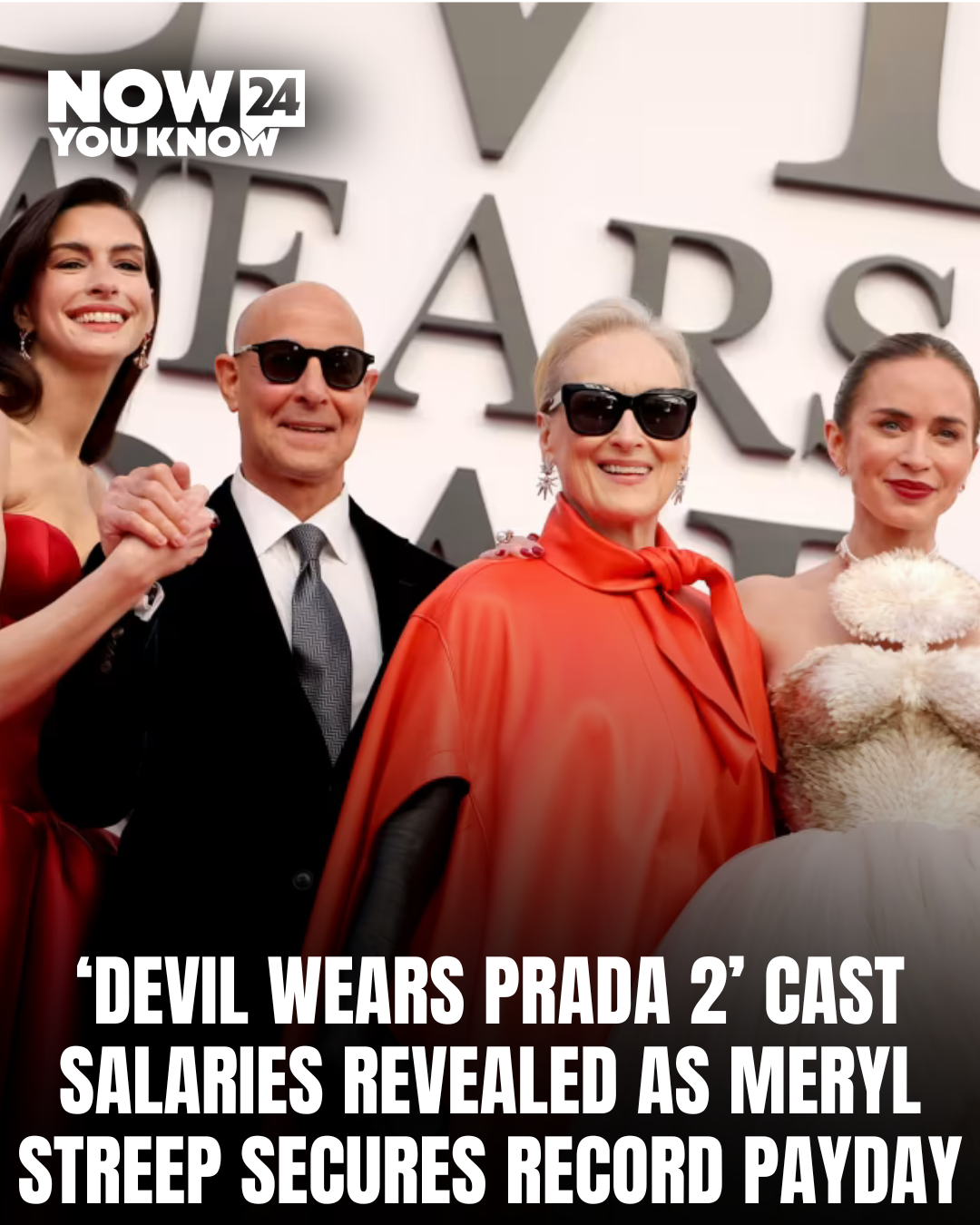

The highly anticipated sequel to one of Hollywood’s most iconic fashion films is already making headlines for its box office success and staggering star salaries.
The Devil Wears Prada 2 has reportedly grossed around $300 million globally, reigniting interest in the return of its original cast nearly two decades after the first film became a cultural phenomenon.
Meryl Streep Leads With $12.5 Million Deal
Oscar-winning actress Meryl Streep reportedly secured a $12.5 million base salary to reprise her role as Miranda Priestly, the icy fashion magazine editor who became one of cinema’s most memorable characters.
Sources cited in industry reports say Streep was considered essential to the sequel’s success, giving her significant leverage in negotiations.
Equal Pay Structure for the Lead Cast
In a notable move for Hollywood salary negotiations, Streep reportedly agreed to a “favored nations” deal alongside co-stars Anne Hathaway and Emily Blunt.
This arrangement means all three actresses are said to have received equal $12.5 million paychecks for returning to their roles, reinforcing the ensemble dynamic that defined the original 2006 film.
Bonus Deals Could Push Earnings Higher
Beyond their upfront salaries, the actresses are also expected to earn significant box office bonuses tied to the film’s performance.
Reports suggest total earnings could exceed $20 million per star if the sequel continues its strong theatrical run and meets pre-agreed revenue milestones.
A Sequel Driven by Nostalgia and Box Office Power
The original The Devil Wears Prada was produced on a modest budget compared to modern blockbusters but went on to become a global hit, earning more than $300 million worldwide.
Industry insiders say the sequel’s $100 million production budget was heavily allocated toward casting and production value, reflecting the film’s reliance on star power and brand recognition.
Industry Trend Toward Shared Pay Deals
Entertainment analysts note that “equal pay” or “favored nations” agreements are becoming more common in ensemble-driven films, particularly when original casts reunite for high-profile sequels.
These structures are often used to avoid pay disparity controversies and maintain cast cohesion during negotiations.
Strong Opening Signals Franchise Revival
Early box office performance indicates strong audience interest, with projections suggesting the film could dominate the weekend charts in multiple regions.
If momentum continues, the sequel could position itself as one of the most commercially successful legacy sequels in recent years.
Bottom Line
While exact salary figures are not officially confirmed by studios, industry sources consistently point to high eight-figure deals, major performance bonuses, and unusually equal pay structures for the lead trio.
The result is a rare Hollywood alignment: a nostalgic franchise return powered equally by star power and strategic negotiation.