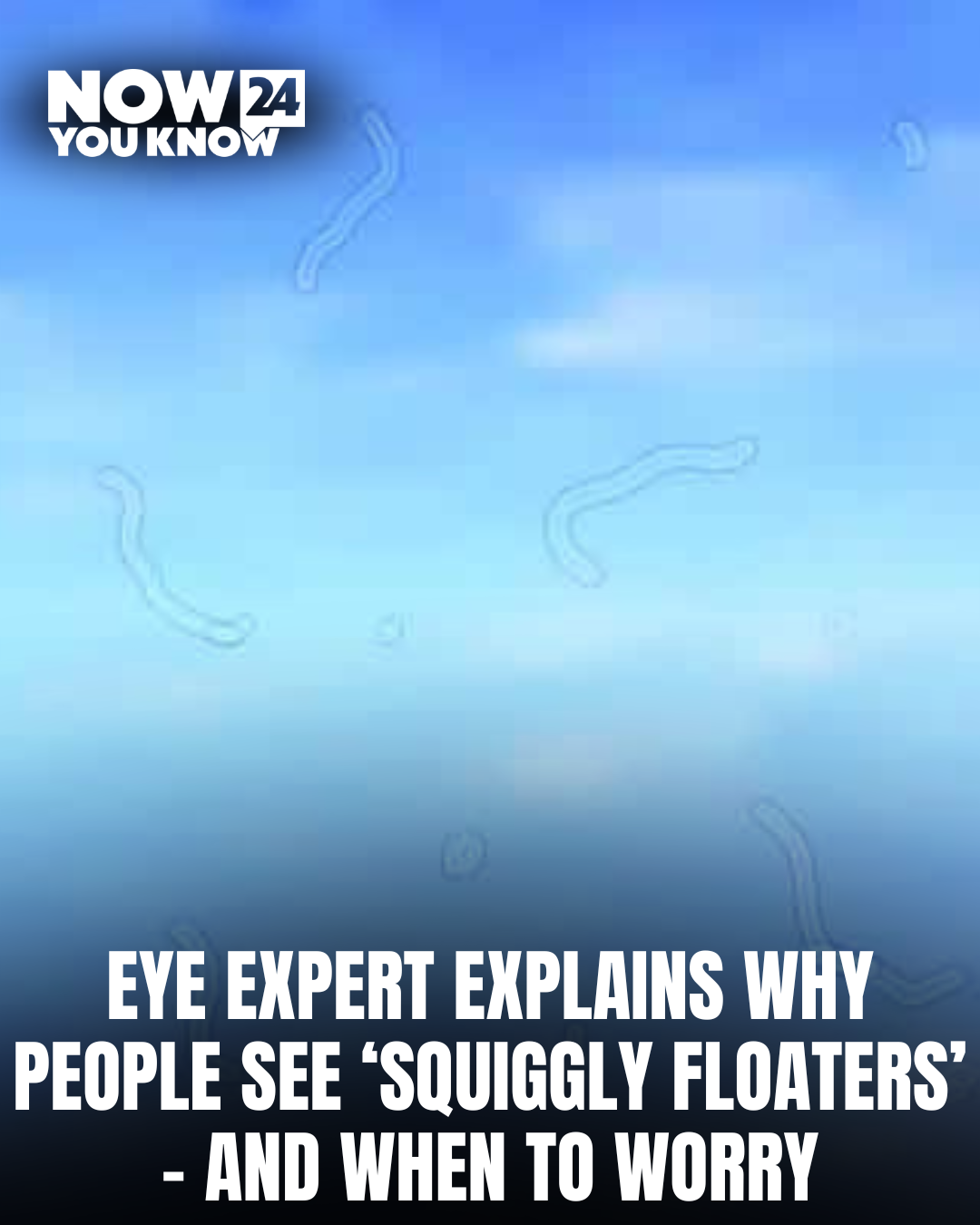

Eye floaters occur inside the vitreous, the gel-like substance that fills most of the eyeball. Over time, the collagen fibers within this gel can begin to clump together, creating tiny shadows that drift across the retina.
Dr Daniel Polya explained that these clumps are essentially condensed collagen fibers floating inside the eye. As light passes through, the retina interprets them as squiggles, cobwebs, dots, or thread-like shapes moving through your field of vision.
They often become more noticeable when staring at plain backgrounds, bright screens, or sunlight.
When Floaters Are Usually Harmless
In many cases, floaters are connected to a condition called posterior vitreous detachment (PVD), a common process where the vitreous gel naturally pulls away from the retina as people age.
Health experts, including guidance from the National Health Service, note that PVD itself is generally harmless and extremely common, especially in older adults.
Over time, many people gradually stop noticing the floaters as the brain adapts to them.
Warning Signs You Should Not Ignore
Doctors say the most important thing is paying attention to sudden changes. New floaters appearing quickly, especially alongside flashes of light or blurred vision, can sometimes indicate a retinal tear or retinal detachment.
According to Dr Daniel Polya, retinal detachment can occur if a vitreous detachment pulls too hard on the retina, creating a tear that may worsen without treatment.
Experts warn that untreated retinal detachment can potentially lead to permanent vision loss.
The Numbers Behind the Risk
While most floaters are harmless, specialists say there is still a small percentage of cases that become more serious. Research cited by eye experts suggests that among patients experiencing posterior vitreous detachment, roughly five percent may develop a retinal tear.
If a tear develops and remains untreated, the risk of retinal detachment increases significantly.
This is why ophthalmologists recommend having new floaters examined promptly rather than assuming they are harmless.
Can Floaters Be Treated?
Most floaters do not require treatment. However, severe cases that interfere heavily with vision can sometimes be addressed with laser procedures designed to break up larger floaters.
Doctors caution that such procedures also carry risks and are generally reserved for more problematic situations.
In many cases, monitoring symptoms and having regular eye exams remain the safest approach.