



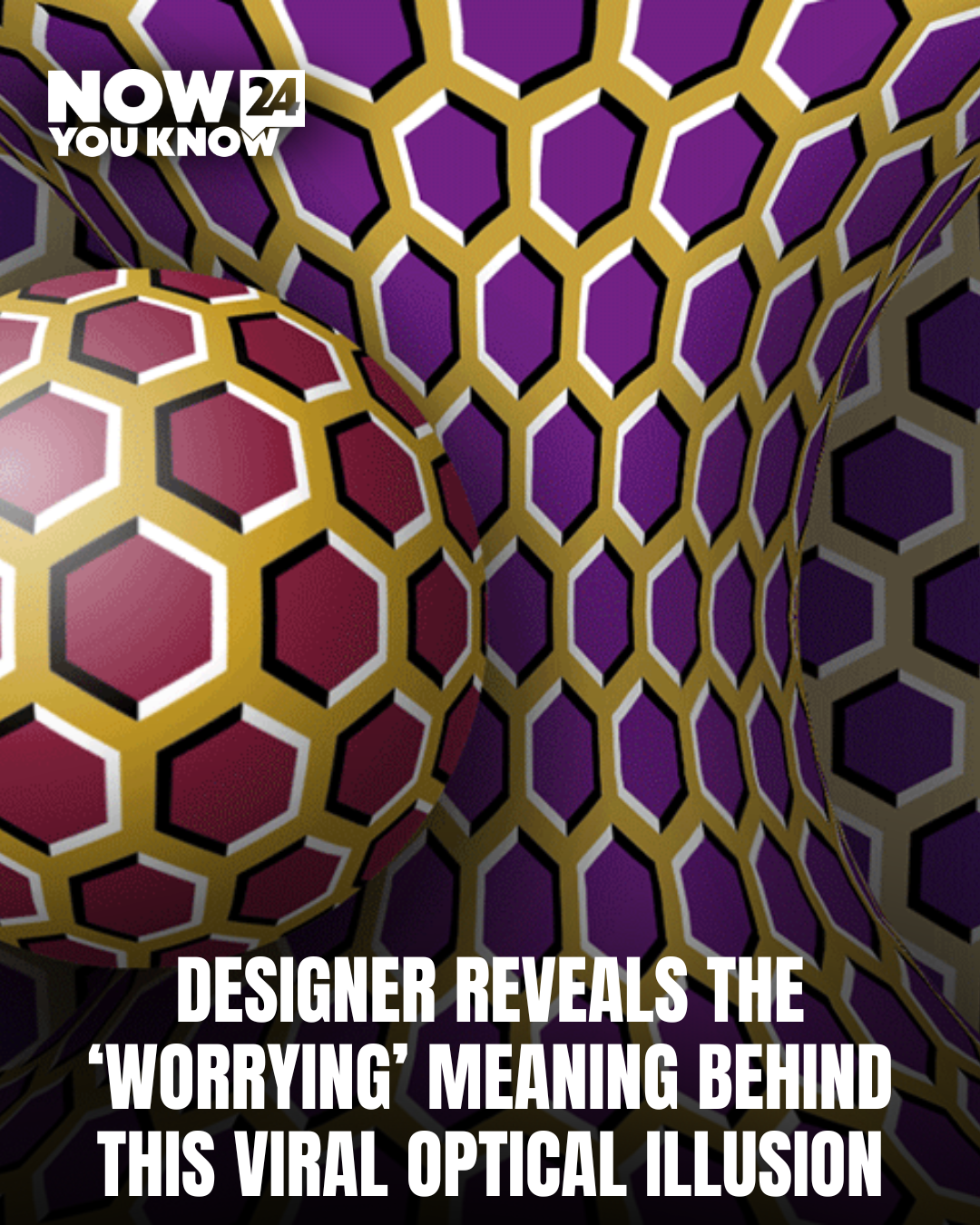

A viral optical illusion spreading across social media has left thousands of people questioning what they see — and whether it says something worrying about their mental state.
The image, featuring swirling purple, black, and white geometric shapes, has been widely shared alongside claims that the illusion can supposedly reveal how stressed or mentally exhausted a person is based on how much the image appears to move.
But according to the actual creator of the artwork, the viral explanation is completely false.
The Illusion That Has the Internet Arguing
The optical illusion recently resurfaced online after users on X began debating whether the image appeared still or constantly moving.
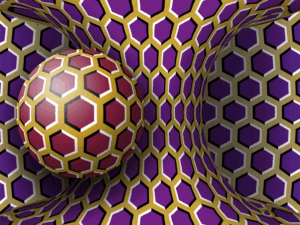
Some viewers claimed the pattern looked completely static, while others insisted it seemed to spin or pulse intensely.
The viral caption attached to many posts claimed the illusion was created by a Japanese neurologist and that the amount of perceived movement supposedly reflected a person’s stress levels, sleep quality, or mental health.
The more movement someone saw, the post claimed, the more stressed they were.
People Online Became Genuinely Concerned
As the illusion spread, reactions online quickly escalated from curiosity to panic and jokes.
Some users admitted they became anxious after seeing the image moving aggressively, while others joked that the illusion “wouldn’t stop spinning” no matter how long they looked at it.
The claim gained additional traction because it sounded scientific and referenced a supposed neurology expert, leading many people to believe it was medically legitimate.
The Designer Says the Viral Explanation Is Fake
The artwork was actually created in 2016 by Ukrainian designer Yurii Perepadia, who later spoke out after the misleading posts exploded online.
According to Perepadia, he used a known visual effect inspired by Japanese psychologist and illusion artist Akiyoshi Kitaoka to create the sensation of motion.
The illusion works because contrasting colors and patterns can trick the brain into perceiving movement even in a completely static image.
Perepadia said he became frustrated after people falsely attached medical claims to his artwork and repeatedly attempted to have misleading reposts removed.
Why the Image Appears to Move
Experts explain that many optical illusions exploit the way the human brain processes contrast, light, and eye movement.
In this case, the alternating dark and light patterns combined with color gradients create tiny visual inconsistencies that can make the image seem alive or shifting.
Factors like fatigue, eye strain, focus, and lighting conditions can slightly affect how strongly someone experiences the illusion, but that does not make it a mental health test.
There is currently no scientific evidence proving that this image can diagnose stress, anxiety, or psychological conditions.
The Internet’s Ongoing Fascination With Optical Illusions
Viral optical illusions continue to dominate social media because people enjoy comparing what they see and testing their perception against others.
Images like “the dress,” spinning dancers, and hidden-object illusions regularly spark debate because they reveal how differently the brain can interpret visual information.
Experts say this particular illusion is another example of how quickly misinformation can spread online when scientific-sounding claims are attached to viral content.