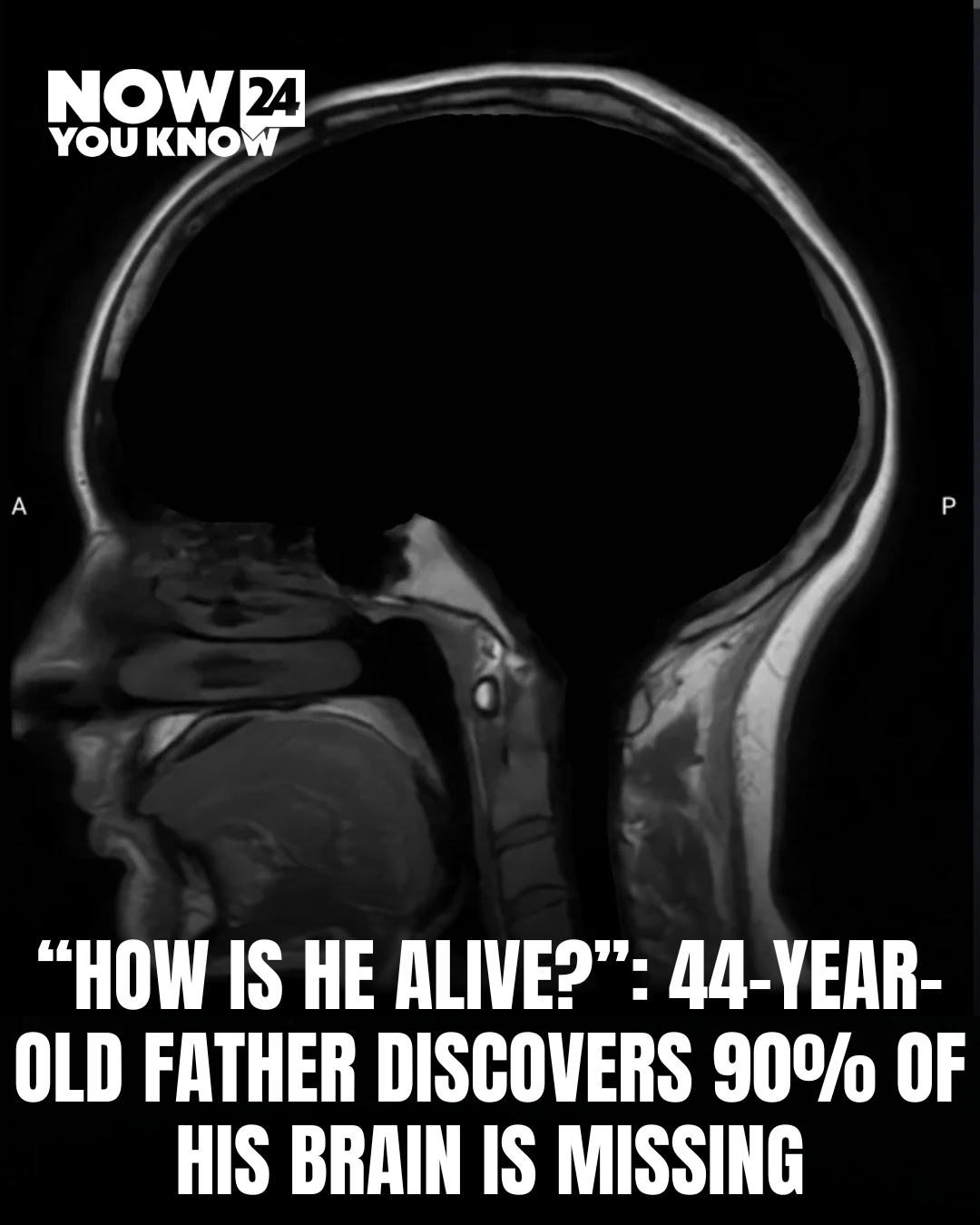

A man in France left doctors stunned after medical scans revealed that nearly 90% of his brain was missing, yet he had been living a largely normal life. The discovery came when the 44-year-old sought medical help for mild weakness in his leg.
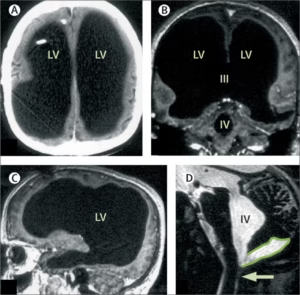
What doctors found was extraordinary. His skull was mostly filled with fluid due to a condition known as hydrocephalus, leaving only a thin layer of brain tissue. Despite this, he had a job, a family, and functioned independently in everyday life.
The case, first documented in 2007 in a respected medical journal, quickly caught the attention of scientists around the world. It challenged long-held assumptions about how much brain mass is actually needed for normal functioning.
Cognitive psychologist Axel Cleeremans later revisited the case, highlighting its implications for understanding the human mind. He noted that while the man’s IQ measured slightly below average at 84, he was socially capable and lived a stable life.
According to researchers, one key takeaway is the brain’s remarkable ability to adapt. Known as neuroplasticity, this ability allows the brain to reorganize itself, even in extreme circumstances where much of its structure is altered or reduced.
The case also raises deeper questions about consciousness. If a person can function with such a reduced brain volume, it suggests that awareness may not be tied to a single region or fixed structure as previously believed.
Instead, scientists are increasingly exploring the idea that consciousness may emerge from the brain’s ability to learn and adapt over time, rather than from any specific physical area.
While extremely rare, cases like this continue to push the boundaries of neuroscience, forcing experts to rethink what is truly essential for human thought, behavior, and awareness.