

Forget the old myths about shoe size or the length of a man’s fingers—modern science suggests we might have been looking at the wrong extremity entirely. According to recent research highlighted by urologist Dr. Rena Malik, the most accurate physical indicator of a man’s “equipment” may actually be sitting right in the middle of his face.
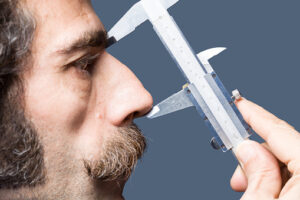
During a widely discussed interview on The Diary of a CEO podcast, Dr. Malik pointed to a series of studies suggesting that nose length is significantly correlated with penile size. While the “big feet” myth has been debunked by medical data, the link between a man’s nose and his lower half appears to be rooted in early human development.
The Numbers Behind the Nose
The primary study cited, originally published in the journal Basic and Clinical Andrology, analyzed 126 male volunteers. The researchers found a measurable statistical link between “Stretched Penile Length” (SPL)—a standard clinical proxy for erect length—and the length of the nose from the bridge to the tip.
Key Findings from the 2021 Study:
-
Larger Noses (2.2 inches+): Correlated with an average penile length of 5.3 inches.
-
Smaller Noses (1.8 inches or less): Correlated with an average length of 4.1 inches.
-
Non-Factors: The study found no significant link between penis size and height, weight, or age, suggesting that these traits are largely “locked in” before birth.
Why the Nose? The Fetal Development Theory
The reason for this bizarre connection isn’t a coincidence of growth, but rather a shared history in the womb. Researchers hypothesize that both the nose and the genitals are influenced by the same surge of androgens (male hormones) during a specific window of fetal development.
Essentially, the amount of testosterone a baby is exposed to in utero helps determine the “blueprints” for various body parts. Because both the nose and the penis are highly sensitive to these hormones during early growth, they often grow in proportion to one another.
Evolution and the “Visual Signal”
This conversation has gained fresh momentum in 2026 following a groundbreaking study published in PLOS Biology. This new research explored why the human penis is an “evolutionary outlier”—significantly larger than those of our closest primate relatives.
The 2026 study suggests that penis size may have evolved as a visual signal of calmness and confidence. Because the flaccid penis can retract during periods of stress or fear (due to adrenaline), a larger flaccid size may have acted as a biological cue to rivals and partners that a male was unfazed and physically dominant. When combined with a prominent nose, these features may have historically served as indicators of high prenatal testosterone levels.
The “Body Fat” Illusion
While your nose length might be set at birth, Dr. Malik and other experts remind men that there is one factor they can control: Body Mass Index (BMI). Carrying excess weight, particularly around the pubic area, can lead to what is known as the “buried penis” effect.
Research suggests that losing significant body weight can reveal “hidden” length that was previously obscured by fat. So, while you can’t change the size of your nose to improve your measurements, maintaining a healthy weight remains the most effective way to maximize visible length.