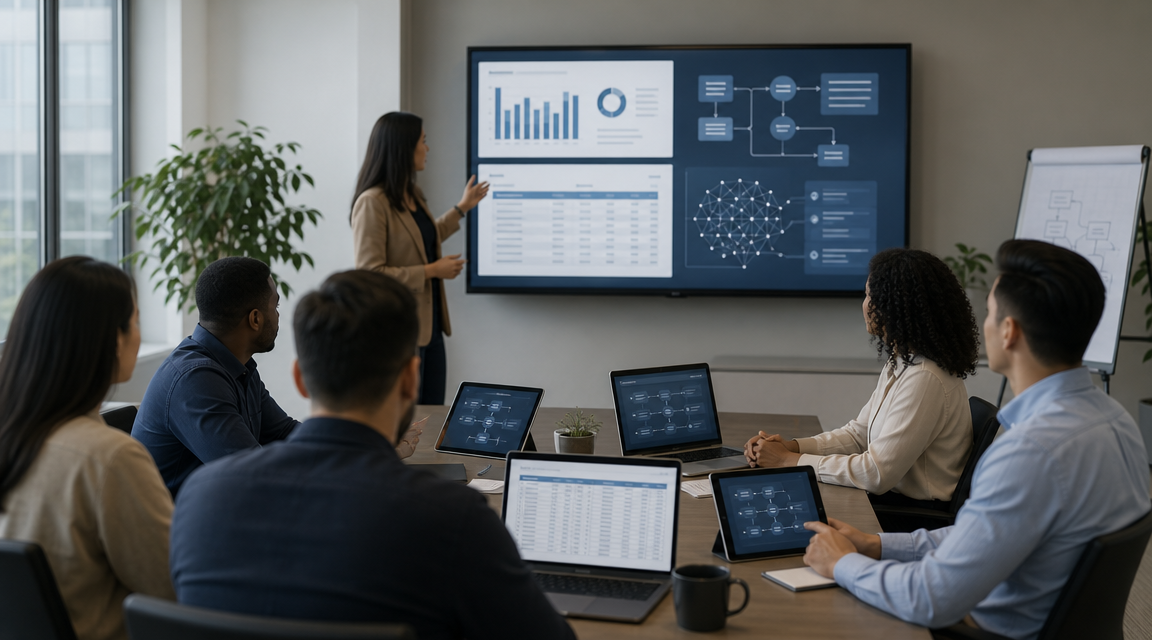

KPMG US is piloting an AI-powered simulation called TaxSIM to accelerate how its tax staff learn judgment and analytical skills formerly gained through years of repetitive return preparation. According to reporting by Business Insider (Tim Paradis, May 18, 2026), the tool is designed to reproduce high-volume, high-speed scenarios so junior employees encounter a broader set of client situations in far less time.
Brad Brown, KPMG’s chief digital officer for tax, framed the rollout as a response to a changing training pipeline: “You’re not going to get as many repetitions of doing that task as you would have in the past,” he said, noting that early-career professionals historically spent roughly four years preparing returns and learning by repetition.
TaxSIM, developed with Centaurian AI, presents simulated tax cases that vary based on user decisions and provide targeted feedback. Kes Sampanthar, Centaurian AI cofounder and CEO and a KPMG alum, compared the system to driving simulators: “It’s like the top athlete who gets better and better if they can get the right feedback.” The company says the software also prompts users to work through their own reasoning before turning to AI assistance.
KPMG plans to make TaxSIM available to about 10,000 tax staff later in the year. The firm positions the tool as a way to recreate the breadth of experience junior staff once gained from repetitive tasks now being automated by AI, compressing years of exposure into high-speed practice cycles.
Executives say the simulations let users explore broader conceptual issues—such as how tariffs affect organizations across jurisdictions—and receive feedback they would not normally get in early career assignments. Sampanthar emphasized that certain learning outcomes require difficulty: “Learning happens when things are hard, not when things are easy.”
Brown expects TaxSIM to accelerate analytical skill development and help some employees move up more quickly, potentially shifting day-to-day work toward managing AI agents and advising clients rather than performing routine calculations. He also acknowledged individual preferences for hands-on work: a first-year tax analyst told him they wanted to build a valuation model by hand first, to which Brown said it’s acceptable to do a few manual exercises even if years of repetition are no longer necessary.
KPMG characterizes TaxSIM as part of a broader strategy to combine human judgment with AI tools rather than to replace professional judgment outright. The tool remains in testing and is slated for wider internal release later in 2026.
Source: Business Insider, Tim Paradis, May 18, 2026.