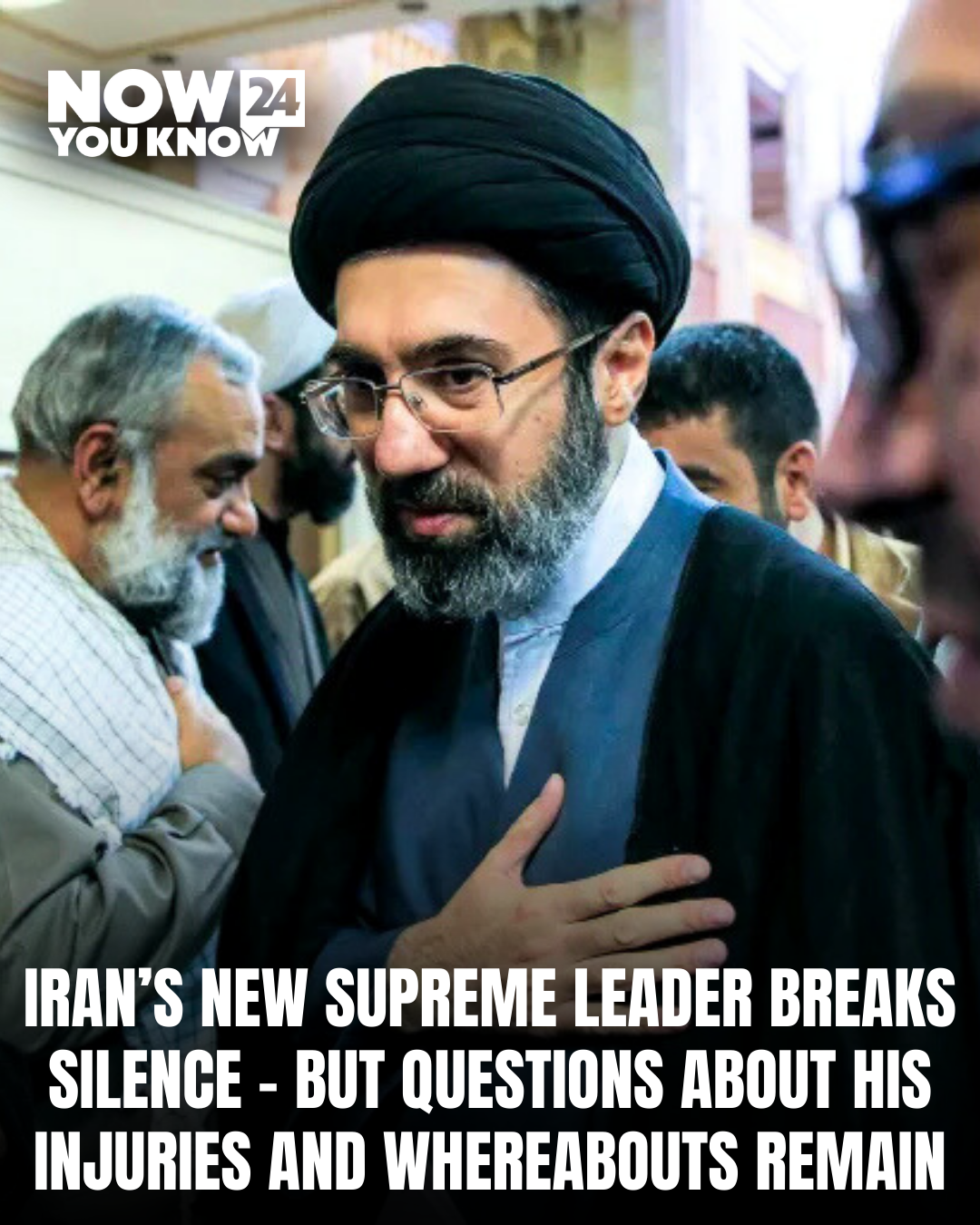

Iran’s newly appointed supreme leader, Mojtaba Khamenei, has issued his first message since taking power, but uncertainty surrounding his health and location is fueling intense speculation.
Khamenei assumed the role after his father, longtime Iranian leader Ali Khamenei, was killed during the opening stages of the ongoing conflict involving Iran, the United States, and Israel. The sudden leadership change has placed the 56-year-old cleric at the center of one of the region’s most dangerous crises.
Despite his new position, Khamenei has not appeared publicly since being named supreme leader. Instead, his first statement was delivered through state media rather than directly by video or speech.
Iranian officials say the leader was injured during early strikes in the conflict, though they have described the wounds as minor and insist he remains capable of performing his duties.
Other reports suggest the injuries may involve damage to his legs or face, while some analysts believe security concerns may be the main reason he is being kept out of public view.
In his message, Khamenei vowed to continue resisting U.S. and Israeli military pressure and warned that Iran could use the Strait of Hormuz, one of the world’s most important oil shipping routes, as leverage in the conflict.
The lack of confirmed appearances has raised questions among observers about who is directing Iran’s strategy during the war. Critics argue that the country’s powerful military and political institutions may currently be playing a larger role behind the scenes.
Meanwhile, the conflict itself continues to escalate across the Middle East, with global markets and governments closely watching developments as tensions remain high.
For now, the mystery surrounding Iran’s new leader—his health, his location, and how much control he truly holds—remains unresolved.