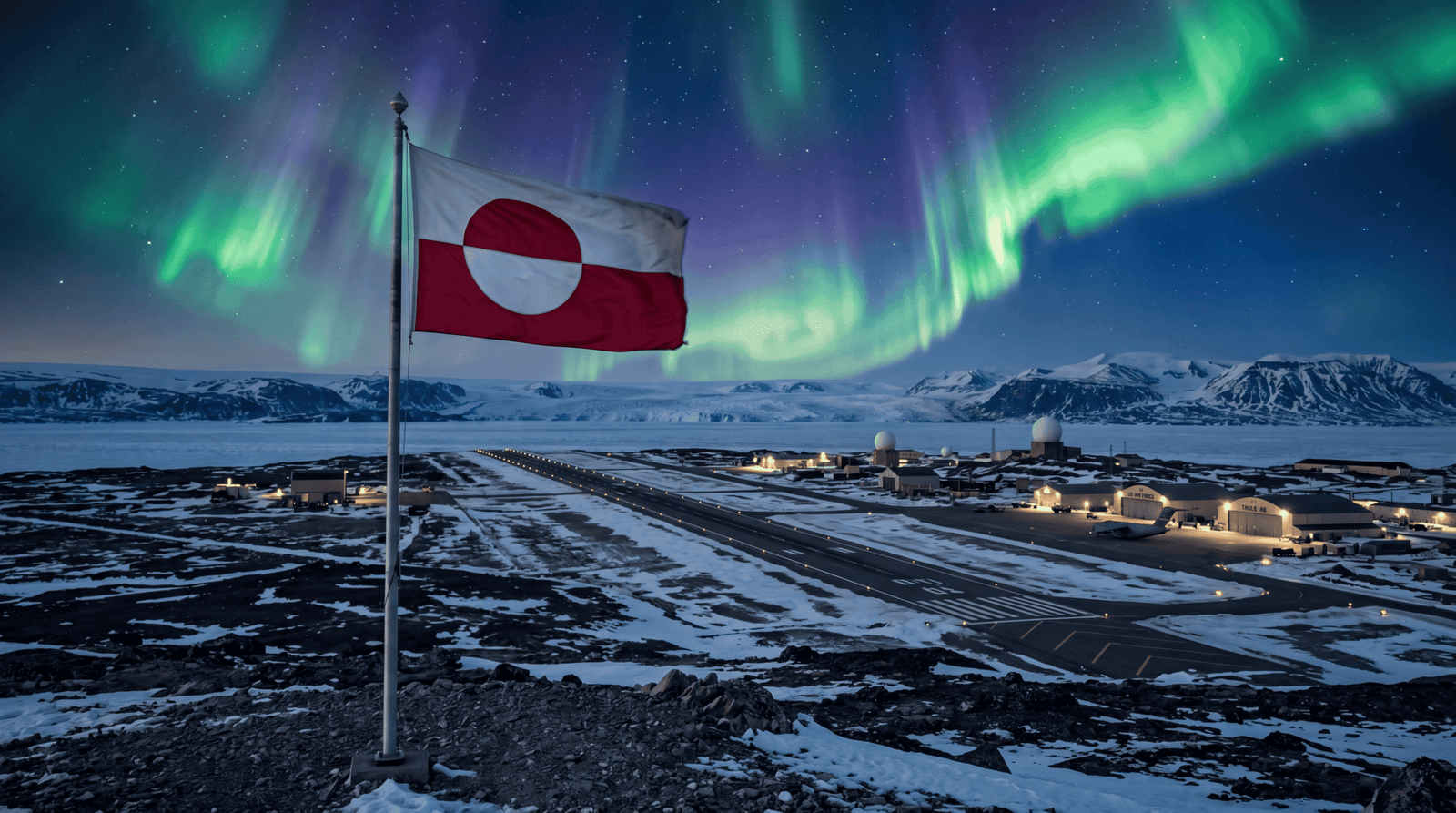

The Prime Minister of Greenland just told the world her citizens “don’t feel safe” because of an American president’s threats. Let that sink in. Not threats from Moscow or Beijing—from Washington. When Múte Egede made that statement in April 2025, she wasn’t engaging in diplomatic hyperbole. She was issuing a distress signal that every NATO member heard with alarm, and every adversary heard with delight.
What Trump Actually Said—And Why It Matters
Donald Trump hasn’t merely expressed interest in acquiring Greenland, the semi-autonomous Danish territory of 57,000 people sitting atop critical Arctic resources and strategic military installations. He’s refused to rule out using military force to take it. In January 2025, he declared “economic force” and even military action were on the table if Denmark wouldn’t sell. By April, his rhetoric escalated to suggesting he wouldn’t honor NATO’s Article 5 mutual defense obligation unless allies “paid their dues”—a fundamental misunderstanding of how the alliance works, or a deliberate threat to dismantle it.
According to Brookings Institution analysis, Trump’s fixation represents more than territorial ambition—it’s a stress test of whether international law and alliance commitments mean anything in 2025. The answer matters because if an American president can openly threaten to seize territory from a NATO ally, the entire post-1945 security architecture collapses.
Greenland’s Response: From Disbelief to Existential Dread
When Trump first floated buying Greenland in 2019, Greenlanders responded with bewildered humor. When he revived the idea in 2025 with military undertones, the laughter stopped. Prime Minister Egede’s statement about citizens not feeling safe wasn’t diplomatic theater—it reflected genuine conversations happening in Nuuk’s cafes and Ilulissat’s fishing communities.
Greenland’s population is smaller than Chula Vista, California. They’ve watched their strategic importance explode as climate change opens Arctic shipping lanes and reveals rare earth deposits worth trillions. They’ve navigated this carefully, maintaining autonomy from Denmark while building economic ties with China that alarm Washington. Now they face a patron-turned-predator scenario they never imagined.
The Council on Foreign Relations reports that Greenland’s leaders have consistently emphasized three points: they’re not for sale, they’re pursuing full independence from Denmark (not annexation by anyone), and they need partnerships that respect sovereignty. Trump’s threats violate all three principles simultaneously.
The Historical Parallel No One Wants to Name
Every foreign ministry in Europe immediately thought of one precedent when Trump refused to rule out force: Russia’s annexation of Crimea in 2014. Vladimir Putin also claimed historical ties, strategic necessity, and the “will of the people” (via a sham referendum). The West imposed sanctions and called it illegal. Now America’s president uses similar logic about a NATO ally’s territory.
The difference isn’t moral—it’s operational. Russia took Crimea through a swift military operation that presented the world with a fait accompli. Trump is telegraphing intentions in advance, which either means he’s bluffing or incompetent at executing territorial seizures. Neither interpretation reassures allies.
Here’s what makes this especially dangerous: Putin’s Crimea gambit succeeded because the West hesitated, unsure if defending Ukrainian sovereignty was worth confrontation. If Trump moves on Greenland—even through “economic force” like blocking EU trade access unless Denmark capitulates—would Europe respond? Would Congress? The uncertainty itself damages security more than open hostility would.
Denmark’s Impossible Position
Denmark finds itself in a geopolitical nightmare. As a NATO member since 1949, it’s supposed to be protected by American security guarantees. Instead, it’s being threatened by the American commander-in-chief. Copenhagen has responded with unusual directness for Nordic diplomacy, with officials stating Greenland’s status is “not up for discussion” and reminding Washington that territorial integrity applies to allies too.
But Denmark also knows its military couldn’t resist American coercion for 48 hours. Its economy depends on NATO stability and EU market access—both of which Trump has threatened to withdraw unless Europe “respects American interests.” This is textbook coercive diplomacy, the kind Washington condemns when Beijing uses it against Taiwan.
What This Means For You
If you’re not a geopolitical analyst, this might seem like an Arctic border dispute with no relevance to your life. That would be a catastrophic misreading. Here’s why this matters to ordinary citizens:
First, your security depends on alliances meaning something. NATO isn’t a protection racket where America defends those who “pay up”—it’s a mutual defense pact where an attack on one is treated as an attack on all. If that principle dies over Greenland, it dies everywhere. Ask yourself: would American troops defend Estonia from Russia if Trump has already seized territory from Denmark? Would South Korea trust U.S. nuclear guarantees?
Second, this sets precedents for how great powers can behave. If America can threaten territorial expansion against democracies without consequence, so can China regarding Taiwan, Russia regarding the Baltics, or any other power with regional ambitions. The rules-based international order—boring phrase, catastrophic consequences if it collapses—is being dismantled in real-time.
Third, the Arctic matters economically. Greenland’s rare earth minerals are essential for smartphones, electric vehicles, and defense systems. If U.S.-European relations fracture over Greenland, Europe will deepen ties with China for resource access. American companies will lose market access. Your economic future is tied to whether these alliances hold.
What Happens Next: Three Scenarios
Scenario One: The Bluff Collapses. Trump’s threats prove to be negotiating theater aimed at extracting concessions on Arctic base access or resource sharing. Denmark and Greenland make minor concessions that save face while maintaining sovereignty. Probability: 40%. This requires Trump to back down, which his track record suggests he rarely does without being forced.
Scenario Two: Economic Coercion. Trump stops short of military action but uses tariffs, trade restrictions, or threats to withdraw from NATO to pressure Denmark. This creates a crisis without tanks rolling, but damages alliances just as severely. Probability: 45%. This fits Trump’s transactional worldview and avoids the political cost of open conflict.
Scenario Three: Military Pressure. Trump orders a naval show of force near Greenland or announces unilateral U.S. control of Thule Air Base (technically Danish territory). This triggers a NATO crisis where European members must choose between condemning America or abandoning principles. Probability: 15%. Low likelihood but catastrophic consequences if it occurs.
None of these scenarios include what Greenland actually wants: to be left alone to determine its own future. That option apparently isn’t available when you sit atop strategic territory in a great power competition era.
The Larger Pattern
Trump’s Greenland threats aren’t isolated. They’re part of a pattern that includes suggesting Canada become the 51st state, threatening to seize the Panama Canal, and demanding European allies “pay their bills” or lose protection. Each statement alone could be dismissed as provocation. Together, they represent a coherent worldview: sovereignty and international law are obstacles to American interests, not foundations of global order.
This isn’t “America First”—it’s “America Alone.” Every ally is watching and recalculating. Japan is quietly expanding military capabilities to reduce dependence on U.S. guarantees. Germany is debating nuclear weapons for the first time since 1945. Poland is signing security deals with Britain and France that bypass Washington. The alliance architecture that won the Cold War is fragmenting because allies can’t trust American commitments anymore.
Why Greenland Can’t Just Say No
Here’s the brutal calculus facing Nuuk: saying no to American demands might work if Washington accepts rejection. But Trump’s pattern suggests he escalates when denied. Greenland lacks the military, economic, or diplomatic power to resist sustained American pressure. Denmark could help, but it also can’t fight Washington. The EU could intervene, but it’s divided and slow-moving.
This is what living in a “might makes right” world looks like for small nations. You can be democratic, rule-following, and strategically valuable—and still face existential threats because geography dealt you a bad hand. Greenland’s rare earths and Arctic location make it a target. Its small population makes it vulnerable. Its NATO affiliation, which should provide protection, instead provides proximity to the threat.
The Question No One Wants to Answer
If Trump actually moves on Greenland through military or severe economic coercion, who stops him? Congress has proven unwilling to constrain executive foreign policy decisions. The courts have limited jurisdiction over international affairs. NATO has no mechanism to sanction a member for aggression against another member—the alliance wasn’t designed for that scenario.
European allies could respond with their own sanctions or by suspending intelligence-sharing, but that accelerates the alliance’s collapse rather than preventing it. China and Russia would exploit the crisis to advance their own territorial claims, arguing America has no moral authority to oppose them.
The most likely outcome is the worst: Trump gets some concessions through pressure, Europe’s trust in American leadership is permanently damaged, and future aggressors learn that threats work if you’re powerful enough. The international order doesn’t collapse in one dramatic moment—it erodes through precedents that make the next violation easier.
What Should Happen (But Probably Won’t)
The correct response from Washington would be immediate and unambiguous: the President’s personal views don’t reflect U.S. policy, America respects Denmark’s sovereignty and Greenland’s autonomy, and any discussions about Arctic security will occur through proper diplomatic channels. Congressional leaders should state this publicly and pass a resolution affirming it.
That won’t happen because it requires Republicans to contradict their party’s leader and Democrats to coordinate an effective foreign policy message. Instead, we’ll get weeks of equivocation, followed by either an embarrassing climbdown or a dangerous escalation. Allies will draw the correct conclusion: American commitments aren’t worth the paper they’re written on.
When a NATO member’s prime minister says her citizens don’t feel safe because of American threats, the alliance is already broken—the only question is whether anyone admits it before the next crisis makes it undeniable.