
Here’s what drives me absolutely mad: Home cooks think “brain-healthy” means flavorless salmon and sad spinach salads. They follow MIND diet guidelines like a punishment instead of a revelation. I’ve watched brilliant people in my kitchens torture perfectly good omega-3-rich fish and antioxidant-packed vegetables with timid seasoning and apologetic cooking techniques.
The truth? The same foods that protect your brain from cognitive decline—fatty fish, leafy greens, nuts, berries, olive oil—are the exact ingredients I built Michelin-starred dishes around in Barcelona and Tokyo. The problem isn’t the ingredients. It’s that nobody taught you how to make them sing.
The MIND Diet Deserves Better Than Bland
The MIND diet (Mediterranean-DASH Intervention for Neurodegenerative Delay) combines the best of Mediterranean and DASH eating patterns, backed by research from Rush University showing it can reduce Alzheimer’s risk by up to 53% when followed rigorously. But here’s what the research papers don’t tell you: adherence crashes when food doesn’t taste phenomenal.
I’ve seen this pattern for twenty years. A patient gets their neurologist’s recommendations, buys all the “right” foods, and within three weeks they’re back to their old diet because steamed broccoli and plain grilled chicken feel like medicine. This is a culinary failure, not a willpower problem.
The MIND diet emphasizes ten brain-protective food groups: leafy greens, other vegetables, nuts, berries, beans, whole grains, fish, poultry, olive oil, and wine. Notice something? These are the foundations of the world’s most celebrated cuisines. Japanese kaiseki. Italian cucina povera. Spanish tapas. None of these traditions produce boring food.
The Science Behind Flavor and Brain Health
Here’s the beautiful coincidence that changed how I approach cooking: many of the chemical compounds that make food delicious are the same ones that protect your brain. Take the Maillard reaction—that gorgeous browning that happens when you properly sear salmon or roast Brussels sprouts. The Maillard reaction creates hundreds of flavor compounds through the interaction of amino acids and reducing sugars at temperatures above 285°F.
But it also creates melanoidins—brown pigments with powerful antioxidant properties that help fight the oxidative stress implicated in neurodegenerative diseases. When you properly brown your food, you’re not just building flavor. You’re creating neuroprotective compounds that didn’t exist in the raw ingredients.
The polyphenols in extra virgin olive oil—oleocanthal and oleuropein—have anti-inflammatory effects comparable to ibuprofen, according to research published in Nature. But here’s what matters in your kitchen: these compounds also carry flavor. That peppery bite in high-quality olive oil? That’s oleocanthal literally reducing inflammation in your brain while making your vegetables taste incredible.
The omega-3 fatty acids in wild salmon—EPA and DHA—are structural components of brain cell membranes and reduce neuroinflammation. They’re also fat-soluble, which means they carry flavor compounds beautifully. This is why salmon with crispy skin and a rich, fatty texture satisfies in a way that overcooked, chalky fish never will.
What You’re Doing Wrong With Brain-Healthy Foods
Let me be direct about the mistakes I see constantly. First, you’re undersalting everything. I know you’ve heard salt is “bad,” but the MIND diet doesn’t prohibit salt—it emphasizes whole foods over processed ones. The sodium in potato chips damages your cardiovascular system. The salt you add to properly season a piece of wild salmon makes the fish taste like itself and ensures you’ll actually want to eat it twice a week.
Salt doesn’t just make food “salty.” It suppresses bitterness, enhances sweetness, and helps aromatic compounds reach your olfactory receptors. Without adequate salt, the glucosinolates in kale and broccoli—the very compounds that provide their anti-cancer and neuroprotective benefits—taste aggressively bitter. Season them properly, and suddenly these vegetables become craveable.
Second, you’re cooking leafy greens to death. Spinach, kale, Swiss chard, and collards are MIND diet superstars, packed with folate, vitamin E, vitamin K, lutein, and beta-carotene. But boiling them for ten minutes destroys heat-sensitive vitamins and creates that sulfurous, nursing-home smell that makes people hate vegetables. Research in Food Chemistry shows that quick, high-heat cooking preserves more nutrients than prolonged steaming or boiling.
The technique: Get your pan screaming hot. Add fat (olive oil, the MIND diet’s preferred fat). Add your greens. Toss for exactly 90 seconds until they’re bright and wilted but still have texture. Season aggressively. The difference is transformative.
Third, you’re afraid of fat. The brain is 60% fat by dry weight. Trying to feed it with fat-free cooking is like building a house without lumber. The MIND diet specifically recommends olive oil as your primary fat and nuts as daily snacks—both are loaded with monounsaturated fats and vitamin E. Stop cooking with non-stick spray. Start cooking with actual olive oil that creates flavor, carries fat-soluble vitamins, and provides satiety.
Common Mistakes That Kill Brain-Healthy Cooking
Mistake 1: Buying pre-ground nuts. Nuts are a MIND diet cornerstone—almonds, walnuts, pistachios are packed with vitamin E, healthy fats, and minerals. But the moment you grind them, their oils oxidize. Pre-ground almond flour sitting in your pantry for months? The fats have gone rancid, creating off-flavors and losing their anti-inflammatory benefits. Buy whole nuts, store them in the freezer, and toast them fresh before using. The flavor difference is staggering.
Mistake 2: Cooking berries. Berries—especially blueberries and strawberries—are the only fruits specifically recommended in the MIND diet because of their high anthocyanin content. These flavonoids cross the blood-brain barrier and accumulate in brain regions involved in learning and memory. But anthocyanins are extremely heat-sensitive. That blueberry muffin you baked? Most of the neuroprotective compounds degraded at 350°F. Eat your berries fresh, or if you must cook them, use the gentlest heat possible for the shortest time.
Mistake 3: Treating olive oil like it’s indestructible. Extra virgin olive oil has a smoke point around 375°F—higher than butter, but lower than refined oils. When you heat it past its smoke point, you create harmful compounds and destroy the polyphenols that provide its health benefits. Use EVOO for medium-heat cooking, raw applications, and finishing. For high-heat searing, use refined avocado oil, then finish your dish with EVOO for flavor and nutrition.
Mistake 4: Ignoring the power of aromatics. Garlic, onions, shallots, ginger, and turmeric aren’t just flavor bases—they’re neuroprotective powerhouses. Allicin in garlic has antimicrobial and anti-inflammatory properties. Curcumin in turmeric may help clear amyloid plaques associated with Alzheimer’s. But you’re probably not using enough. In my Barcelona kitchen, we’d use six cloves of garlic where American recipes call for one. Don’t be timid. Build layers of flavor with generous aromatics.
The Salmon Technique That Changes Everything
Wild salmon appears on every brain-health diet for good reason: it’s the richest source of DHA and EPA omega-3s, which reduce inflammation and support neuron health. But most home cooks produce dry, chalky salmon that tastes like a chore.
The problem is overcooking. Salmon proteins begin to contract and expel moisture at 120°F. By the time you reach the FDA’s recommended 145°F, you’ve created tight, dry fish that needs lemon juice just to choke down. The Japanese—who have some of the world’s lowest rates of cognitive decline—eat salmon at 110-115°F, where it’s silky, rich, and supremely satisfying.
Here’s my technique: Remove your salmon from the refrigerator 20 minutes before cooking so it comes to room temperature—this ensures even cooking. Pat it completely dry (water is the enemy of browning). Season both sides generously with salt. Heat a stainless steel or cast-iron pan over medium-high heat. Add enough olive oil to coat the bottom. When the oil shimmers, place the salmon skin-side down. Do not touch it for four minutes. The skin will crisp, the fat will render, and a golden crust will develop.
After four minutes, flip the salmon. Immediately remove the pan from heat. The residual heat will gently cook the fish through over the next 2-3 minutes, bringing it to a perfect 120°F. The center should be translucent and soft. This is safe to eat (salmon is sushi-grade), and it’s when the fish tastes incredible.
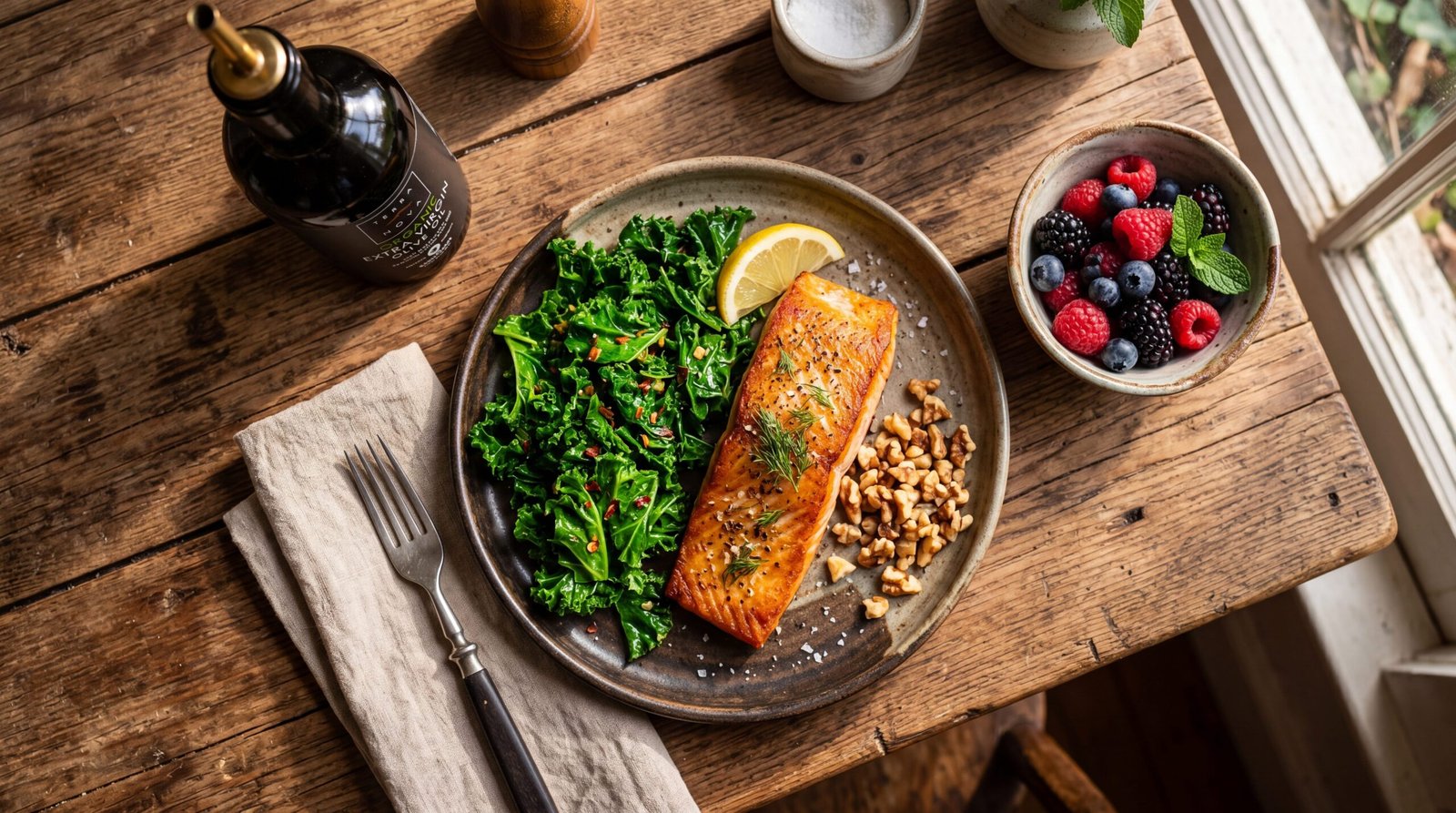
Finish with a drizzle of your best olive oil, flaky salt, and lemon zest (not juice, which masks flavor). You’ve just created a restaurant-quality dish with more omega-3s and better flavor than anything you’d get from salmon cooked to 145°F.
The Leafy Greens Formula Nobody Teaches
The MIND diet recommends six servings of leafy greens per week. Most people struggle to eat six servings per month because they don’t know this formula: Fat + Salt + Acid + Texture.
Start with the best greens you can find—farmers’ market kale, not the rubbery supermarket bunches. Remove the tough stems (save them for stock). Heat your largest pan until it’s almost smoking. Add three tablespoons of olive oil—yes, three. Add four cloves of thinly sliced garlic. The second the garlic sizzles and becomes fragrant (15 seconds), add all your greens at once.
Toss constantly with tongs for 90 seconds. The greens should wilt and turn brilliant green but retain structure. Remove from heat. Immediately add the juice of half a lemon, half a teaspoon of salt, and a pinch of red pepper flakes. The acid brightens everything, the salt brings out natural sweetness, and the pepper flakes add complexity.
The final touch: golden raisins or toasted pine nuts. The raisins provide little pops of sweetness that contrast with the greens’ bitterness. The pine nuts add textural contrast and healthy fats. This isn’t a side dish—it’s a destination.
Why Beans Deserve Your Respect
Beans are the MIND diet’s secret weapon: plant protein, fiber, folate, magnesium, and resistant starch that feeds beneficial gut bacteria. But canned beans straight from the can taste like wet cardboard because they’re sitting in starchy, salty liquid that masks their natural creaminess.
The fix: Drain and rinse your canned beans thoroughly. Heat olive oil in a pan with smashed garlic and rosemary. Add the beans and cook, stirring occasionally, until they start to break down and get crispy in spots (5-7 minutes). Mash some of them against the side of the pan to create a creamy sauce. Season aggressively with salt and pepper.
You’ve just transformed a $1.50 can of cannellini beans into something texturally complex and deeply satisfying. Serve this over whole grain toast with a runny egg and you have a brain-healthy breakfast that rivals anything from a café.
The One Technique You Can Use Today
Here’s the single change that will transform your brain-healthy cooking: Start finishing every dish with high-quality extra virgin olive oil after cooking. Not the olive oil you cook with—a special bottle of peppery, green, expensive EVOO that you drizzle on food just before serving.
This technique—called finishing oil in professional kitchens—preserves all the delicate polyphenols and aromatic compounds that heat destroys. It makes vegetables taste rich, grains taste complex, and lean proteins taste satisfying. It’s the secret weapon of Italian cooking, and it’s the easiest way to make brain-healthy food taste like something you’d order in a restaurant.
Buy one bottle of premium olive oil—look for harvest dates, not just “best by” dates, and choose oils from single estates in Greece, Italy, or California. Keep it away from heat and light. Use it as the final touch on everything: roasted vegetables, bean soups, grilled fish, whole grain salads. You’ll immediately understand why the Mediterranean diet isn’t a sacrifice—it’s one of the world’s most pleasurable ways to eat.
Your brain deserves food that tastes phenomenal, and phenomenal food happens to be exactly what your brain needs to thrive. That’s not a coincidence. That’s evolution working in your favor. Stop cooking like brain health is a punishment, and start cooking like it’s the best thing you’ll eat all day—because with the right techniques, it absolutely is.