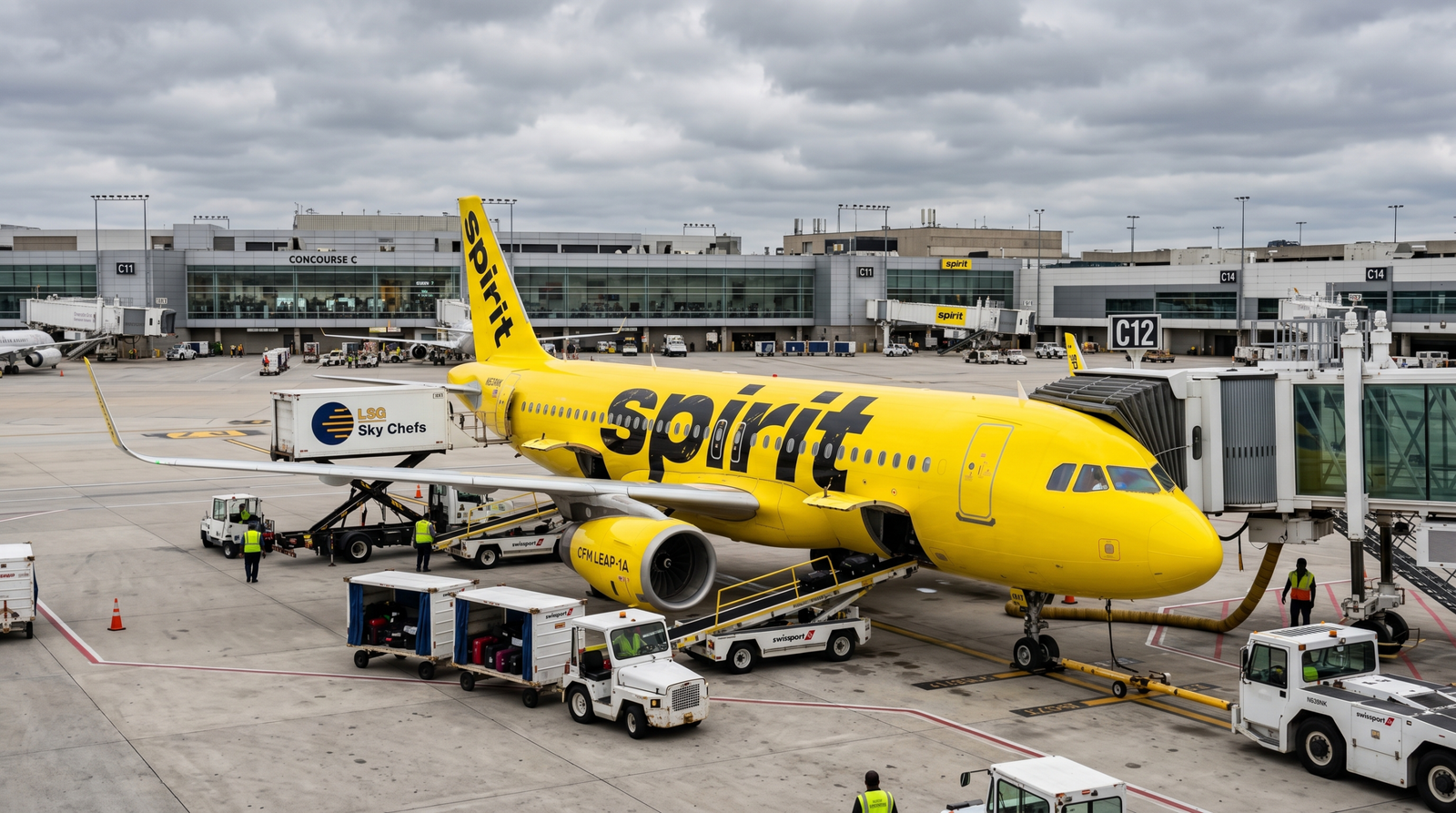

Spirit Airlines, known for its ultra-low-cost business model and distinctive yellow planes, could cease operations as early as this week amid escalating fuel prices, largely driven by geopolitical tensions in the Middle East. This development marks a significant crisis for the airline, which is currently undergoing its second bankruptcy since 2024. The airline had been showing some progress in its Chapter 11 bankruptcy proceedings before rising fuel costs created additional challenges that may hinder its recovery.
A spokesperson for Spirit Airlines declined to comment on rumors regarding the potential liquidation. Should the airline shut down, it would have an immediate impact on customers and result in the grounding of its fleet. The future of Spirit’s operations depends heavily on interest from potential buyers, although none have been formally announced.
JetBlue Airways, which attempted to acquire Spirit in 2024 for $3.8 billion but was blocked by regulators, could consider renewing efforts to purchase Spirit’s assets. Other airlines might also see value in Spirit’s relatively modern fleet and extensive East Coast network.
Spirit’s history spans 62 years, beginning in 1964 as Clippert Trucking Company. In 1974, it was reestablished as Ground Air Transport Inc., and by 1980, Michigan native Ned Homfeld launched the passenger-focused Charter One Airlines. Official operations began in 1983 with a focus on gambling destination charters to Atlantic City. Through the years, the airline expanded its routes to Florida, the Bahamas, Las Vegas, and Puerto Rico, eventually transitioning to scheduled air services in 1990.
In 1992, Charter One rebranded as Spirit Airlines and acquired four DC-9 jets, entering the commercial aviation market with affordable fares that included charging for extras like snacks and water—a model that continues to define the company.
Throughout the 1990s, Spirit expanded its routes to several major U.S. cities and thrived during an economic recession that challenged legacy carriers. The airline pursued mergers and partnerships but faced setbacks, such as a failed acquisition attempt by Delta’s regional carrier Comair in the mid-1990s amid growing safety concerns toward low-cost airlines.
After relocating its headquarters to Miramar, Florida, in 1999, Spirit continued growing its fleet, eventually standardizing on the Airbus A320 family starting in 2002. This fleet remains the basis for the airline’s operations today.
Spirit’s no-frills, low-cost approach has been both controversial and profitable. It pioneered fees for carry-on baggage as a way to reduce fuel consumption and minimize boarding delays. Despite criticism and regulatory fines over advertising practices, the airline has consistently increased passenger numbers and revenues, particularly from ancillary fees.
Efforts to attract premium flyers led to the introduction of upgraded seating options, including the Big Front Seat, representing a shift towards capturing higher-margin customers.
Labor disputes, such as a pilot strike in 2010 over wages and benefits, have occasionally disrupted operations, but the airline generally maintained profitability even during economic downturns.
The current crisis for Spirit Airlines is shaped by a combination of increasing fuel costs related to global conflicts, changing consumer preferences favoring premium travel, and financial struggles exacerbated by previous bankruptcies. If Spirit ceases operations, it will bring an end to a unique chapter in U.S. aviation history that began over six decades ago in the trucking industry and grew into a major player in low-cost air travel.