



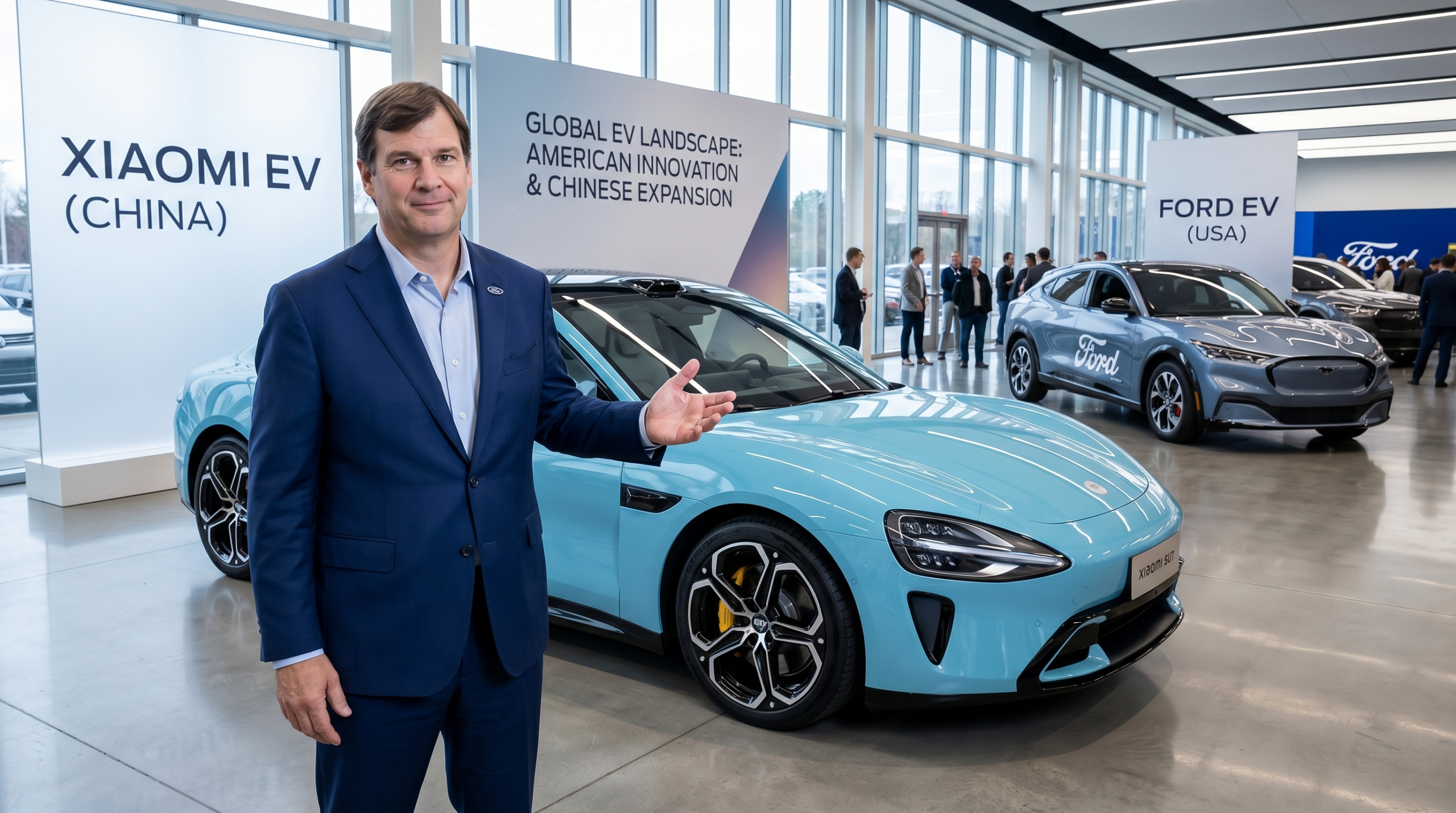

Ford CEO Jim Farley explained his decision to test-drive a Chinese electric vehicle (EV) from Xiaomi instead of a Tesla, highlighting the differing approaches to vehicle updates and market strategies. In an interview on the show “Rapid Response,” Farley stated that Tesla lacks an “updated vehicle” compared to Chinese automakers such as Xiaomi and BYD, which he described as “the best in the business” due to their cost structures, supply chains, and manufacturing expertise.
Farley spent six months driving a Xiaomi SU7 in 2024, a vehicle he expressed admiration for and reluctance to give up. He underscored the significance of Chinese automakers’ ability to offer affordable EVs, suggesting that Chinese companies are targeting a $30,000 price point, much lower than the $50,000 typical for early EV models. This price difference is particularly critical for US customers who seek pickups, utilities, and various body styles at more accessible prices.
“If we’re smart, we’ll take the cost competitiveness of BYD and then compete with that platform in parts of the market where we know our customers really well,” Farley said. He noted that the next wave of EV buyers in the US prioritizes affordability alongside diversity in vehicle types, a market segment where he believes Ford can compete effectively.
Farley has previously emphasized the need to respect and acknowledge China’s rapid progress in automobile technology, a stance he reiterated in multiple interviews. Earlier in 2024, he told another media program that the arrival of Chinese vehicles in the US market could be “devastating” to the American manufacturing industry, which he described as the country’s “heart and soul.”
Ford’s strategy appears to be shifting accordingly. The company recently announced a pivot from focusing solely on pure electric vehicles like the F-150 Lightning pickup to developing smaller, more affordable electric and hybrid vehicles. This transition is expected to cost Ford approximately $19.5 billion. Currently, Ford’s most affordable hybrid vehicle is the Maverick XL pickup, priced at about $28,000, while Tesla’s most affordable model, the Model 3, starts at nearly $37,000.
Tesla did not respond to requests for comment on Farley’s remarks. Meanwhile, Ford continues advancing its competitive edge by recognizing the influence of Chinese EV manufacturers and aiming to adapt its offerings to meet evolving customer demands in the US market.