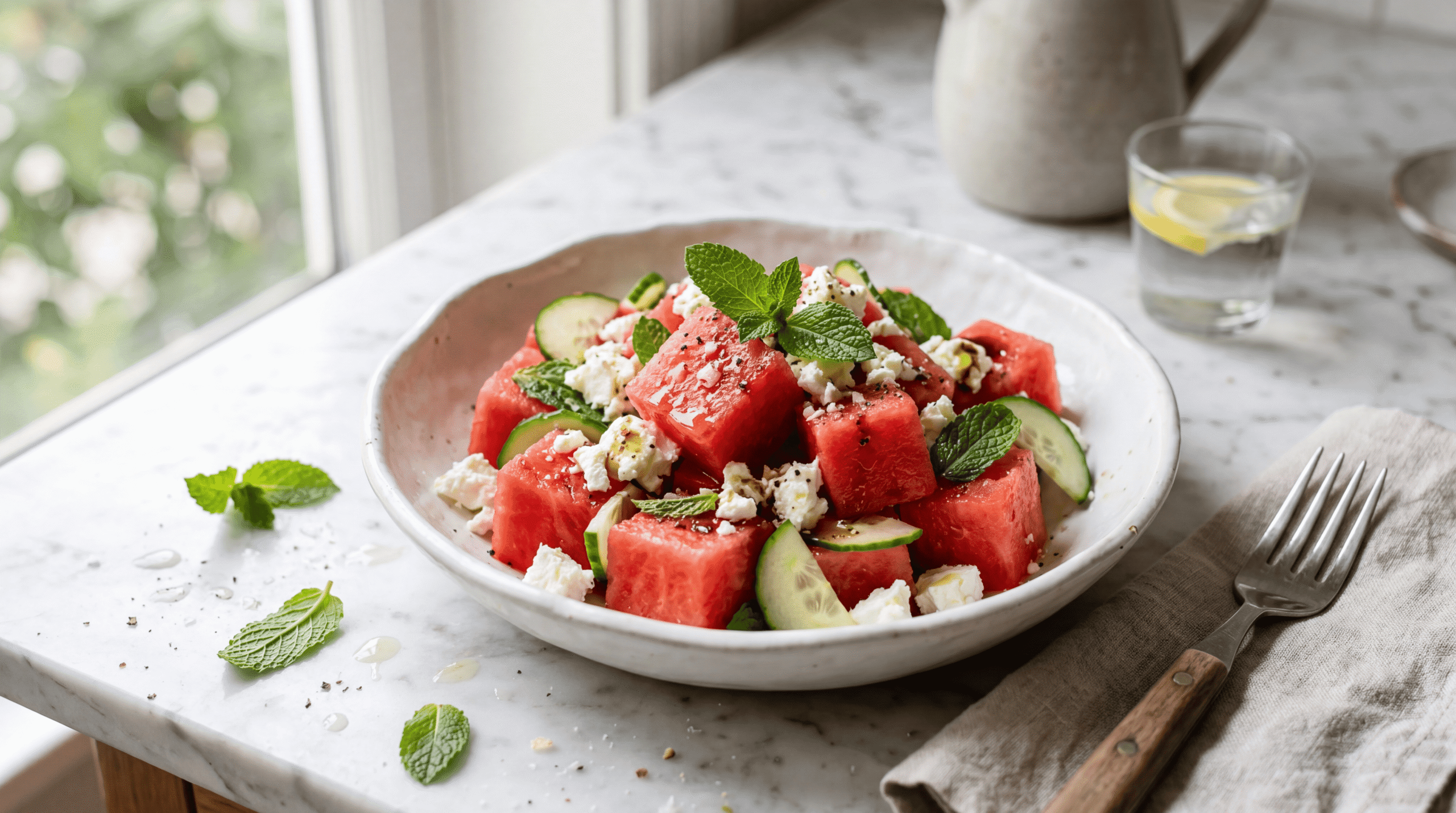

Here’s what most home cooks get wrong about watermelon salad: they treat it like a fruit bowl with cheese thrown in. They don’t understand that watermelon and feta create one of the most scientifically perfect flavor pairings in culinary history—a combination that doesn’t just taste good, but actually makes the watermelon healthier for you to eat.
After years of studying flavor compounds in Barcelona and working with molecular gastronomy in Tokyo, I can tell you this: the watermelon-feta combination isn’t trendy Instagram food. It’s brilliant food chemistry that home cooks accidentally discovered, then consistently execute poorly.
The Lycopene Problem Nobody Talks About
Watermelon contains more lycopene per serving than raw tomatoes—about 12 milligrams per cup. Lycopene is the carotenoid that gives watermelon its red color and provides powerful antioxidant protection against cellular damage. Research published in the Journal of Agricultural and Food Chemistry shows lycopene may reduce cardiovascular disease risk by up to 17%.
But here’s what your grandmother didn’t know: lycopene is fat-soluble. Your body cannot absorb it without dietary fat present in the same meal. When you eat plain watermelon, you’re absorbing only a fraction of its lycopene content—maybe 20-30% at best.
This is where feta performs its molecular magic. The milk fat in feta cheese acts as a transport vehicle for lycopene. When you eat watermelon with full-fat feta, your lycopene absorption increases by up to 400%. Suddenly, that Instagram-pretty salad becomes a nutritional powerhouse.
Why Sweet and Salty Actually Balance (The Science)
The watermelon-feta pairing works because of taste receptor competition. Your tongue has separate receptor sites for sweet and salty compounds. When you activate both simultaneously, they don’t just coexist—they modulate each other’s intensity through a process called taste suppression.
Watermelon contains about 6-8% natural sugars (primarily fructose). Eaten alone, this sugar concentration can feel cloying and one-dimensional. Feta cheese contains approximately 1.5% sodium chloride. When combined, the sodium ions in feta reduce your perception of sweetness by about 30%, while the sugars in watermelon decrease your perception of saltiness by roughly 25%.
The result? Neither ingredient tastes too sweet or too salty. Instead, you experience what food scientists call “flavor balance”—where contrasting tastes create a third, more complex sensation that neither ingredient produces alone.
The Hidden Hydration Advantage
Watermelon is 92% water, making it one of the most hydrating foods you can eat. But most people don’t realize that watermelon also contains significant electrolytes: 170mg potassium per cup, plus smaller amounts of magnesium and calcium.
When you add feta (which contributes sodium), cucumber (more potassium), and a proper acid-fat dressing, you’ve created what sports nutritionists call an “isotonic solution”—a naturally balanced electrolyte replacement that rivals commercial sports drinks. Food & Wine’s nutrition analysis confirms this combination provides better post-exercise hydration than water alone.
This is why traditional Mediterranean cultures have eaten watermelon with salty cheese for centuries during hot weather. It wasn’t tradition—it was survival intelligence.
Why Your Watermelon Salad Turns Watery (And How to Fix It)
The biggest mistake I see: home cooks cut watermelon too early and let it sit. Watermelon flesh contains cells filled with pressurized water. When you cut those cells, you rupture their membranes and release that water through osmosis. Within 20 minutes, your beautiful salad becomes a soup.
The professional fix: cut watermelon into large cubes (at least 1.5 inches), not dainty pieces. Larger pieces have a lower surface-area-to-volume ratio, meaning less water can escape. And here’s the critical part: dress the salad no more than 10 minutes before serving.
Second mistake: they oversalt or use low-quality feta. Cheap feta is often brined in excessive salt and lacks the creamy texture of authentic Greek or Bulgarian feta. The oversalting draws even more water out of the watermelon through osmotic pressure. Use quality feta packed in brine, rinse it briefly, then crumble it yourself. The texture and moisture control will transform your salad.
The Mint-Cucumber Science You Need to Know
Mint isn’t just a pretty garnish. Mint contains menthol compounds that activate TRPM8 receptors—the same cold-sensing receptors activated by actual cold temperatures. This creates a genuine cooling sensation that makes the salad feel more refreshing, even at room temperature.
Cucumber amplifies this effect through its high water content and the presence of caffeic acid, a compound with natural anti-inflammatory properties. Serious Eats food lab research shows cucumber and mint together reduce the perceived temperature of foods by 2-3 degrees Fahrenheit.
For maximum impact: slap your mint leaves before adding them to the salad. Literally slap them between your palms. This ruptures the essential oil glands and releases up to 60% more aromatic compounds. Your salad will smell and taste dramatically more vibrant.
The Acid Factor: Why Lime Beats Lemon
Most recipes call for lemon, but lime is scientifically superior for this application. Lime juice has a pH of about 2.0-2.4, compared to lemon’s 2.2-2.6. That slightly lower pH means lime provides more acidity per volume, which you need to cut through the fat in feta and balance the sweetness of watermelon.
More importantly, lime contains higher concentrations of volatile terpenes—specifically limonene and citral—that complement watermelon’s subtle aromatic compounds better than lemon’s more floral profile. This isn’t opinion; it’s measurable in gas chromatography analysis.
The ratio matters: you want 1 tablespoon acid per 4 cups watermelon. Any less, and the salad tastes flat. Any more, and the acid overwhelms the delicate watermelon flavor.
Common Mistakes That Ruin This Salad
Mistake #1: Using unripe or overripe watermelon. Unripe watermelon lacks flavor complexity and sweetness. Overripe watermelon has already begun converting sugars to alcohols, creating off-flavors. Choose watermelon that feels heavy for its size (high water content) and has a creamy yellow spot where it rested on the ground (not white or green).
Mistake #2: Adding avocado too early. Avocado contains polyphenol oxidase, an enzyme that causes browning when exposed to oxygen. Add avocado immediately before serving, or toss it separately in lime juice to denature the enzyme and prevent oxidation.
Mistake #3: Refrigerating for too long. Cold temperatures suppress flavor perception. Watermelon salad should be served cool (around 55-60°F), not ice cold. Take it out of the refrigerator 15 minutes before serving for optimal flavor expression.
The Professional Assembly Technique
Here’s how to build this salad like you’re working a Michelin kitchen: Cut watermelon last and keep it separate until the final moment. Make your lime dressing with a 3:1 oil-to-acid ratio—this creates a proper emulsion that coats ingredients without making them soggy.
Slice red onion paper-thin (use a mandoline if you have one) and soak in ice water for 10 minutes to remove harsh sulfur compounds that overpower the delicate watermelon. Pat everything dry before assembly. Moisture is your enemy.
Layer ingredients in this order: watermelon on the bottom, cucumber next, then crumbled feta, drained onions, avocado, and herbs on top. Drizzle dressing over everything and toss gently—only 3-4 folds total. Over-mixing breaks down the watermelon structure and creates that watery mess you’re trying to avoid.
Why This Matters for Your Health
One serving of properly composed watermelon feta salad delivers: 180mg potassium (heart health), 2,500 IU vitamin A (eye and skin health), 20mg vitamin C (immune function), and 12mg bioavailable lycopene (cardiovascular protection). The feta provides 6-8g protein and the healthy fats necessary for vitamin absorption.
This isn’t just a pretty summer side dish. It’s a nutritionally complete food that hydrates, nourishes, and satisfies in ways plain watermelon never could. The Mediterranean cultures that invented this combination understood something profound about food synergy that modern nutrition science is only now confirming.
Your One-Technique Takeaway
Tonight, if you make only one change to how you prepare watermelon salad, do this: cut your watermelon into large cubes and dress it only at the last possible moment. This single technique—controlling when water is released from the cells—will transform your salad from watery disappointment to restaurant-quality perfection. Master this, and suddenly summer entertaining feels effortless, impressive, and rooted in real culinary science rather than guesswork.