




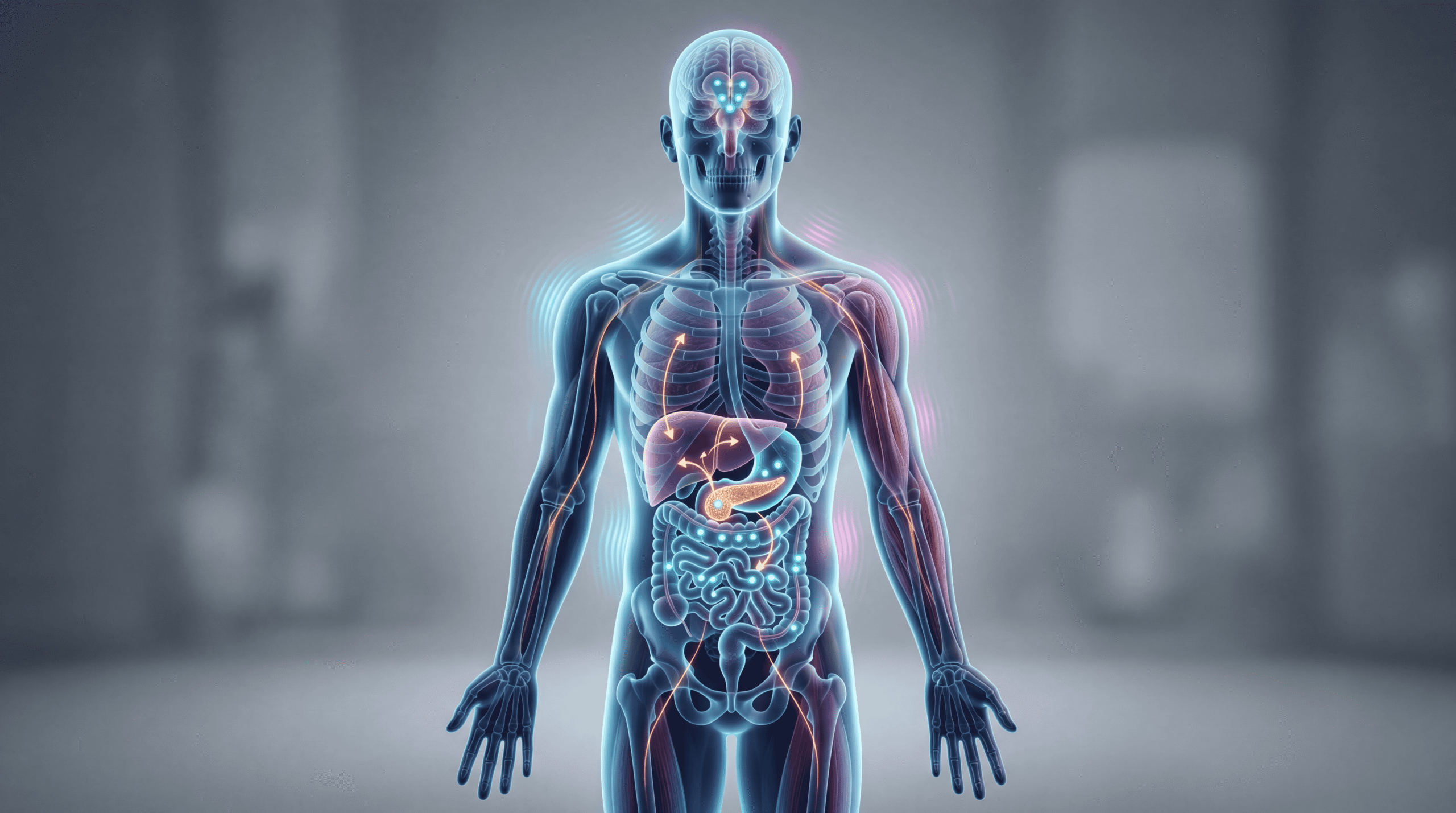

Let’s start with what nobody’s telling you: GLP-1 drugs like Ozempic and Mounjaro don’t just make you less hungry. They fundamentally alter how your body regulates temperature, metabolizes nutrients, and maintains muscle mass. The side effects you’re experiencing aren’t “weird” or “rare”—they’re predictable consequences of these metabolic shifts that your doctor probably didn’t explain.
I’ve been prescribing GLP-1 receptor agonists for over a decade, first for diabetes, now increasingly for weight loss. What concerns me isn’t that these drugs have side effects—every medication does. What concerns me is that patients are discovering these effects on Reddit instead of hearing about them from their physicians during informed consent.
The Biology Behind GLP-1: What Actually Happens in Your Body
GLP-1 (glucagon-like peptide-1) is a naturally occurring hormone your intestines release after eating. It does three primary things: it tells your pancreas to release insulin, it slows how fast food leaves your stomach, and it signals your brain that you’re full. The drugs we’re using—semaglutide (Ozempic, Wegovy), tirzepatide (Mounjaro, Zepbound), and others—are synthetic versions that last much longer than your natural hormone.
Here’s the mechanism your doctor should have explained: These drugs bind to GLP-1 receptors throughout your body, not just in your gut and brain. You have these receptors in your heart, kidneys, liver, muscles, and crucially, in the hypothalamus—your body’s thermostat. When you flood these receptors with pharmaceutical levels of GLP-1 agonists, you’re not just affecting appetite. You’re changing fundamental metabolic processes.
According to multiple studies published in the Journal of Clinical Endocrinology & Metabolism, GLP-1 receptors influence thermogenesis, the process by which your body generates heat. This explains why patients report feeling cold—it’s not just because they’re losing insulating fat tissue. The drug is literally changing how your hypothalamus regulates core body temperature.
The Six “Hidden” Side Effects Nobody Warned You About
1. Temperature Dysregulation: The Chills and Hot Flashes
Patients on GLP-1 drugs frequently report feeling freezing cold, then suddenly flushed and overheated. This isn’t psychological. Your hypothalamus contains GLP-1 receptors that help regulate body temperature, and when you’re on these medications, that regulation gets disrupted.
The mechanism: GLP-1 receptor activation affects brown adipose tissue (BAT), the metabolically active fat that generates heat. Studies show that GLP-1 agonists can alter BAT activity, leading to impaired thermogenesis. Additionally, rapid weight loss means you’re losing subcutaneous fat that provided insulation, while simultaneously your metabolic rate is changing.
2. Hair Loss: The Telogen Effluvium Effect
About 3-6 months into treatment, many patients notice significant hair shedding. This is telogen effluvium—a stress response where hair follicles prematurely enter the resting phase. But it’s not just the stress of weight loss.
The real culprit: Rapid weight loss combined with inadequate protein intake. When you’re eating 800-1200 calories daily (which many patients do on these drugs because the appetite suppression is so profound), you’re not consuming enough protein to maintain hair follicle health. Your body prioritizes vital organs over hair growth. NIH research on caloric restriction shows that protein deficiency during rapid weight loss triggers hair follicle shutdown within 2-3 months.
3. Gastrointestinal Paralysis: Beyond Nausea
Everyone knows about the nausea and vomiting. What they don’t tell you is that GLP-1 drugs slow gastric emptying so dramatically that some patients develop gastroparesis-like symptoms that persist even after stopping the medication.
Here’s what’s happening: GLP-1 receptors in your stomach wall slow peristalsis, the wave-like contractions that move food through your digestive tract. In clinical trials, gastric emptying times increased by 70-200% in some patients. Food can sit in your stomach for 6-8 hours instead of 2-3 hours. This isn’t just uncomfortable—it can lead to bacterial overgrowth, reflux, and nutritional deficiencies.
The concerning part: We don’t yet have long-term data on whether this gastric slowing fully reverses after stopping the medication. Some case reports suggest persistent delayed gastric emptying months after discontinuation.
4. Muscle Loss: The Hidden Cost of Rapid Weight Loss
The average patient on GLP-1 drugs loses 15-20% of their body weight. Sounds great, right? Except 25-40% of that weight loss is lean muscle mass, not just fat. That’s catastrophically high compared to traditional diet and exercise, where muscle loss is typically 10-15% of total weight lost.
Why this matters: Muscle is metabolically active tissue. Every pound of muscle you lose drops your resting metabolic rate by about 6-10 calories per day. Lose 20 pounds of muscle, and you’ve just reduced your daily calorie burn by 120-200 calories. This sets you up for rapid weight regain when you stop the medication.
The mechanism nobody explains: When appetite is suppressed to the point where you’re eating minimal calories, and you’re not getting adequate protein (at least 0.7-1.0 grams per pound of ideal body weight), your body has no choice but to break down muscle for amino acids. GLP-1 drugs don’t cause muscle loss directly—the severe caloric deficit they create does.
5. Gallbladder Disease and Gallstones
The FDA now requires warnings about increased gallbladder problems with GLP-1 drugs. Clinical trials showed a 1.5-3.5 fold increase in cholecystitis (gallbladder inflammation) and cholelithiasis (gallstones).
The pathophysiology: Rapid weight loss increases cholesterol concentration in bile, making stone formation more likely. Additionally, the slowed gastric emptying means your gallbladder doesn’t contract as frequently or as completely. Bile sits stagnant, and cholesterol crystallizes. A 2023 study in The New England Journal of Medicine found that patients losing more than 1.5 pounds per week on GLP-1 drugs had the highest gallstone risk.
6. Facial Volume Loss: The “Ozempic Face”
Patients and plastic surgeons have coined the term “Ozempic face” to describe the gaunt, aged appearance that develops with rapid weight loss. This isn’t vanity—it’s a legitimate concern about where fat is being lost.
What’s actually happening: Facial fat pads provide structural support and youthful contours. With rapid weight loss, you lose subcutaneous fat (including facial fat) disproportionately fast compared to visceral fat (the dangerous fat around organs). You end up looking hollow-cheeked and older, even though your health markers may be improving. This is exacerbated by the muscle loss mentioned earlier—you’re losing the structural support from both fat and muscle.
What the Media Consistently Gets Wrong About GLP-1 Drugs
Here’s what drives me crazy about most GLP-1 coverage: The media presents these drugs as either miracle cures or dangerous poisons. Both narratives are wrong.
Myth #1: “These are just appetite suppressants.” No. They’re metabolic modifiers that affect multiple organ systems. The appetite suppression is just one mechanism among many.
Myth #2: “Side effects are mild and temporary.” Many are neither. Gastroparesis symptoms can persist. Muscle loss is cumulative. Gallstones require surgery. These aren’t minor inconveniences.
Myth #3: “You can just stop taking them whenever you want.” Technically yes, but the rebound weight gain is often rapid and can exceed your starting weight. Why? Because you’ve lost metabolically active muscle tissue and your body’s set point hasn’t adjusted. A 2024 study in The Lancet showed that patients regained an average of 14% of their body weight within one year of stopping semaglutide, with two-thirds regaining even more.
Myth #4: “These drugs are safe for anyone who wants to lose weight.” The FDA approved them for patients with BMI ≥30 or BMI ≥27 with weight-related comorbidities. Using them for cosmetic weight loss in people who don’t meet these criteria isn’t just off-label—it’s medically questionable given the side effect profile.
The most dangerous myth: “Natural weight loss is always better than medication.” Not necessarily. For someone with a BMI of 38 and type 2 diabetes, the cardiovascular benefits of GLP-1 drugs likely outweigh the risks. But for someone with a BMI of 26 who wants to lose 15 pounds for their wedding? The risk-benefit calculation is completely different.
Long-Term Effects: What We Know and What We’re Guessing
Let’s be honest: We have strong data for 2-3 years of use, decent data for 4-5 years, and we’re speculating beyond that. The longest-running trials are still ongoing.
What we know for certain: Cardiovascular benefits are real. The SELECT trial showed that semaglutide reduced major adverse cardiovascular events by 20% in patients with established cardiovascular disease. That’s not trivial.
What concerns me: We don’t have 10-15 year data on continuous use. We don’t know if the gastroparesis risk increases with longer duration. We don’t know if there are cumulative effects on pancreatic function (despite current data looking reassuring). Most importantly, we don’t know what happens to patients who cycle on and off these medications repeatedly—which is what most people will do given the cost and side effects.
The muscle loss issue is particularly concerning for long-term use. If you’re losing 25-40% muscle mass with each weight loss cycle, then regaining primarily fat with each weight regain cycle, you’re progressively worsening your body composition. After three cycles, you could be significantly worse off than when you started, even if your weight is the same.
The Mechanisms Behind Short-Term vs Long-Term Side Effects
Short-term side effects (first 3 months) are primarily related to the gastrointestinal effects: nausea, vomiting, diarrhea, constipation. These occur because GLP-1 receptors in your gut are being overstimulated. Most patients develop tolerance as receptor sensitivity adjusts.
Medium-term side effects (3-12 months) include hair loss, muscle loss, and gallbladder issues. These are consequences of the rapid weight loss and caloric restriction rather than direct drug effects. Hair loss typically peaks around month 4-6 and should improve if you’re consuming adequate calories and protein.
Long-term concerns (beyond 1 year) are where we enter murkier territory. Persistent gastroparesis, chronic muscle loss with continued use, potential effects on bone density (less weight-bearing stress plus possible calcium and vitamin D malabsorption), and the psychological dependence that develops when patients realize they regain weight rapidly upon discontinuation.
One mechanism that doesn’t get enough attention: GLP-1 receptors in the brain affect reward pathways. Some patients report losing interest not just in food but in other pleasurable activities. This isn’t depression—it’s a direct neurological effect. We need more research here, but anecdotal reports are accumulating.
What You Should Actually Do If You’re Considering or Currently Taking GLP-1 Drugs
Before starting: Get comprehensive labs including vitamin D, B12, iron studies, and thyroid function. Establish baseline muscle mass using DEXA scan or bioimpedance analysis. Have a frank conversation with your doctor about your goals—are you trying to prevent diabetes and heart disease, or are you trying to fit into a smaller clothing size? The answer should determine whether these drugs are appropriate.
While taking: Prioritize protein intake above everything else. Aim for 100-120 grams daily minimum, even if it’s the only thing you eat that day. Resistance training is non-negotiable—at least three times per week focusing on compound movements. This is the only way to preserve muscle mass.
Supplement appropriately: B-complex vitamins, vitamin D3 (2000-4000 IU daily), magnesium, and a high-quality multivitamin. The slowed gastric emptying and reduced food intake almost guarantee micronutrient deficiencies without supplementation.
Monitor for gastroparesis symptoms: If you’re experiencing early satiety, bloating, or food sitting in your stomach for hours, talk to your doctor about dose reduction or taking breaks from the medication. Persistent gastroparesis can become a chronic problem.
When stopping: Don’t go cold turkey if you’ve been on these drugs for more than six months. Taper down gradually over 4-8 weeks while simultaneously increasing calories slowly. Work with a dietitian who understands metabolic adaptation. Your maintenance calorie needs will be lower than predicted by standard calculators because of muscle loss.
Consider this: If you’ve lost significant muscle mass, spend 3-6 months in a structured recomp program (slight calorie surplus plus progressive resistance training) before attempting to maintain your new weight. Otherwise, you’re fighting a losing battle against a suppressed metabolic rate.
The Questions Your Doctor Should Be Asking But Probably Isn’t
Are you strength training at least three times per week? If not, you shouldn’t be on these drugs. The muscle loss will be catastrophic.
Are you tracking your protein intake? If you can’t reliably consume 100+ grams of protein daily, you’re going to have problems.
Do you have a history of eating disorders? GLP-1 drugs can be psychologically dangerous for people with complicated relationships with food. The severe appetite suppression can reinforce restrictive eating patterns.
What’s your plan for when you stop? Because you will stop, either by choice or necessity. If your doctor doesn’t have a clear exit strategy that includes metabolic adaptation, muscle rebuilding, and psychological support, you’re not getting adequate care.
Have you tried comprehensive lifestyle modification first? I don’t mean a half-hearted attempt. I mean working with a registered dietitian for 6-12 months, consistent exercise program, sleep optimization, stress management. If you haven’t truly exhausted non-pharmaceutical options, jumping to GLP-1 drugs might be premature.
What This Means for Your Decision
GLP-1 drugs are powerful tools with legitimate medical applications. For someone with a BMI over 35, type 2 diabetes, and cardiovascular disease, the benefits likely outweigh the risks. The weight loss and metabolic improvements can be life-saving.
But these aren’t casual weight loss drugs. The side effects are real, some are severe, and we don’t have complete long-term safety data. The muscle loss alone should give anyone pause, especially if you’re older or already have low muscle mass.
If you’re taking these medications, you need to be hypervigilant about protein intake, resistance training, and micronutrient supplementation. You need a doctor who understands the physiology, not just someone who writes prescriptions. And you need realistic expectations about what happens when you eventually stop.
The media narrative of “miracle drug” or “dangerous poison” both miss the point. These are serious metabolic medications with significant effects throughout your body, and they deserve serious medical supervision and patient education.
Your one action step: If you’re on a GLP-1 drug and haven’t had your muscle mass measured or calculated your protein needs, schedule both this week—because preventing muscle loss is the single most important factor determining whether your weight loss will be sustainable or whether you’ll end up worse off than when you started.