
Tattoos can mean very different things depending on the person wearing them. While some designs are chosen purely for style, others carry deeply personal stories connected to identity, survival, relationships, or difficult life experiences.
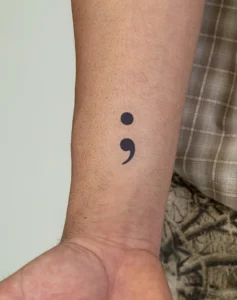
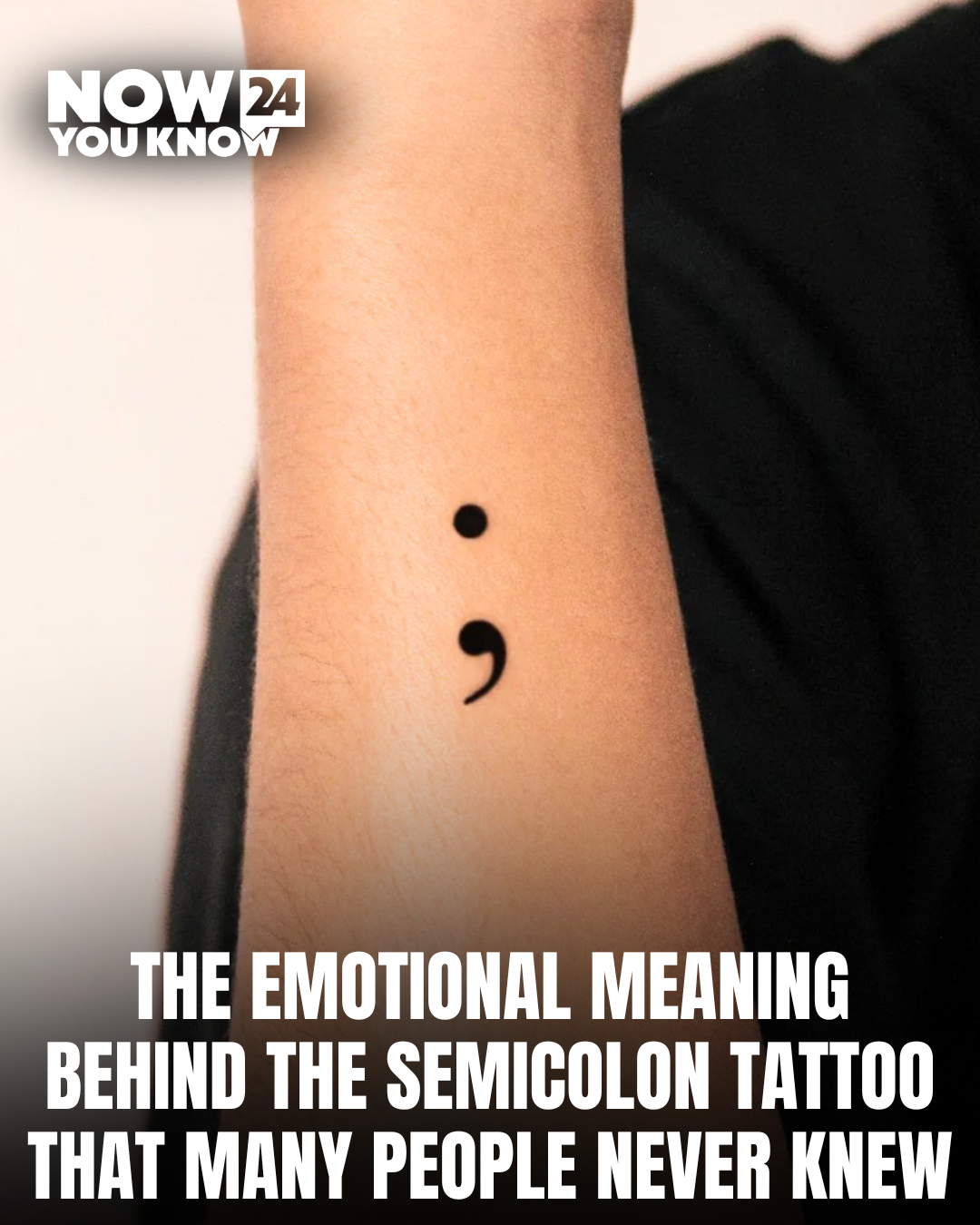
One of the most emotionally significant tattoo symbols in recent years has become the semicolon tattoo, which many people now recognize as a message connected to mental health awareness and survival.
Why the semicolon tattoo matters
A semicolon tattoo is often associated with people who have struggled with depression, suicidal thoughts, self-harm, or other mental health challenges.
The symbol represents a sentence that could have ended but did not continue. In writing, a semicolon is used when an author chooses not to end a sentence completely.
For many people, that idea became a powerful metaphor for life itself.
Rather than a full stop representing an ending, the semicolon symbolizes continuing forward despite hardship, pain, or moments where someone may have felt close to giving up.
A symbol tied to mental health awareness
The semicolon movement gained international attention through Project Semicolon, a mental health awareness initiative encouraging conversations around suicide prevention and emotional support.
Over time, the tattoo became a quiet way for people to share survival stories, support loved ones, or remind themselves of personal resilience.
Mental health professionals have also noted that symbols like these can help some individuals feel connected to broader support communities.
Other tattoos with hidden meanings
The semicolon is not the only tattoo associated with deeper personal meaning.
Butterfly tattoos are often connected to transformation, healing, or starting a new chapter in life. Some people also choose serotonin molecule tattoos, referencing the brain chemical linked to mood and happiness.
Another design sometimes discussed online is the “five dots” tattoo, which has historically been associated in some regions with time spent in prison. However, meanings can vary widely depending on culture and personal interpretation.
Tattoos and emotional recovery
For some individuals, tattoos can also represent recovery after traumatic experiences.
Many people choose body art to cover scars connected to surgery, accidents, or self-harm, helping them reclaim confidence and privacy while turning painful reminders into symbols of healing.
Psychologists have noted that tattoos can sometimes serve as emotional markers, helping people process major life events or express personal identity in visible ways.
Growing openness around mental health
The popularity of semicolon tattoos has also reflected broader changes in public conversations around mental health.
In recent years, more celebrities, athletes, and public figures have openly discussed depression, anxiety, and emotional struggles, helping reduce stigma around seeking support.
For many people, the small punctuation mark has become more than just a tattoo. It represents survival, resilience, and the decision to keep going.