
Apple just patched a bug that let the FBI read Signal messages from a deleted app. Not because Signal failed. Not because encryption broke. But because iOS kept a database of notifications that survived app deletion, defying every user expectation about how “delete” works.
CVE-2026-28950 is a logging issue in iOS Notification Services. The press called it a vulnerability. Engineers call it a design choice that aged poorly.
What Actually Broke in iOS
When you delete an app on iOS, you expect its data to vanish. For years, that’s been mostly true — app sandboxes get wiped, caches clear, preferences reset. But iOS maintains a separate notification database at the system level, outside any app’s control.
This database exists for legitimate reasons. iOS needs to track notification history for features like notification grouping, Siri suggestions, and Screen Time reports. The problem: Apple never implemented proper cleanup when apps get deleted.
So when someone installed Signal, received encrypted messages as notifications, then deleted Signal, those notification payloads stayed in /var/mobile/Library/UserNotifications/. Forever. Accessible to anyone with forensic tools and physical device access.
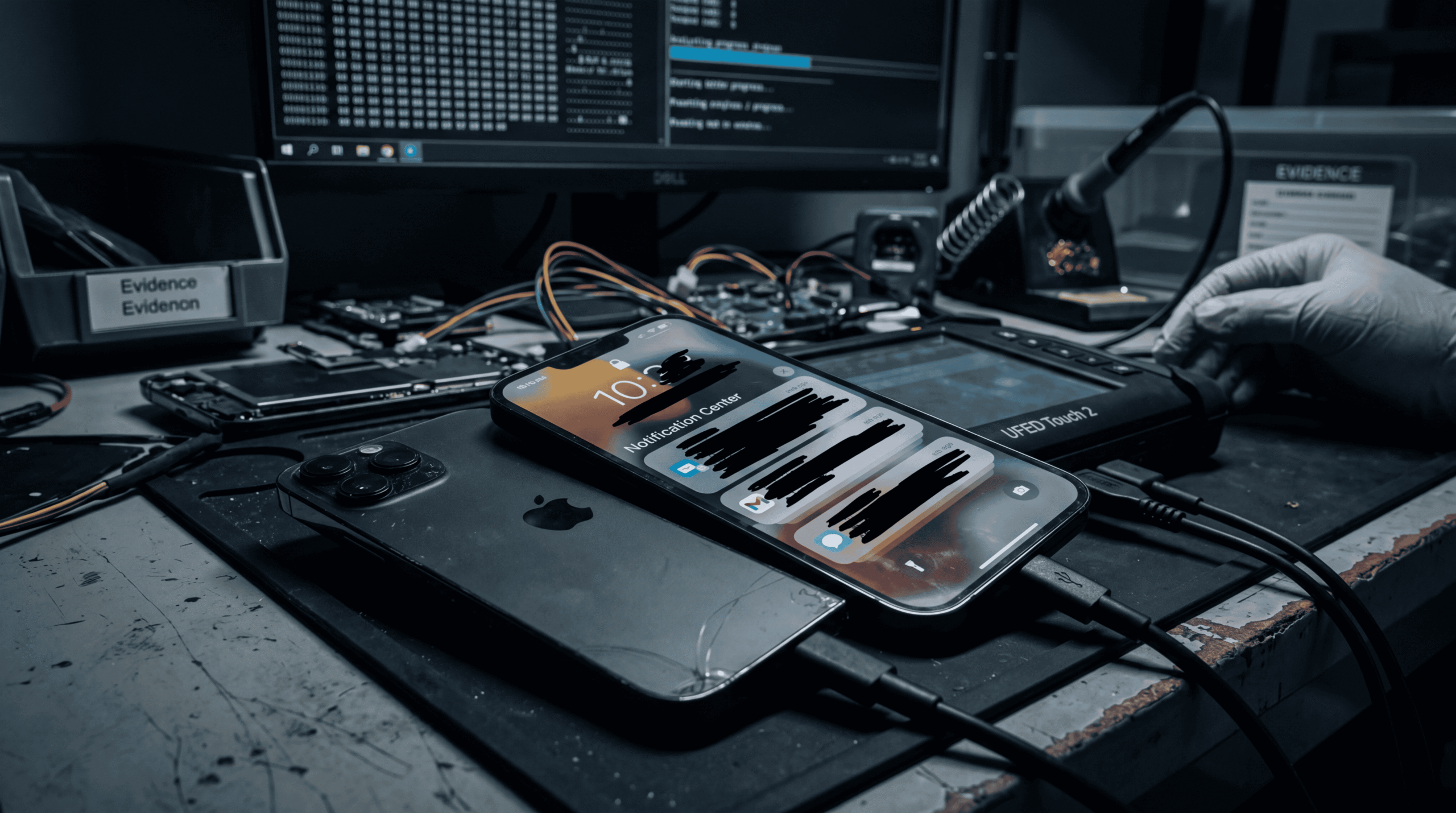
According to a 404 Media investigation, the FBI used exactly this technique during a criminal investigation. They imaged the suspect’s iPhone, parsed the notification database, and recovered Signal message content from an app that had been deleted months earlier.
Why This Matters More Than You Think
This isn’t just about Signal. Every app that sends notifications with sensitive content — banking alerts, medical results, authentication codes, private messages — was affected. The scope is massive.
iOS has roughly 1.5 billion active devices. CVE-2026-28950 affected every iPhone running iOS 18 through iOS 26 until the April 2026 patch. That’s potentially hundreds of millions of devices storing notification history that users believed was deleted.
The real issue isn’t the bug itself. It’s the systemic failure in Apple’s privacy architecture. Apple markets iOS as the gold standard for user privacy. They run ads about how “what happens on your iPhone stays on your iPhone.” Then they ship a notification system that keeps deleted app data indefinitely.
What The Press Got Wrong
Most coverage framed this as a Signal vulnerability. Wrong. Signal’s encryption worked perfectly. The protocol is sound. The app does everything right.
The problem lives entirely in iOS. When Signal sends an encrypted message, it also sends a notification payload to Apple’s Push Notification Service. That payload contains the message preview — the text you see on your lock screen. It’s decrypted on-device, displayed briefly, then supposed to be forgotten.
But iOS wrote it to persistent storage. And never cleaned it up. This is Apple’s bug, not Signal’s.
Some articles suggested users should disable notification previews. True, but that’s treating symptoms. The real fix required Apple to change how iOS handles notification lifecycle management.
The Technical Fix Apple Shipped
Apple’s patch does two things. First, it implements proper data redaction when apps are deleted. The notification database now gets scrubbed of entries associated with removed apps.
Second, iOS now applies stricter retention policies to notification history. Instead of keeping everything forever, the system prunes old entries based on age and relevance. Apple hasn’t published the exact retention window, but testing suggests it’s around 30 days for standard notifications.
The fix ships in iOS 26.1 and iOS 18.4.1. Both updates are available now for devices going back to iPhone XR and iPad Air 3rd generation.
One critical detail: the patch is retroactive. When you install the update, iOS immediately purges any notification data from deleted apps. You don’t need to manually clear anything. The cleanup happens automatically during the update process.
Signal confirmed on their blog that CVE-2026-28950 is the exact bug the FBI exploited. They praised Apple’s response time — the company patched within days of being notified, not months.
Who Actually Wins and Loses
Winners: Law enforcement just lost a powerful forensic technique. The notification database was a goldmine for investigators because it existed outside app control and survived factory resets if the device was backed up. That’s over.
Losers: Anyone who assumed “delete” meant “delete” before April 2026. Your old devices, your backups, your iCloud history — all potentially contain notification payloads you thought were gone. If you’re a journalist, activist, or anyone with a threat model that includes state actors, you need to assume compromised devices are fully compromised.
Apple wins in the long term. Fast patching and transparent disclosure rebuild trust. But they took a credibility hit. When you position yourself as the privacy company, you can’t have bugs that undermine the core promise.
Signal wins too. They proved their architecture works. Even when the OS fails, end-to-end encryption contains the blast radius. The vulnerability exposed notification previews, not message history or contact lists. That’s exactly how defense in depth should work.
What This Means for Platform Trust
This bug reveals a deeper truth about mobile platforms: you never control the full stack. Apps run in sandboxes, but the OS mediates everything. Notifications, location services, background processes — all of it lives in platform-controlled space.
Developers building privacy-critical apps face an impossible choice. Use platform notification services and accept you’re trusting Apple or Google’s implementation. Or build your own notification system and sacrifice the user experience that drives adoption.
Most choose trust. Signal chose trust. It almost worked. The protocol held. The crypto held. But the platform’s data retention policies broke the promise.
For founders: if you’re building anything that touches sensitive data, audit how your platform partner handles system-level persistence. Don’t assume ephemeral means ephemeral. Don’t assume deleted means deleted. Test it. Verify it. Document the gaps.
The Fix You Can Apply Today
Update to iOS 26.1 or iOS 18.4.1 immediately. This isn’t optional. The patch is small, the install is fast, and the risk of not updating is real.
For Signal users specifically: open Settings, go to Notifications, and under Notification content, select either “Name Only” or “No Name or Content.” This prevents message text from appearing in notifications at all. Slightly less convenient. Significantly more secure.
This setting only affects future notifications. It doesn’t retroactively scrub old data. That’s why the OS update matters — it handles cleanup of historical notification storage.
If you’re running older devices that won’t get the patch (anything before iPhone XR), you need to decide whether to keep using them for sensitive communications. The notification database vulnerability isn’t getting fixed on those devices. Period.
What This Teaches Us About Security
The highest-profile security failures rarely come from broken crypto or clever exploits. They come from mismatched assumptions between what developers promise and what platforms deliver.
Signal promised end-to-end encryption. They delivered. But they couldn’t promise the OS wouldn’t keep plaintext copies of notification payloads. That’s outside their control.
Apple promised privacy. They mostly delivered. But they designed a notification system that prioritized features over data minimization. That’s a values choice, not a technical limitation.
The fix is straightforward: iOS should never persist decrypted notification content longer than necessary to display it. Apple now agrees. It took an FBI investigation and public disclosure to get there.
This bug proves that privacy isn’t a feature you add — it’s a design constraint you enforce from day one, because every platform will eventually face an adversary with physical access and forensic tools.