
The artificial intelligence hardware market is witnessing a significant strategic shift as Google introduces its latest generation of custom AI chips, explicitly designed to address two distinct phases of AI development. The tech giant’s announcement of its eighth-generation Tensor Processing Units (TPUs) represents a calculated move to capture market share from Nvidia, which currently dominates the AI chip industry.
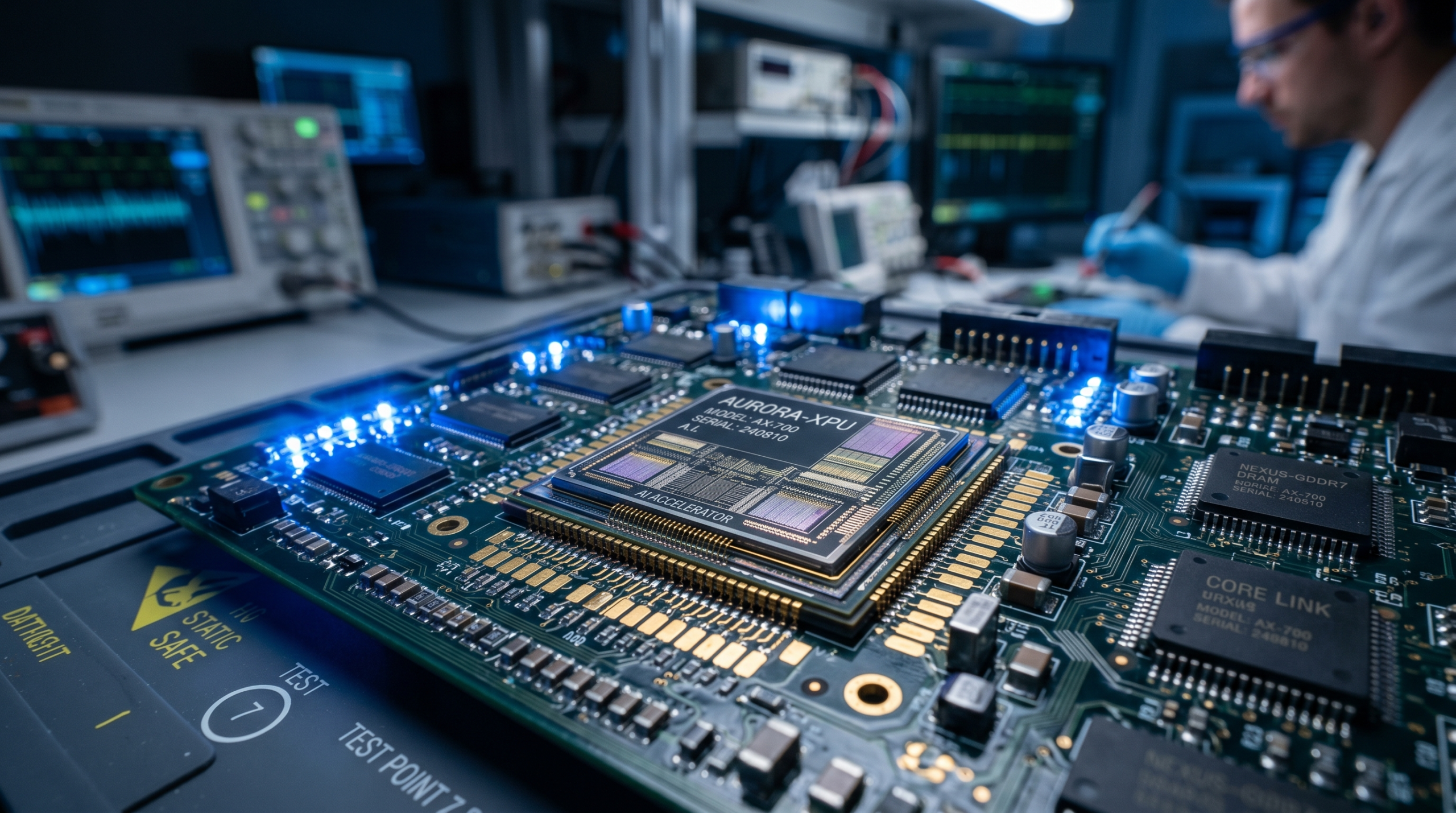
For the first time in its decade-long chip development history, Google is dividing its TPU line into two specialized variants: the TPU 8t for training large-scale AI models and the TPU 8i optimized for inference operations. Both chips are scheduled for release later in 2026, marking a pivotal moment in Google’s hardware strategy.
The distinction between training and inference represents a fundamental shift in how the AI industry approaches computational resources. Training involves teaching AI models to recognize patterns and make predictions using vast datasets, requiring immense computational power upfront. Inference, on the other hand, is the process of applying these trained models to real-world tasks—essentially putting the AI to work. As AI applications become more sophisticated and widespread, the demand for efficient inference processing has skyrocketed.
Google Cloud CEO Thomas Kurian characterized this dual-chip approach as a “natural evolution” during a recent press briefing. The company’s infrastructure leaders, Amin Vahdat and Mark Lohmeyer, emphasized that AI is transforming from simply answering questions to reasoning and taking autonomous actions—a transition that demands specialized hardware solutions.
A critical innovation in the new TPU 8i inference chip is its enhanced high-bandwidth memory (HBM) capability. This advancement addresses what engineers call the “memory wall”—a longstanding challenge where processors can perform calculations faster than they can access the necessary data. For AI agents that need to process information and respond in real-time, overcoming this bottleneck is essential.
Power efficiency has emerged as another crucial factor driving Google’s chip design decisions. Kurian noted that the company prioritized energy efficiency in both new chips, anticipating that power consumption would become a significant constraint as AI operations continue to scale. This focus on efficiency could provide Google with a competitive advantage as data centers worldwide grapple with rising energy costs and environmental concerns.
The competitive landscape reveals the high stakes involved in this technological race. Google’s TPUs have already gained traction with major AI companies—Anthropic relies heavily on them, and Apple has utilized TPUs for training its AI models. Meanwhile, Nvidia has responded to the inference challenge by striking a $20 billion licensing agreement with inference chipmaker Groq and launching its own inference-optimized chips.
Google’s strategy involves a delicate balance. While developing its own silicon to reduce dependence on Nvidia, the company continues to offer Nvidia’s chips through Google Cloud, including plans to provide access to Nvidia’s next-generation Vera Rubin GPUs later in 2026. This dual approach allows Google to serve diverse customer needs while gradually building its own chip ecosystem.
To accelerate TPU adoption, Google has expanded compatibility with popular development tools like PyTorch, making it easier for companies to transition from Nvidia’s ecosystem. This strategic move could prove crucial in attracting customers who have been hesitant to switch due to technical barriers.
The financial implications are substantial. According to Morgan Stanley analysts, if Google sells 500,000 TPU chips, it could generate approximately $13 billion in revenue by 2027. This projection underscores the massive economic opportunity in the AI chip market and explains why tech giants are investing billions in custom silicon development.
Amazon and Microsoft have also joined this race, developing their own AI chips to reduce costs and gain strategic independence. However, Google’s decade of experience in chip development and its integrated approach—combining hardware with its AI models and cloud services—positions it as a formidable challenger to Nvidia’s dominance.
As the AI industry evolves toward more sophisticated applications and autonomous agents, the demand for specialized hardware will only intensify. Google’s dual-chip strategy represents not just a product announcement but a vision for the future of AI computing—one where different computational tasks require purpose-built solutions rather than one-size-fits-all approaches.