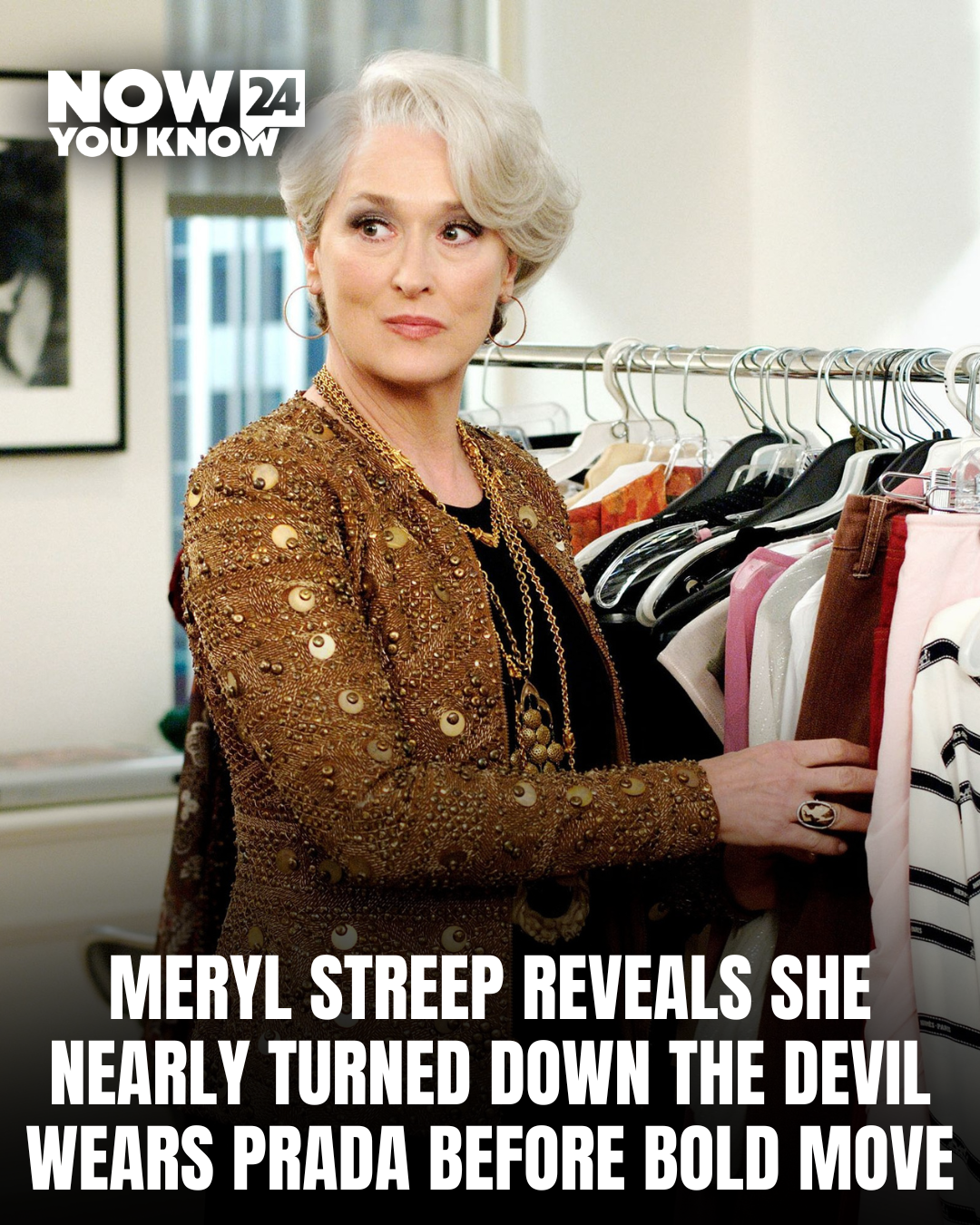

Meryl Streep has revealed she almost walked away from one of her most iconic roles before making a surprising decision that changed everything.
A Role She Almost Rejected
Before starring in The Devil Wears Prada, Streep admitted she was considering stepping away from acting altogether. During a recent interview, she shared that she initially declined the offer to play the now-legendary Miranda Priestly.
At the time, she believed she was nearing the end of her career and was ready to move on from major roles.
The Bold Salary Move
Instead of fully walking away, Streep decided to test something she had never done before. She doubled her salary demand, expecting it might end the conversation.
To her surprise, the studio immediately agreed.
That moment became a turning point, showing her the value she brought and reshaping how she approached her career moving forward.
A Career-Defining Performance
Streep was 57 when she took on the role of Miranda Priestly, a performance that went on to become one of the most recognizable in modern cinema.
The film’s success led to continued momentum in her career, with major roles in projects like Mamma Mia! and The Iron Lady, the latter earning her another Academy Award.
Returning After Two Decades
Now, nearly 20 years later, Streep is set to reprise her role in a sequel alongside Anne Hathaway, Emily Blunt, and Stanley Tucci.
The announcement has reignited excitement among fans who still regard the original as a cultural staple.
A Lesson That Stuck
Reflecting on her decision, Streep described it as a valuable lesson in understanding her worth. She noted that it took decades in the industry before she felt confident enough to make such a demand.
That moment not only secured her role but also reshaped her perspective on negotiating and self-value.
Early Criticism That Stayed With Her
In the same conversation, Streep also shared a memory from her youth that left a lasting impression. During a college interview, she was corrected in a way that made her feel diminished.
Experiences like that, she explained, tend to stay with you and shape how you see yourself over time.