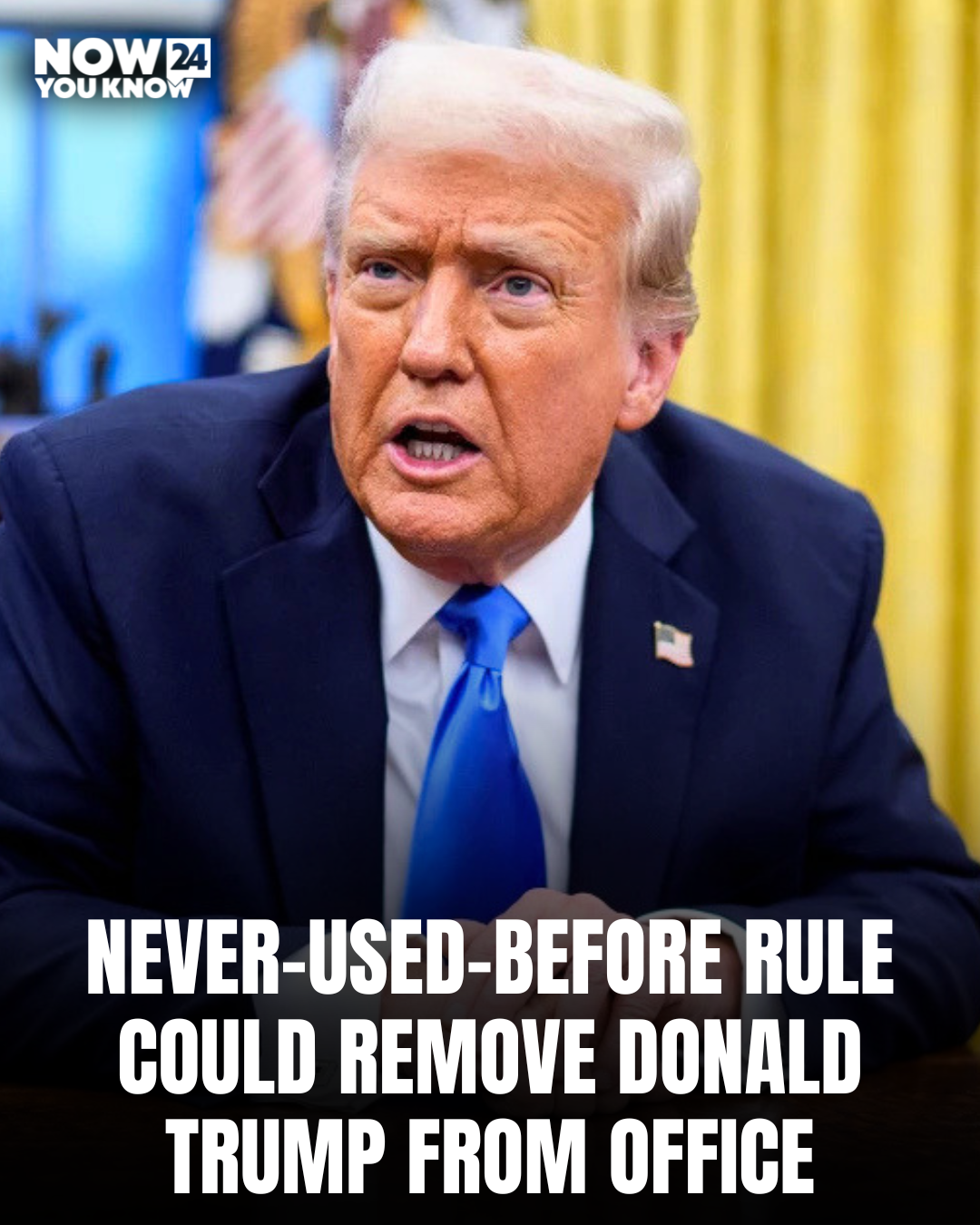

Fresh political controversy surrounding Donald Trump has reignited debate over one of the most extraordinary provisions in the US Constitution — a rule that has never successfully been used to remove a sitting president against their will.
The renewed discussion follows criticism of Trump’s handling of tensions involving Iran, with several Democratic lawmakers and political commentators publicly raising concerns about presidential judgment and decision-making.
As the debate intensifies, attention has turned once again to a little-discussed constitutional safeguard: Section 4 of the 25th Amendment.
What Is the 25th Amendment?
The 25th Amendment was added to the Constitution in 1967 following the assassination of President John F. Kennedy. Its purpose was to establish clear procedures for presidential succession and situations where a president becomes unable to carry out the duties of office.
The most controversial part of the amendment is Section 4, which outlines a process for temporarily or permanently transferring presidential power if a president is deemed unfit to serve.
How Section 4 Works
Under Section 4 of the 25th Amendment, the vice president and a majority of the president’s Cabinet can formally declare that the president is unable to perform the duties of office.
If that happens, the vice president immediately assumes the role of acting president.
However, the process does not end there. The president has the right to challenge the declaration, which would then trigger a vote in Congress.
To permanently remove the president from office, a two-thirds majority in both the House of Representatives and the Senate would be required — an extremely high constitutional threshold that has never been successfully reached.
Why Trump’s Critics Are Mentioning It
Several critics of Trump, including Democratic lawmakers and political commentators, have recently referenced the amendment while discussing concerns about his conduct and public statements.
Representative Jamie Raskin said there was “tremendous anxiety” surrounding the president’s behavior, while others argued that constitutional safeguards exist specifically for moments of national concern or instability.
The comments have fueled renewed public discussion online about whether the amendment could ever realistically be used.
Experts Say the Bar Is Extremely High
Despite the renewed attention, constitutional experts stress that the 25th Amendment was never intended to remove a president over political disagreements, controversial rhetoric, or unpopular decisions.
Legal scholars note that Section 4 specifically addresses physical or mental incapacity — not policy disputes or political controversy.
There is currently no indication that Vice President JD Vance or members of Trump’s Cabinet are considering any such action.
Experts widely agree that the chances of Section 4 being invoked remain extremely low due to the enormous political, legal, and constitutional barriers involved.
A Rarely Discussed Constitutional Safeguard
Although the amendment has never been successfully used to remove a sitting president against their will, the latest controversy has once again pushed one of America’s most rarely discussed constitutional mechanisms into the national spotlight.
For now, the debate remains largely theoretical — but it continues to highlight how extraordinary constitutional powers can quickly become part of public conversation during periods of political tension.