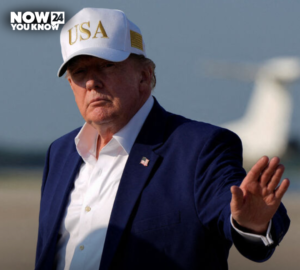




President Donald Trump has officially ordered the United States Navy to begin a full blockade of the Strait of Hormuz. This major escalation follows the collapse of high-stakes nuclear negotiations held in Islamabad over the weekend. The President stated that the move is necessary to secure global shipping routes.
Effective immediately, the Navy will stop any vessel attempting to enter or exit the strategic waterway. This action aims to cut off Iran’s economic leverage after peace talks ended without a deal. Trump criticized the Iranian leadership for failing to meet nuclear commitments during the discussions.
In addition to the blockade, the U.S. military will begin mine-clearing operations in the region. Trump warned that any interference with American forces or peaceful ships would be met with immediate and decisive force. He emphasized that the Strait must remain open to the world.
The President also instructed the Navy to intercept ships in international waters that have paid transit tolls to Tehran. This policy seeks to stop illegal financial support for the Iranian government. U.S. officials claim this is a response to what they call global extortion.
Vice President JD Vance recently departed Pakistan after the marathon 21-hour session failed to produce an agreement. While some progress was made on secondary issues, the nuclear program remained the primary sticking point. This leaves the current ceasefire in a very fragile state.
Global energy markets are already reacting to the news of the blockade. The Strait of Hormuz is responsible for a massive portion of the world’s oil and gas shipments. Any long-term disruption could have significant effects on fuel prices and maritime trade worldwide.
Military leaders have been placed on high alert as the blockade begins. The U.S. has deployed several carrier strike groups to ensure total control of the corridor. Trump noted that while the U.S. does not seek war, it is fully prepared for any hostility.
The international community is closely monitoring the situation as diplomats search for a way to resume talks. For now, the maritime posture of the United States has shifted toward a total lockdown of the region’s most critical chokepoint.