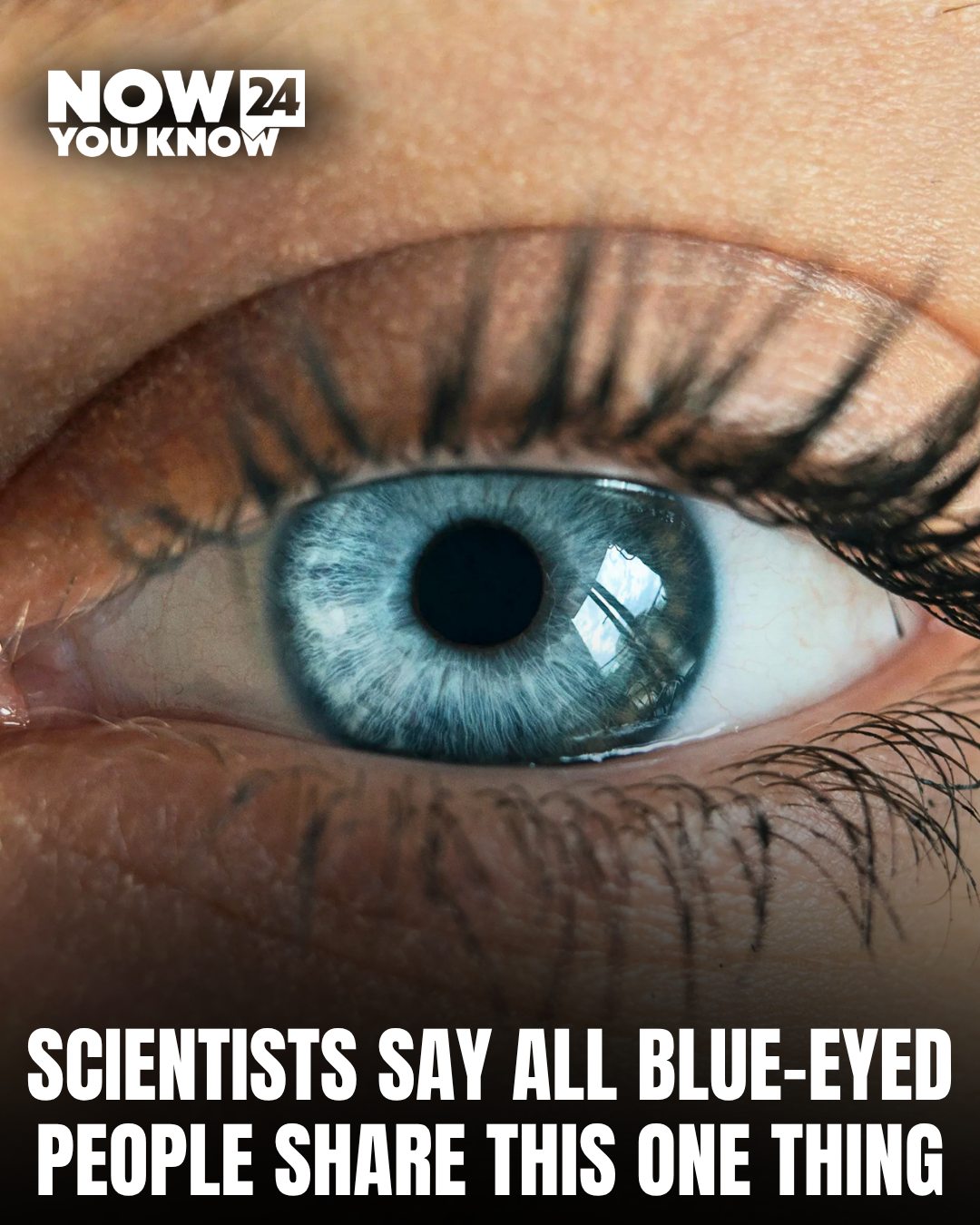

A fascinating scientific discovery has revealed that people with blue eyes may all share one unexpected connection.
Researchers have found that blue eyes are the result of a genetic mutation that occurred thousands of years ago, rather than being a naturally separate trait from the start.
According to studies, this mutation affects a gene linked to melanin production, which controls how much pigment appears in the iris. People with blue eyes have significantly less melanin, giving their eyes that lighter color.
What makes this even more interesting is where that mutation likely came from.
Scientists believe it first appeared between 6,000 and 10,000 years ago, meaning that most blue-eyed individuals today can trace this trait back to a single common ancestor.

In simple terms, that means people with blue eyes around the world may be more closely connected than they realize.
The mutation essentially acted like a genetic “switch,” reducing the ability to produce brown pigment in the eyes and passing that change down through generations.
Despite this shared origin, experts note that eye color is still complex and influenced by multiple genes, meaning there can be variations and exceptions.
Blue eyes themselves don’t actually contain blue pigment. Instead, the color comes from how light scatters in the iris due to the lower levels of melanin.
While the idea of a shared ancestor might sound surprising, scientists say it highlights just how interconnected human genetics really are.
And for many people seeing this research for the first time, it completely changes how they think about something as simple as eye color.