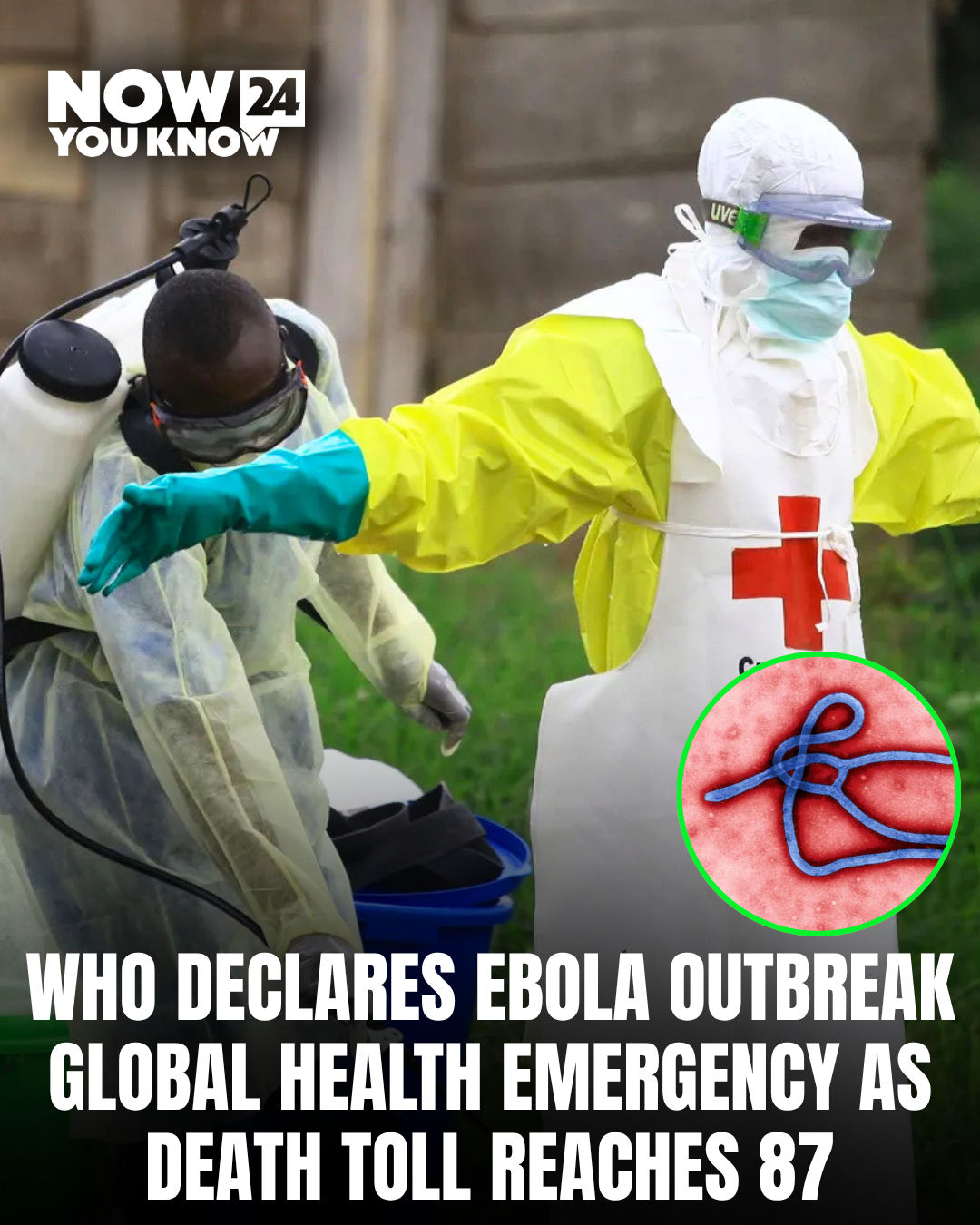

World Health Organization has declared the latest Ebola outbreak in Central Africa a public health emergency of international concern as the number of reported deaths continues to climb.
Health officials say the outbreak has primarily affected the Democratic Republic of Congo and neighboring Uganda, raising fears about possible regional spread.
Death Toll Continues Rising
According to the World Health Organization, at least 87 deaths linked to the outbreak have now been reported.
Officials say there have also been hundreds of suspected infections, particularly in the Ituri Province of the Democratic Republic of Congo.
Two confirmed cases, including one death, were additionally reported in Uganda’s capital, Kampala.
Health Workers Among the Victims
One of the biggest concerns for international health officials is the number of healthcare workers infected during the outbreak.
The deaths of multiple medical workers have raised alarms about possible gaps in infection prevention and protective measures inside treatment facilities.
Experts warn that healthcare-associated transmission can significantly worsen outbreaks if not quickly contained.
The Current Strain Has No Approved Vaccine
Health authorities say the outbreak involves the Bundibugyo strain of Ebola virus.
Unlike some previous Ebola outbreaks, there are currently no fully approved vaccines or specific treatments available for this strain.
Early symptoms can include fever, muscle pain, fatigue, sore throat, severe headaches, vomiting, and internal bleeding in severe cases.
WHO Says Situation Is Still Evolving
The World Health Organization stressed that there are still “significant uncertainties” surrounding the actual number of infections and the full geographic spread of the outbreak.
Officials say unusual clusters of community deaths have already been identified in several areas.
Neighboring countries are considered at higher risk due to ongoing travel, trade, and cross-border movement.
International Agencies Responding
Centers for Disease Control and Prevention is now assisting response efforts alongside African health authorities and international organizations.
CDC officials confirmed they are supporting surveillance, containment, and emergency response operations through partnerships with regional health ministries.
Global health experts say rapid international coordination will be critical to preventing wider spread.
Ebola Remains One of the World’s Deadliest Viruses
Ebola is a highly contagious viral disease that spreads through direct contact with infected bodily fluids.
Past outbreaks have carried fatality rates ranging from roughly 25% to over 80%, depending on the strain and access to treatment.
The virus first gained worldwide attention during the devastating West Africa epidemic between 2014 and 2016.
Officials Urge Vigilance, Not Panic
While the WHO has classified the outbreak as a major international health concern, officials emphasized that it does not currently meet the criteria for a global pandemic.
Health experts continue urging countries to strengthen screening, monitoring, and public awareness efforts while avoiding unnecessary panic.
Authorities say early detection and fast containment measures remain the most effective tools for limiting further spread.