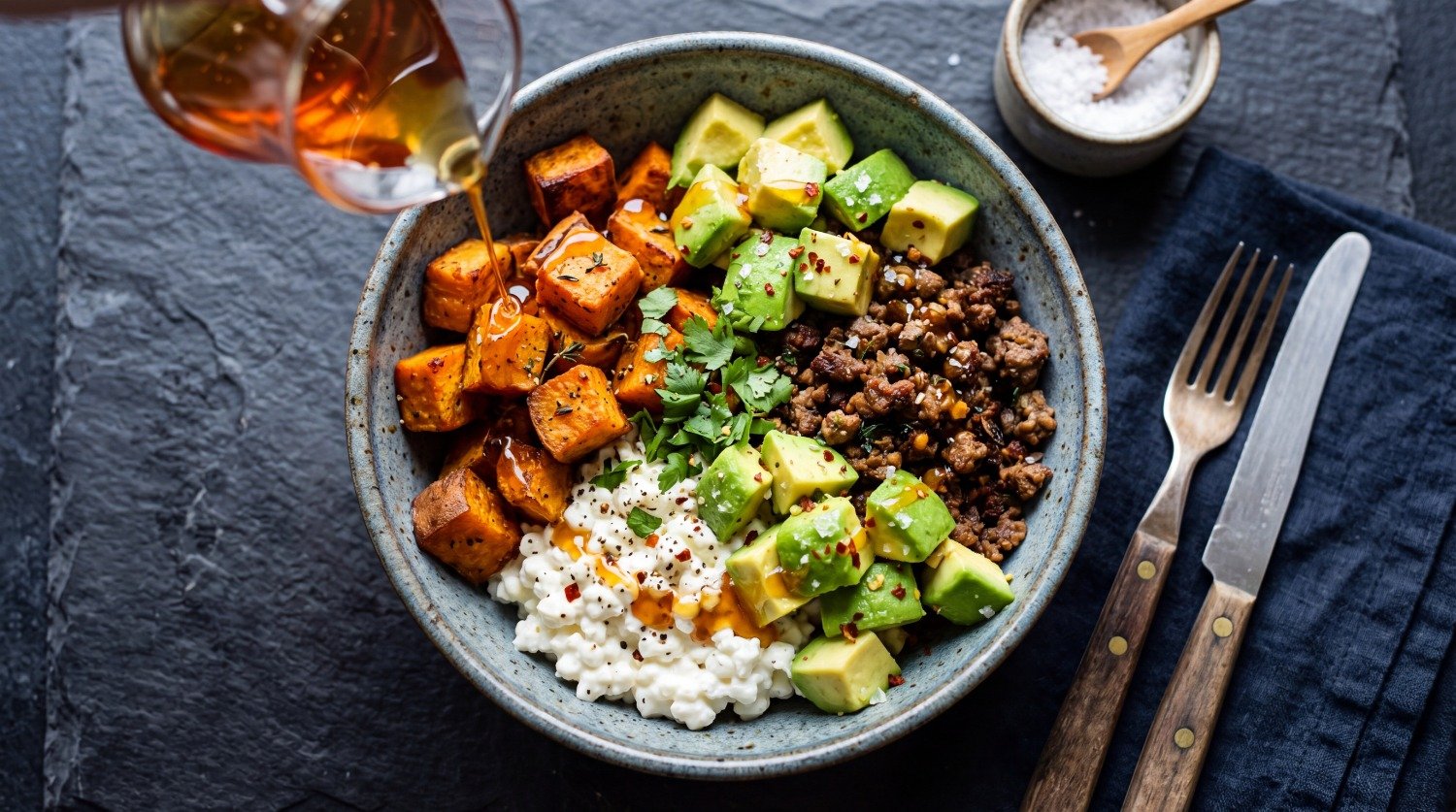

You’ve been roasting your sweet potatoes wrong for this viral bowl, and that’s exactly why your version doesn’t taste like the restaurant-quality TikTok videos flooding your feed. The cottage cheese trend isn’t just social media noise — it’s accidentally brilliant food science that combines protein chemistry, flavor pairing theory, and the Maillard reaction in ways most home cooks completely miss.
Let me tell you what’s really happening when you layer these ingredients, and why understanding the science will transform this from a trendy recipe into a technique you’ll use for years.
The Cottage Cheese Renaissance Has Scientific Roots
Cottage cheese suddenly dominates social media because it solves a fundamental problem in modern eating: how to add complete protein without cooking meat. With 24 grams of protein per cup and all nine essential amino acids, cottage cheese delivers what bodybuilders have known for decades — casein protein absorbs slowly, keeping you satisfied for hours.
But here’s what TikTok doesn’t tell you: cottage cheese’s mild lactic acid tang creates what flavor scientists call a “flavor bridge.” It connects the umami-rich beef with the sweet caramelized potatoes through complementary taste receptors. This isn’t random — it’s the same principle behind yogurt marinades in Middle Eastern cuisine and sour cream on tacos.
The curds provide textural contrast that makes every bite interesting, while the whey adds moisture without making the bowl soggy. You’re essentially building a deconstructed casserole with better macros and more interesting flavor layers.
Why Your Sweet Potatoes Taste Like Baby Food
Most home cooks steam or microwave their sweet potatoes for this bowl. That’s your first mistake. Sweet potatoes contain an enzyme called amylase that converts starches into sugars — but only at specific temperatures between 135°F and 170°F.
When you blast them at high heat immediately (400°F+), you skip this enzymatic conversion window. The result? Starchy, one-dimensional potatoes that taste flat. Professional kitchens roast sweet potatoes low and slow first (275°F for 45 minutes), then crank the heat to caramelize the surface.
Here’s the technique that changes everything: cut your sweet potatoes into ½-inch cubes, toss with oil and salt, then roast at 375°F for exactly 25-30 minutes, stirring once. This temperature allows enzymatic sugar conversion while achieving proper Maillard browning on the exterior. The sugars caramelize into nutty, complex flavors instead of just tasting sweet.
The Science Behind Perfectly Browned Beef
Ground beef releases moisture as it cooks. That moisture creates steam, which prevents browning — the Maillard reaction requires dry heat above 300°F. This is why restaurant ground beef tastes intensely savory while yours often tastes boiled.
The solution isn’t higher heat — it’s patience and space. Spread your beef in a single layer in a hot pan, then don’t touch it for 3-4 minutes. Serious Eats testing shows this approach creates 40% more browned surface area compared to constant stirring.
When you finally break it up, you’ll hear sizzling instead of steaming — that’s the sound of proper crust formation. Add your taco seasoning only after browning, not during. Spices contain sugars that burn at high heat, turning bitter instead of aromatic.
The Hot Honey Chemistry That Makes This Work
The viral bowl’s signature is hot honey drizzled over everything — and this isn’t just Instagram aesthetics. Capsaicin (the compound that makes peppers hot) is fat-soluble, not water-soluble. When you combine it with honey’s viscosity and the fat from beef and avocado, you create a delivery system that coats every element.
More importantly, honey’s fructose and glucose activate different sweet receptors than the complex sugars in sweet potatoes. Your brain perceives this as greater flavor complexity — the same reason why compound butters taste more interesting than plain butter.
Make your own by gently heating ¼ cup honey with 1 teaspoon red pepper flakes for 5 minutes, then strain. The low heat prevents caramelization while extracting capsaicin. Commercial hot honey often contains artificial flavors; homemade costs pennies and tastes exponentially better.
Why This Bowl Became an Internet Phenomenon
This recipe went viral because it solves three modern eating problems simultaneously: it’s high-protein (40+ grams per serving), it photographs beautifully, and it requires zero specialized cooking skills. But most importantly, it delivers what food scientists call “sensory-specific satiety” — enough flavor variety that you stay satisfied without getting bored.
The combination hits all five taste receptors: sweet (potatoes, honey), salty (beef seasoning), sour (cottage cheese), bitter (optional greens), and umami (beef). When you engage all taste dimensions, meals feel more complete at a neurological level. This is why simple rice bowls with multiple toppings dominate fast-casual restaurants — they’re scientifically designed to be satisfying.
The cottage cheese serves another crucial function: it’s a complete protein with leucine, the amino acid that triggers muscle protein synthesis. For the fitness-focused crowd driving TikTok trends, this matters more than taste. You’re getting the protein density of Greek yogurt with less sugar and more satisfying texture.
The Common Mistakes Ruining Your Bowl
Mistake #1: Using Low-Fat Cottage Cheese
Fat carries flavor compounds. Low-fat cottage cheese has 60% less fat, which means the lactic tang dominates without the creamy roundness that balances the bowl. Use full-fat (4% milkfat minimum) for proper mouthfeel and flavor distribution.
Mistake #2: Underseasoning the Beef
Ground beef is 70-80% water by weight. As it cooks, that moisture evaporates, concentrating flavors. If you season it like a steak, it’ll taste underseasoned after cooking. Use 1½ tablespoons of taco seasoning per pound of beef — what seems like too much before cooking becomes perfect after.
Mistake #3: Adding Avocado Too Early
Avocado’s creamy texture comes from oil-rich flesh. When it sits on hot ingredients, those fats start to break down, turning slightly bitter. Dice your avocado and add it as the absolute last step, right before serving, for optimal texture and clean flavor.
Mistake #4: Skipping the Rest
This seems like a bowl you can eat immediately, but letting it rest for 2-3 minutes after assembly allows the hot honey to thin slightly and the cottage cheese to warm just enough to release its aroma compounds. Cold dairy tastes flat — slightly warmed dairy tastes rich.
The Professional Assembly Technique
Bowl composition matters as much as cooking technique. Start with your protein base (cottage cheese) in the center — this anchors everything and prevents the bowl from looking like a pile of random ingredients. Arrange your sweet potatoes and beef in distinct sections rather than mixing them completely.
This isn’t just visual — it allows you to control flavor combinations with each bite. Sometimes you want pure beef, sometimes you want potato with cottage cheese, sometimes you want everything together. Restaurants call this “component plating,” and it’s why their bowls feel more intentional than homemade versions.
Finish with avocado chunks (not slices — chunks have better textural contrast), a generous drizzle of hot honey in a zigzag pattern (for even distribution), and optional fresh cilantro or lime wedges. The cilantro’s aldehydes cut through the richness, while lime’s citric acid brightens everything.
The Science Behind the Perfect Bite
When you taste this bowl, your brain processes multiple sensory inputs simultaneously: the temperature contrast between warm beef and cool cottage cheese, the textural variety from creamy curds to crispy sweet potato edges, and the flavor complexity from sweet, spicy, savory, and tangy elements.
This engages what neuroscientists call “hedonic eating” — pleasure-driven consumption that goes beyond basic hunger satisfaction. It’s the same mechanism that makes restaurant food memorable: engineered variety that keeps your palate interested from first bite to last.
The cottage cheese temperature is crucial here. Straight from the refrigerator (35-40°F), it tastes flat and acidic. At room temperature (65-70°F), its aroma compounds volatilize, releasing buttery, slightly nutty notes you never knew existed. Let it sit out for 15 minutes before assembling your bowl.
Scaling This Technique Beyond the Bowl
Once you understand why this combination works, you can apply it everywhere. The principle is: fatty protein + creamy fermented dairy + starchy vegetable + sweet-spicy finish. Try ground turkey with Greek yogurt and butternut squash. Or crumbled sausage with ricotta and roasted carrots.
The cottage cheese can replace sour cream in almost any application where you want more protein. I use it as a base for loaded “nacho” bowls, as a topping for chili, and even as a bed for roasted vegetables with crispy chickpeas. Each time, it adds 20+ grams of protein without changing the dish’s fundamental character.
Understanding flavor bridges — ingredients that connect disparate tastes — is what separates confident cooks from recipe-followers. Cottage cheese bridges sweet and savory. Miso bridges vegetable and meat. Fish sauce bridges fresh and fermented. Once you recognize these patterns, you can improvise fearlessly.
How to Store and Reheat Without Ruining It
Store components separately in airtight containers. The beef keeps for 4 days, sweet potatoes for 5, cottage cheese for a week past its date (the lactic acid acts as a preservative). Never store them assembled — the moisture from vegetables will make everything soggy.
To reheat: microwave the beef and sweet potatoes separately for 60-90 seconds, then assemble with fresh cottage cheese and avocado. If you refrigerate cottage cheese that’s already been warmed, its protein structure changes and becomes grainy. Always add it cold or at room temperature for optimal texture.
The One Technique That Changes Everything
Here’s what I want you to remember: let your ingredients speak at different volumes. Not everything needs equal seasoning or equal presence. The cottage cheese whispers milky sweetness. The beef shouts savory intensity. The sweet potatoes hum with natural sugar. The hot honey punctuates with spice.
When you understand that cooking is about orchestrating intensity rather than making everything taste the same, you stop following recipes and start creating food that feels alive. This viral bowl works because someone accidentally discovered that truth — now you know it intentionally, and that makes you dangerous in the kitchen.