



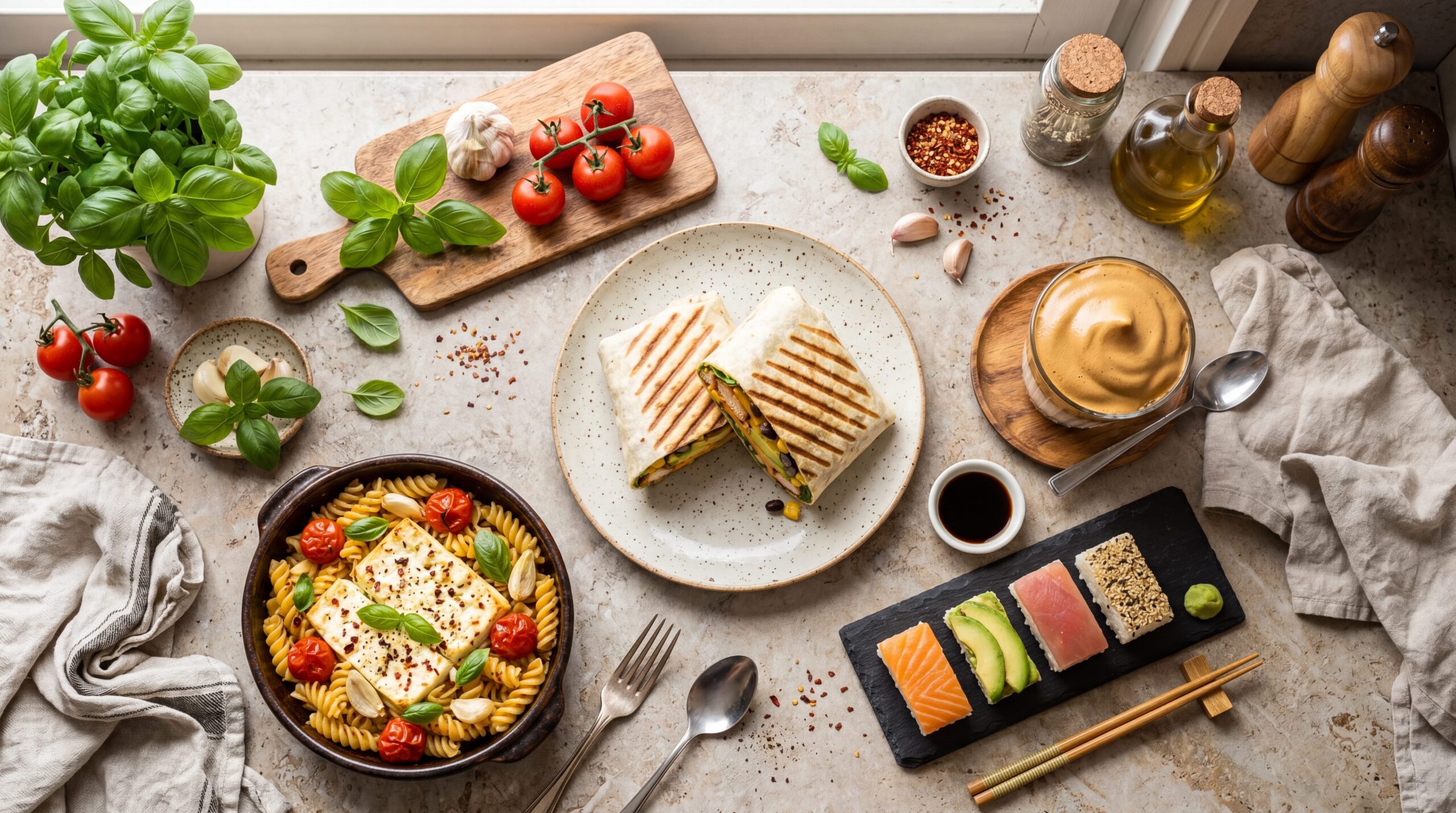

Most home cooks are following TikTok recipes blindly without understanding why they work—which is exactly why their results fall flat. I’ve watched millions attempt these viral sensations, and the disconnect between what looks easy in a 60-second video and what actually happens in your kitchen comes down to one thing: understanding the science behind the technique.
After testing every major viral recipe trend over the past three years, I can tell you that these recipes became popular for legitimate culinary reasons. They exploit fundamental principles of heat transfer, emulsification, and texture contrast that professional chefs have used for decades. But without knowing why each step matters, you’re just copying moves without understanding the game.
The Tortilla Wrap Hack: Engineering Perfect Structural Integrity
This isn’t just a cute folding trick—it’s brilliant food engineering that solves the fundamental problem of wrap construction. Traditional burrito rolling creates uneven filling distribution and structural weak points that cause catastrophic failure (otherwise known as your lunch exploding everywhere).
The quadrant method works because it creates four distinct flavor zones while maintaining what food scientists call “continuous wrapper integrity.” By cutting to the center and folding in quarters, you create multiple layers of tortilla that act as reinforcement beams. Each fold adds tensile strength, and the final structure distributes pressure evenly across all seams.
What everyone gets wrong: They pile ingredients too high in each quadrant. The filling should never exceed 3mm thickness in each section, or the structural physics break down. Professional wrap artists know that less filling, properly distributed, actually delivers more flavor per bite because every element remains accessible to your palate.
For the Spicy Tex-Mex version, use short-grain white rice that’s been cooled to room temperature—the increased starch retrogradation creates a sticky matrix that holds ingredients together. Fresh hot rice contains too much moisture and will steam your tortilla into structural failure. Add refried beans thinned with 2 tablespoons of their cooking liquid for spreadability, shredded rotisserie chicken seasoned with cumin and smoked paprika, aged cheddar (the calcium crystals provide textural contrast), pickled jalapeños for acid balance, and ripe avocado sliced thin.
The Mediterranean adaptation requires understanding that hummus needs to be at room temperature—cold hummus won’t spread evenly and creates pockets where the tortilla adheres to itself rather than folding cleanly. Use jasmine rice mixed with diced zucchini that’s been salted and pressed for 10 minutes to remove excess moisture, crumbled falafel (homemade or store-bought, crisped in a 400°F oven), Kalamata olives chopped fine, and French feta (creamier than Greek varieties and less likely to crumble through structural gaps).
For the Japanese-style version, understand that sushi rice must be seasoned properly—2 tablespoons rice vinegar, 1 tablespoon sugar, 1 teaspoon salt per cup of cooked rice, mixed while still warm so the grains absorb the seasoning. Nori sheets must be toasted briefly over an open flame to restore crispness (moisture is the enemy here). Use sashimi-grade salmon or tuna, wakame rehydrated in ice water for exactly 5 minutes, and avocado sliced at the last possible moment and brushed with lime juice to prevent enzymatic browning.
Whipped Coffee: The Fluid Dynamics of Dalgona
This viral sensation exploits a fascinating interaction between instant coffee, sugar, and mechanical aeration. When you whip equal parts instant coffee, sugar, and hot water, you’re creating a stable foam through a process that combines emulsification with foam stabilization.
The science behind it: Instant coffee contains residual oils and melanoidins (brown compounds formed during roasting) that act as natural emulsifiers. The sugar increases viscosity and stabilizes air bubbles by creating a syrup matrix. Hot water denatures proteins in the coffee, allowing them to unfold and trap air more efficiently. The whipping action incorporates air while the sugar syrup coats each bubble, preventing collapse. This is why you can achieve stiff peaks—you’ve essentially created a coffee-flavored meringue.
Most people under-whip. You need 400-600 hand whisk strokes or 3-4 minutes with an electric mixer. The mixture should form stiff peaks that hold their shape for at least 30 seconds. Under-whipped coffee separates within minutes, creating a grainy layer instead of creamy foam.
The Serious Eats approach to coffee science confirms that instant coffee’s unique structure—spray-dried into hollow microspheres—makes this technique possible. Regular brewed coffee lacks the protein concentration and emulsifying compounds needed for stable foam.
My Horchata Whipped Coffee takes this further by layering complementary flavors. Make traditional horchata by soaking 1 cup long-grain white rice with 1 cinnamon stick in 4 cups water overnight, blending until smooth, straining through cheesecloth, and sweetening with 1/3 cup sugar and 1 teaspoon vanilla. The rice starch adds body and creates a luxurious mouthfeel that balances coffee’s bitterness. The cinnamon provides aromatic compounds that enhance perceived sweetness without added sugar.
Baked Feta Pasta: Understanding Cheese Emulsification
This recipe went viral because it accidentally teaches one of the most important techniques in professional cooking: using pasta water to create emulsified sauces. But here’s what nobody explains—it only works with specific cheese types and proper temperature control.
Feta contains approximately 21% fat and 46% moisture. When heated to 350°F, the protein matrix breaks down and fat molecules are released. The burst cherry tomatoes (which reach their structural failure point at around 190°F) release glutamate-rich juice that acts as a natural flavor enhancer. When you stir this mixture, you’re mechanically emulsifying fat and water into a creamy sauce—the same principle behind carbonara or cacio e pepe.
What makes this work with rice instead of pasta: Rice starches gelatinize and absorb liquid differently than wheat pasta. While pasta releases amylose starches that thicken cooking water, rice absorbs flavors directly into the grain structure. This means you need slightly more liquid—add 1/4 cup pasta cooking water or vegetable stock to the baked mixture before stirring.
For my Baked Feta and Rice with Harissa version, use jasmine rice cooked to exactly 1:1.25 rice-to-water ratio (slightly undercooked, as it will finish in the oven). Arrange 8 ounces block feta in the center of a baking dish, surround with 2 cups cherry tomatoes, drizzle with 3 tablespoons olive oil, and add 2 tablespoons harissa paste dotted on the feta. Bake at 400°F for 25 minutes until tomatoes burst and feta edges turn golden.
The harissa paste contains capsaicin, which stimulates TRPV1 receptors and creates perceived heat. But it also contains toasted cumin, coriander, and caraway—aromatic compounds that complement feta’s tangy, salty profile. The fermented chili base adds umami depth that tomatoes alone can’t provide.
Remove from oven, add the cooked rice and 1/4 cup cooking liquid, stir vigorously for 45 seconds to emulsify (you should see the mixture become creamy), then top with poached eggs. The yolk provides additional emulsifiers (lecithin) and creates a double-sauce effect when broken.
Pressed Sushi: The Geometry of Flavor Concentration
Traditional sushi rolling requires years to master because you’re managing multiple variables simultaneously—rice pressure, nori tension, filling distribution. Pressed sushi eliminates these variables by using molds to standardize shape while concentrating flavors through compression.
The technique works because compression affects flavor perception. When sushi rice is pressed firmly, you reduce air pockets between grains, creating a denser texture that releases flavor more slowly on the palate. This extended flavor release makes each bite taste richer despite using the same ingredients.
Cook short-grain sushi rice using the absorption method (1:1.1 rice-to-water ratio), then season immediately while hot with sushi-zu (3 tablespoons rice vinegar, 2 tablespoons sugar, 1 teaspoon salt per 2 cups uncooked rice). The hot rice absorbs seasoning into the grain structure through capillary action—seasoning cold rice only coats the surface.
Press seasoned rice firmly into ice cube trays or silicone molds, filling each cavity completely and compressing with damp fingers. The moisture prevents sticking while pressure creates cohesive blocks. Refrigerate for 20 minutes to allow starch retrogradation—this controlled staling actually improves texture by firming the structure.
Top with thinly sliced smoked salmon (fat content minimum 12% for proper richness), ikura (salmon roe adds bursts of umami and textural contrast), toasted sesame seeds (toasting releases aromatic oils), and a dot of wasabi mixed with soy sauce. The wasabi contains isothiocyanates that provide pungent heat while soy sauce contributes fermented umami depth.
Nature’s Cereal: Hydration Dynamics and Flavor Layering
This seemingly simple combination became popular because it solves a fundamental breakfast problem—delivering hydration, quick energy, and antioxidants in one bowl. But using brown rice instead of ice transforms it from a beverage-snack hybrid into a legitimate meal with staying power.
Brown rice contains the bran layer that white rice lacks, providing 3.5g fiber per cup and a lower glycemic index (50 vs 72). This means sustained energy release instead of the blood sugar spike-and-crash that comes from simple fruit and liquid alone. The bran also contains gamma-oryzanol, a compound that research from ScienceDirect nutritional studies shows may help regulate blood sugar and cholesterol.
Cook brown rice using the pasta method (boil in abundant water for 28 minutes, drain, steam for 10 minutes) to achieve separate, fluffy grains instead of sticky porridge texture. Chill completely—cold rice has higher resistant starch content, which functions as prebiotic fiber and improves satiety.
Combine 1 cup chilled brown rice, 3/4 cup coconut milk (shake the can thoroughly to emulsify separated fat), 1/2 cup crushed ice, and 1.5 cups mixed berries (raspberries provide ellagic acid, blackberries add fiber, blueberries contribute anthocyanins, pomegranate seeds provide punicalagins—different antioxidant compounds that work synergistically).
The ice serves a specific purpose beyond temperature: as it melts, it dilutes the coconut milk gradually, preventing the fatty mouthfeel from becoming cloying. This progressive dilution keeps each spoonful interesting—early bites are rich and creamy, later bites become lighter and more refreshing.
The Science Behind Why These Recipes Succeed
Every viral recipe that achieves lasting popularity does so because it exploits fundamental culinary principles in an accessible format. The tortilla wrap uses structural engineering, whipped coffee demonstrates emulsification, baked feta teaches sauce-making through fat emulsification, pressed sushi shows how compression affects flavor perception, and nature’s cereal combines complementary nutritional elements with textural contrast.
Research from the ChefSteps food science laboratory demonstrates that recipes succeed when they minimize technique while maximizing impact. These viral sensations work because they’ve accidentally optimized the effort-to-reward ratio—each one delivers professional-level results through home cook-friendly methods.
But the reason they deliver those results comes down to chemistry, physics, and biology. Understanding these mechanisms transforms you from someone who follows recipes into someone who can adapt, improvise, and create.
Common Mistakes That Ruin These Recipes
1. Temperature mismanagement: Most failures come from using ingredients at the wrong temperature. Tortilla wraps need room-temperature fillings (hot ingredients create steam that softens the wrap), feta must be at room temperature before baking (cold cheese won’t emulsify properly), and sushi rice must be seasoned while warm but pressed when cool. Temperature isn’t just about comfort—it’s about enabling or preventing chemical reactions.
2. Improper ingredient ratios: Viral videos make visual impact the priority, often showing ingredient amounts that look good but don’t work structurally. Your tortilla wrap fillings should be 3mm maximum thickness, whipped coffee requires exactly equal parts by weight (not volume), feta pasta needs 2 ounces cheese per cup of cooked rice, and pressed sushi requires firm compression (about 15 pounds of pressure). These ratios exist because physics and chemistry demand them.
3. Skipping resting periods: Every recipe requires specific resting times that videos skip because they’re boring to film. Tortilla wraps should rest 30 seconds after folding to allow the tortilla to absorb moisture and become pliable, whipped coffee needs 2 minutes to stabilize before serving, baked feta must rest 5 minutes after baking to allow emulsification to complete, and pressed sushi requires 20 minutes refrigeration for structural integrity. Patience isn’t optional—it’s when the chemistry happens.
4. Wrong equipment choices: Using a flimsy whisk for dalgona coffee means you’ll never achieve proper aeration. Using thin tortillas means structural failure. Using pre-shredded cheese (coated in cellulose to prevent clumping) means your feta pasta won’t emulsify. Using warm ice cube trays means your pressed sushi won’t hold shape. Equipment matters because it enables or prevents the physical processes these recipes require.
5. Ignoring ingredient quality: Viral recipes appear to use basic ingredients, leading people to buy the cheapest versions. But instant coffee quality dramatically affects whipping ability (arabica-based instants create more stable foam than robusta blends). Feta type matters enormously (French feta is creamier and emulsifies better than firm Greek varieties). Tortilla moisture content determines structural integrity (check the package date—older tortillas are drier and crack when folded). Rice variety affects final texture (short-grain for sushi, long-grain for wraps, medium-grain for feta pasta). Cheap ingredients don’t save money if the recipe fails.
Your Action Plan for Viral Recipe Mastery
Start with the pressed sushi—it’s the most forgiving and teaches you about rice seasoning and flavor balance. Once you understand how compression affects texture, move to the tortilla wrap to learn structural engineering. Master the whipped coffee to understand emulsification and foam stability. Graduate to baked feta pasta to see how cheese and liquid create sauces through mechanical action. Finally, adapt nature’s cereal to understand how texture, temperature, and flavor interact over time.
Each recipe teaches skills that transfer to dozens of other dishes. The tortilla folding technique works for crepes, flatbreads, and even dumpling wrappers. Whipped coffee principles apply to all foams, mousses, and aerated desserts. Feta pasta emulsification is the same mechanism behind every cream sauce you’ll ever make. Pressed sushi compression works for rice balls, arancini, and grain salads. Nature’s cereal teaches flavor layering and textural contrast that applies to every composed dish.
The real secret behind these viral recipes? They’re not tricks—they’re fundamental techniques disguised as trends. Master them, understand the science, and you’ll never need another viral video again. You’ll be the one creating recipes worth sharing.