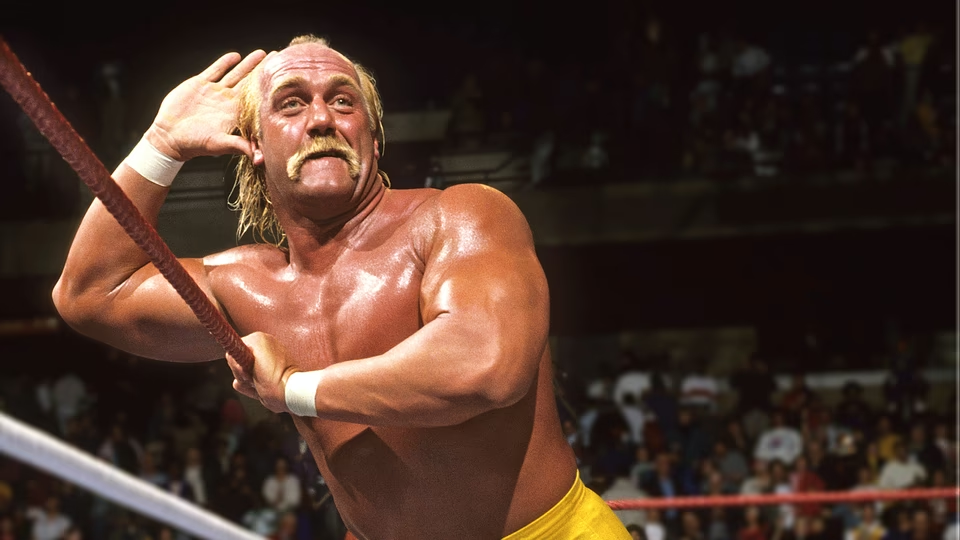

Wrestling icon Hulk Hogan battled a severe fentanyl addiction that reached life-threatening levels following his 2009 divorce from Linda Hogan, according to revelations made in his final documentary interview before his death.
The legendary wrestler, who passed away from a heart attack in July 2025 at age 71, opened up about his dangerous opioid use in the Netflix docuseries “Hulk Hogan: Real American.” The documentary, which features what would become his last recorded interview, sheds light on a dark period in the wrestler’s life when chronic pain and financial pressures drove him to extreme measures.
Following his divorce from Linda Hogan in 2009, the wrestling pioneer found himself in dire financial straits after giving “everything” to his ex-wife in the settlement. This financial pressure led him to sign with Total Nonstop Wrestling (TNA), the second-largest wrestling promotion after WWE, despite being in poor physical condition.
The extent of Hogan’s fentanyl consumption was staggering and medically alarming. According to his own account, his daily regimen included taking two 80-milligram fentanyl tablets in the morning, which he would place under his gums for absorption. Additionally, he wore two 300-milligram fentanyl patches on his legs and consumed six 1500-milligram fentanyl lollipops throughout the day.
A pharmacy professional who became aware of Hogan’s prescription levels expressed shock at the quantities involved. “You should be dead. We have never seen a human being take this much fentanyl,” the pharmacist reportedly told him, highlighting the extraordinary danger of his consumption levels.
The chronic pain that drove Hogan to such extreme measures stemmed from decades of physical punishment in the wrestling ring. His condition had deteriorated to the point where he could no longer sleep in a bed, instead having to rest in a chair. The severity of his back problems meant that even the slightest movement could trigger debilitating muscle spasms.
“If I just twitched my finger like that, my whole back would spasm and torque,” Hogan explained in the documentary, illustrating the constant agony he endured during this period.
Hogan’s tenure with TNA proved short-lived as both parties quickly realized he was physically unable to perform at the level his contract required. His final in-ring appearance occurred in 2012, and he officially departed TNA when his contract expired in 2013.
The timeline of events reveals a tragic progression: the 2009 divorce led to financial hardship, which prompted the TNA contract, which in turn exposed his inability to perform without extreme pain management. This cycle ultimately resulted in his dangerous dependency on fentanyl, a synthetic opioid known to be 50 to 100 times more potent than morphine.
Fentanyl has become a major public health crisis in recent years, with overdose deaths increasing dramatically across the United States. Medical experts typically prescribe the drug only for severe pain management in carefully controlled doses, making Hogan’s consumption levels particularly alarming.
The wrestler’s candid admission about his addiction adds another layer to his complex legacy. While celebrated as one of professional wrestling’s most recognizable figures who helped bring the sport into mainstream entertainment during the 1980s and 1990s, Hogan’s later years were marked by personal struggles and controversies.
His death in July 2025 from a heart attack came approximately six months after the documentary interview was filmed. While the official cause of death was cardiac-related, the long-term effects of opioid use on cardiovascular health are well-documented in medical literature.
The revelations in “Hulk Hogan: Real American” serve as both a cautionary tale about the dangers of opioid addiction and a reminder of the physical toll professional wrestling takes on its performers. Many wrestlers from Hogan’s era have faced similar battles with pain management and substance abuse, highlighting ongoing concerns about athlete welfare in high-impact sports.
Hogan’s story underscores the importance of proper pain management strategies and the dangers of opioid dependency, even for those who seem larger than life. His willingness to discuss these struggles in what became his final interview offers a stark reminder of the human cost behind the entertainment spectacle of professional wrestling.