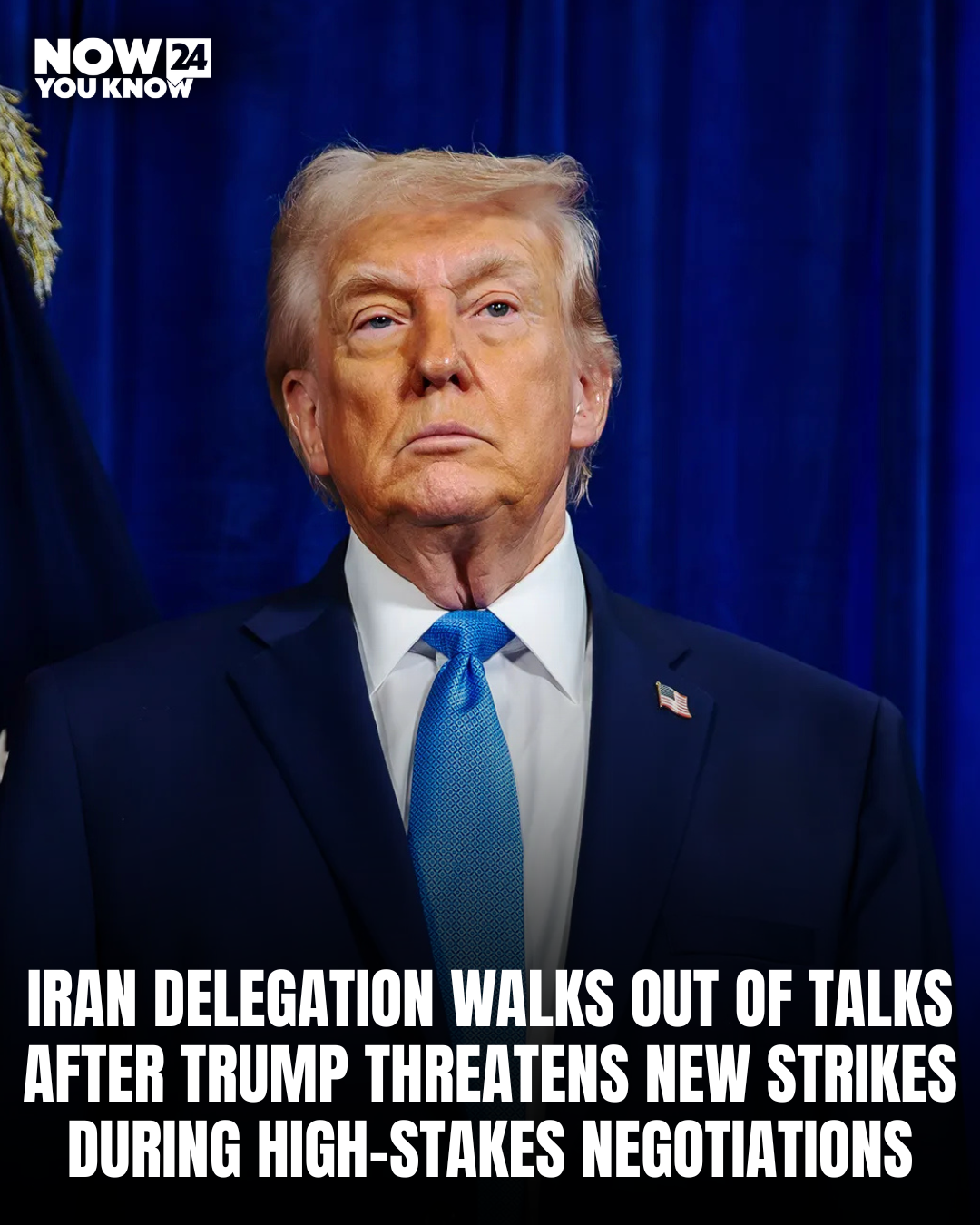

Tensions flared during critical negotiations aimed at ending the conflict in the Middle East after President Donald Trump threatened fresh military action against Iran, prompting reports that the Iranian delegation walked out of talks being held in Switzerland.
According to Iranian state media, representatives from Iran left the negotiating venue shortly after Trump issued a warning on social media targeting Tehran over its alleged support for Hezbollah.
Trump wrote that Iran must “immediately stop” its proxies in Lebanon from causing trouble, adding:
“If they don’t, we’ll hit Iran very hard again, just like we did last week, only harder!!!”
The comments landed as negotiators from both sides were attempting to make progress on a broader agreement designed to permanently end the regional conflict and open a new chapter in US-Iran relations.
Iran’s state news agency claimed the delegation departed the building after meeting with mediators from Qatar.
However, conflicting reports quickly emerged.
A diplomat familiar with the discussions told reporters that Iran had not abandoned the negotiations and remained engaged with mediators despite the heightened rhetoric.
The apparent confusion only added to uncertainty surrounding the talks, which are viewed as one of the most significant diplomatic efforts in years.
Iran’s chief negotiator, Mohammad Bagher Ghalibaf, responded sharply to Trump’s comments.
“We do not take American threats into account,” he said.
Ghalibaf also warned that Iran’s armed forces were prepared to respond if necessary.
“No matter what they say, we are the ones who act.”
Meanwhile, Israeli Prime Minister Benjamin Netanyahu reiterated that Israeli forces would remain in southern Lebanon for as long as necessary and again pledged to prevent Iran from acquiring nuclear weapons.
The negotiations come against a backdrop of continuing instability in the region. While a recent memorandum of understanding between Washington and Tehran included provisions intended to reduce tensions in Lebanon, clashes have continued in recent weeks.
Iran has also linked progress in negotiations to developments on the ground, insisting that a lasting agreement cannot move forward unless hostilities in Lebanon come to an end.
US Vice President JD Vance struck a more optimistic tone, describing the discussions as a “historic meeting.”
Speaking alongside negotiators Jared Kushner and Steve Witkoff, Vance said the goal was to determine whether both sides could permanently change relations in the Middle East.
“Can we turn over a new leaf? Can we change relations in the Middle East permanently? Or do we go back to doing things the old way?”
For now, the answer remains unclear.
Despite the dramatic exchange of threats, reports later in the day indicated there had been no fresh Israeli strikes and no significant escalation in fighting, offering a glimmer of hope that diplomacy may still remain on track.