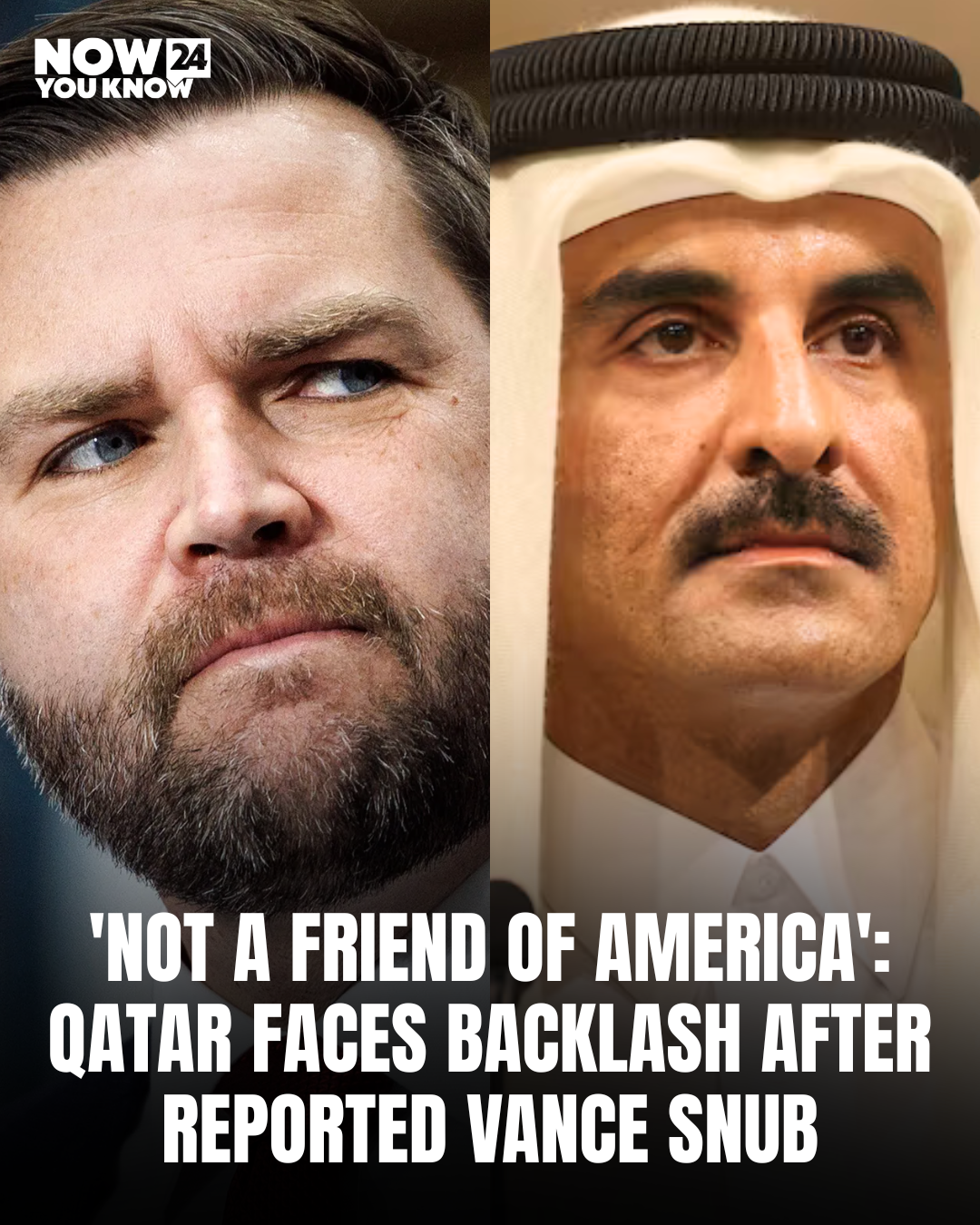

A diplomatic moment involving Vice President JD Vance and Qatar’s leadership is fueling renewed debate over the United States’ relationship with one of its most strategically important partners in the Middle East.
Critics of the Gulf nation claim that Qatar’s prime minister publicly snubbed Vance during a recent interaction, arguing that the incident reflects deeper tensions beneath the long-standing alliance between Washington and Doha.
While details surrounding the alleged snub remain disputed, the episode has reignited criticism from analysts and political commentators who have long questioned Qatar’s role in regional politics and its relationship with the United States.
Why Qatar Matters to the U.S.
Qatar has been a key American partner in the Middle East for decades.
The country hosts one of the largest U.S. military installations in the region and has frequently served as a mediator in international conflicts and negotiations involving Washington.
Supporters of the alliance argue that Qatar plays a critical strategic role by providing military access, facilitating diplomatic talks and helping advance American interests throughout the region.
Critics Say Concerns Remain
However, critics contend that Qatar has often pursued policies that do not fully align with U.S. priorities.
Some point to the country’s historical ties with Islamist political movements and its relationships with various regional actors as evidence that Washington should take a more cautious approach.
Those concerns have periodically surfaced in American political circles, with opponents arguing that Qatar seeks to balance relationships across competing factions while maintaining close ties with the United States.
The latest controversy has provided new ammunition for those voices.
Debate Over America’s Middle East Strategy
The discussion extends beyond a single diplomatic interaction.
For some observers, the controversy raises broader questions about how the United States manages relationships with key partners whose interests may not always perfectly align with Washington’s goals.
Others argue that international alliances are often built on strategic necessity rather than shared political systems or identical values.
As a result, disagreements and tensions between allies are not uncommon, particularly in a region as complex as the Middle East.
A Growing Political Flashpoint
Whether the alleged snub was intentional or simply overblown, the incident has quickly become a talking point among commentators debating America’s foreign policy priorities.
For critics, it serves as another example of why they believe Washington should reassess its relationship with Doha.
For supporters of the alliance, it highlights the risks of drawing sweeping conclusions from isolated diplomatic moments.
Either way, the controversy has once again placed Qatar’s role as a U.S. partner under the spotlight.