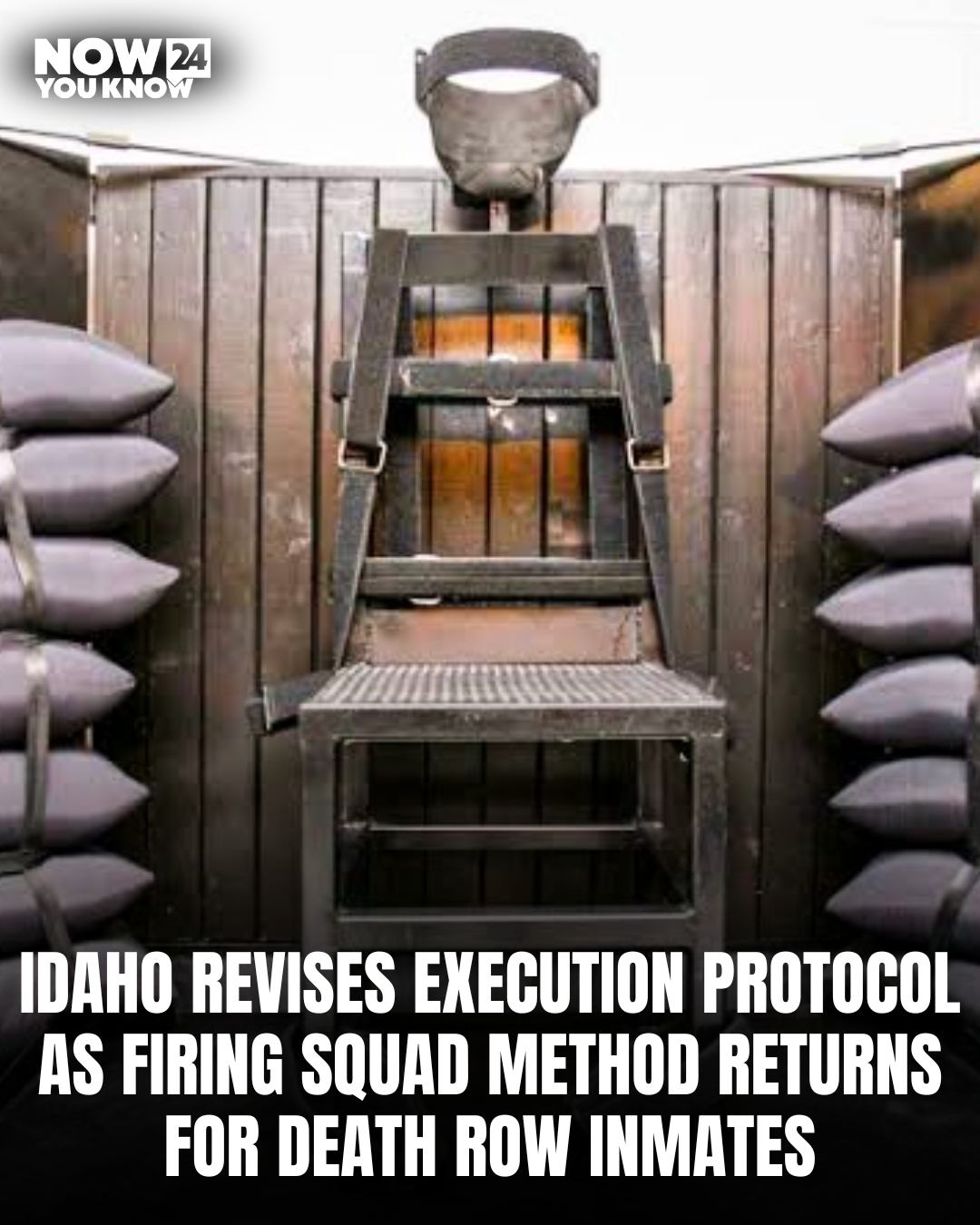

The U.S. state of Idaho has updated its execution procedures at the Idaho Maximum Security Institution, reintroducing the firing squad as an available method for carrying out death sentences. The change follows previous complications with lethal injection procedures in the state.
Officials confirmed that the revised protocol applies to the institution’s current death row population, which includes eight inmates. The update marks a significant shift in how executions may be conducted moving forward, with state authorities emphasizing procedural structure and oversight.
Volunteer Officers Assigned to Execution Duties
Under the new system, six specially selected law enforcement officers are assigned to each execution. These volunteers must meet strict eligibility requirements, including years of certified service, a clean disciplinary record regarding use of force, and completion of regular firearms qualification tests.
Three officers are designated to fire live rounds, while two serve as alternates. A sixth officer acts as team leader, responsible for overseeing preparation and weapon readiness. Training includes routine drills and marksmanship evaluations intended to ensure accuracy and consistency.
Procedure Inside the Execution Chamber
According to the revised guidelines, inmates may be offered sedatives prior to the procedure and are secured in a chair with a target placed over the chest. A heart monitor is used to track vital signs during the process, and a prison official issues the formal death warrant immediately before the execution begins.
Officers stand behind a protective barrier at a fixed distance and fire simultaneously at the designated target. If the inmate’s heartbeat continues after the initial shots, additional rounds may be authorized until medical personnel confirm death.
Debate Over Ethics and Effectiveness
The reinstated firing squad has renewed debate over capital punishment methods in the United States. Critics, including representatives from advocacy organizations such as the Death Penalty Information Center, argue that no execution method can be guaranteed free from complications or ethical concerns.
Supporters within the Idaho Department of Correction maintain that the updated procedures are designed to ensure security, order, and adherence to legal requirements. Officials emphasize that all involved personnel undergo extensive preparation to carry out court-ordered sentences in a controlled environment.
As Idaho moves forward with the revised system, the policy is expected to remain a point of national discussion on the future of capital punishment in the United States.