
A New Warning From U.S. Intelligence
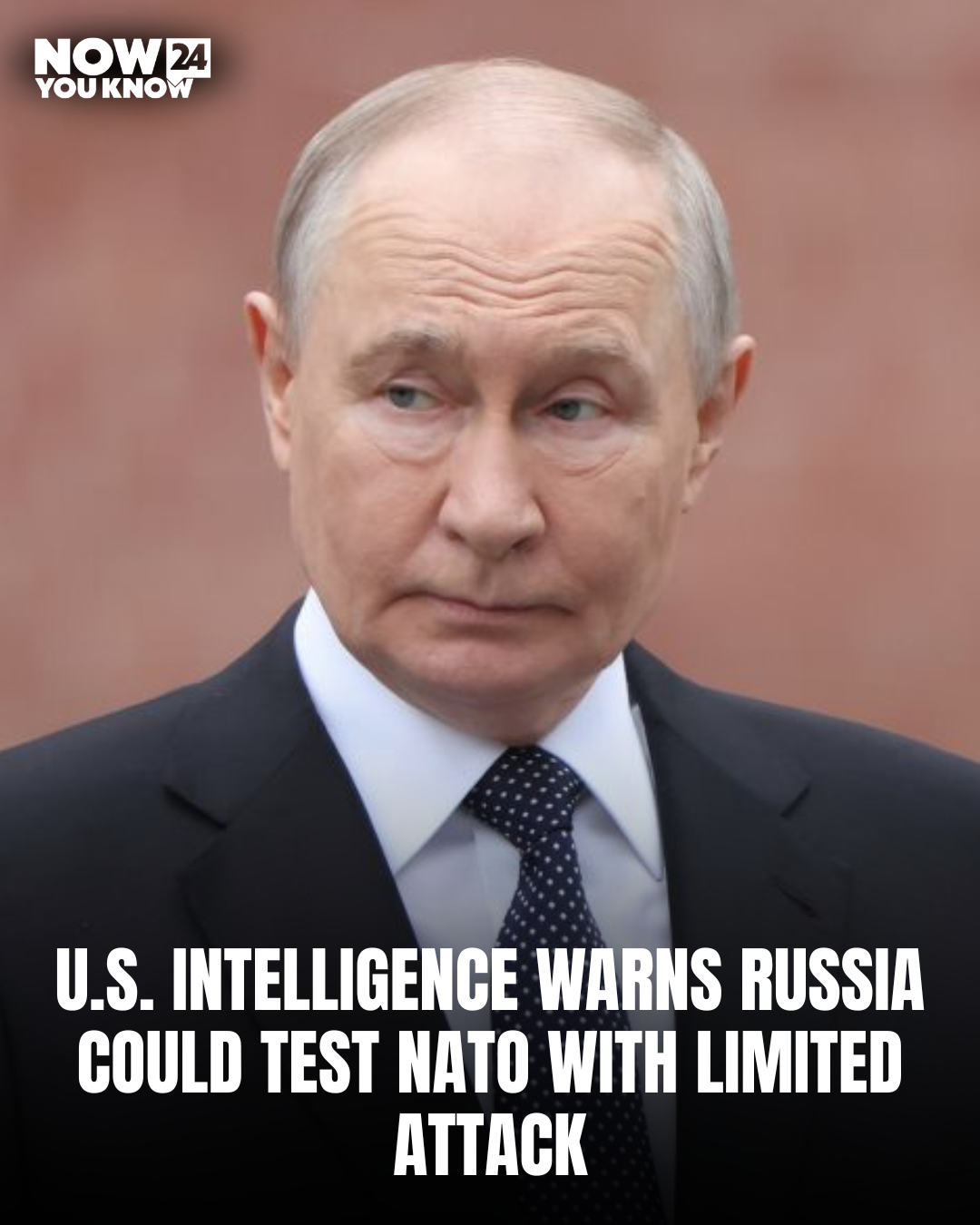
U.S. intelligence assessments have raised fresh concerns that Vladimir Putin could attempt to test NATO’s defenses and political resolve, marking a shift from earlier assessments that Russia was unlikely to directly challenge the alliance while its war in Ukraine continues.
According to reporting by The Wall Street Journal, U.S. officials believe Moscow could consider a limited military incursion into NATO territory rather than immediately launching a large-scale attack.
Eastern Europe Could Be Most Exposed
One scenario reportedly being considered involves a small-scale land incursion on NATO’s eastern flank. Poland and the Baltic states of Estonia, Latvia and Lithuania are among the countries that could face particular concern because of their proximity to Russia and the ongoing security tensions in the region.
Another possibility is a cyberattack or other form of hybrid operation designed to test how quickly NATO responds without immediately triggering a full-scale military confrontation.
When Could It Happen?
The intelligence assessment does not say that a Russian attack is certain or that one will definitely occur within weeks.
Instead, current reporting indicates that U.S. officials believe a provocative move could potentially occur as early as autumn 2026 and sometime before 2029. That distinction is important because the intelligence describes a potential scenario, not a confirmed Russian invasion plan.
Why NATO Is Watching Closely
NATO’s eastern members have remained particularly alert to Russian military activity, while alliance officials continue preparing for a range of possible scenarios.
The concern is that Moscow could attempt to exploit uncertainty over whether NATO members would respond collectively, especially if an incident were deliberately kept small or ambiguous.
Tensions Are Already Rising
The warning comes as European countries report a series of incidents involving Russian military and hybrid activity.
In July, the Russian frigate Neustrashimy conducted a live-fire weapons exercise in international waters roughly 40 nautical miles south of Plymouth. The Royal Navy monitored the exercise throughout after the Russian vessel notified a British patrol ship and requested that it move to a safer distance.
The UK Calls Russian Activity a Provocation
British Defence Secretary Wes Streeting described the exercise as “performative and irresponsible”, saying it was part of a broader pattern of Russian activity directed at Britain and its allies. The Royal Navy said it continued to track the Russian vessel and remained ready to protect UK national security.
The exercise itself was not an attack on Britain, but it illustrates why European governments are increasingly focused on Russia’s military activity around NATO territory.
The Bigger Question for NATO
The most serious concern is therefore not that an invasion of a NATO country is inevitable, but that Russia could deliberately create a limited crisis designed to test the alliance.
Any attack on a NATO member would carry potentially enormous consequences because of the alliance’s collective-defense commitment. For now, U.S. officials appear to be warning governments to prepare for the possibility rather than predicting that a war with NATO is about to begin.