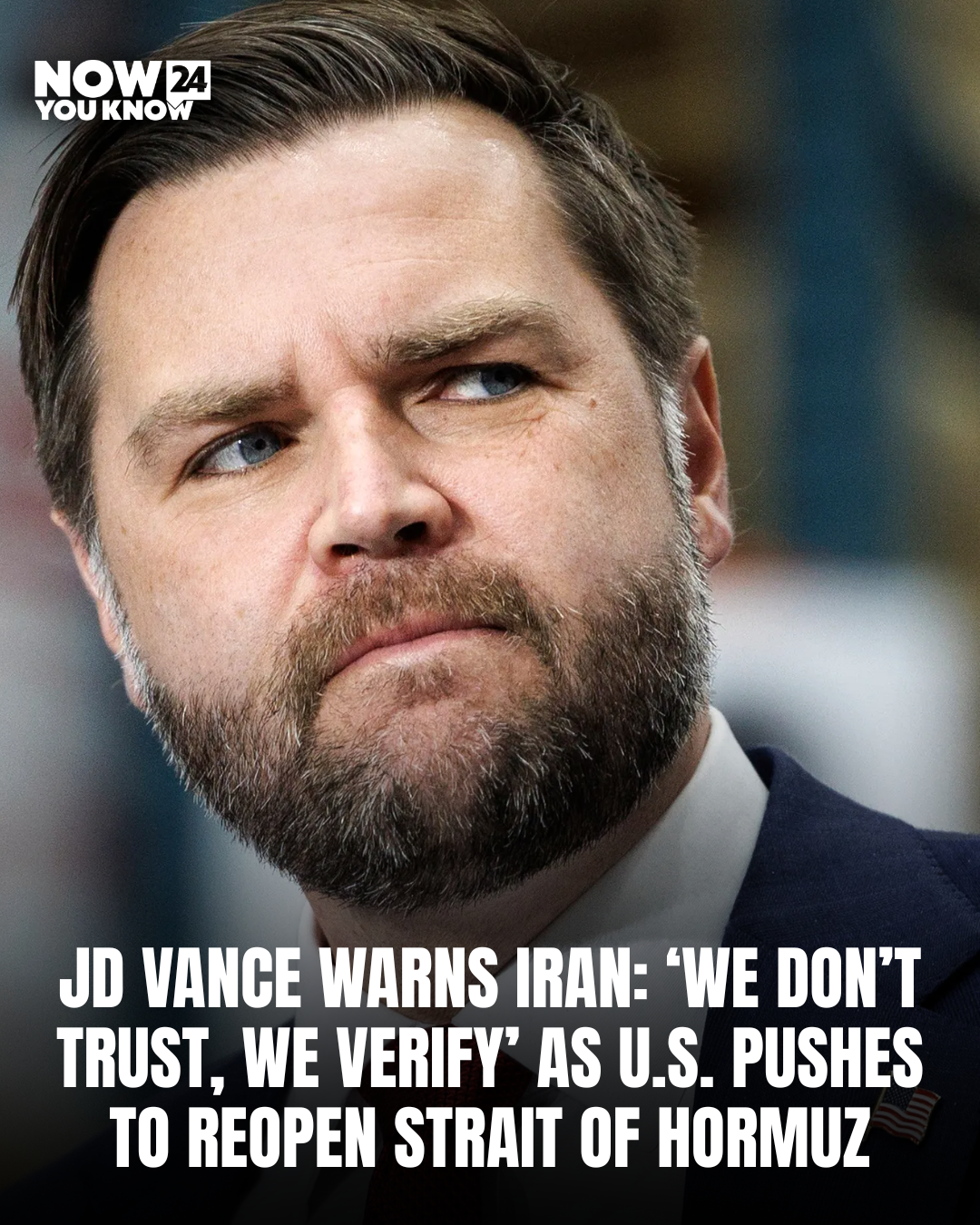

Vice President JD Vance says the United States will not rely on promises from Iran as Washington works toward restoring commercial shipping through the strategically vital Strait of Hormuz.
Speaking to Fox News, Vance said the administration would judge Tehran by its actions rather than its statements. “We don’t trust, we verify,” he said, while acknowledging that negotiations have made some progress in recent days.
What Washington Wants
Vance said the United States is looking for long-term changes from Iran and wants assurances that commercial vessels can move safely through the waterway. He also said Iranian officials have told Washington they have no plans to impose transit fees on ships using the strait.
But the vice president stressed that the United States intends to watch what Iran actually does before accepting those assurances. That could make the reopening of the waterway a much more complicated process than simply reaching a political agreement.
One immediate problem is maritime security. Vance said Iran laid mines in the area during the conflict and that discussions are therefore focused partly on creating a safe traffic system and determining how demining would take place.
Why the Strait Matters
The Strait of Hormuz is one of the world’s most important energy corridors. Any prolonged disruption can affect the movement of oil and gas and, in turn, influence energy costs far beyond the Middle East.
Vance said the administration wants energy flows from the Gulf to return to levels seen before the conflict. He argued that restoring those supplies could help Americans by keeping gasoline and energy prices lower.
At the same time, Vance warned that the conflict is not over. He said Washington is still using a combination of diplomatic, economic and military pressure while assessing whether Iran is prepared to make the changes the administration is demanding.
Vance also argued that the U.S. military campaign has severely weakened Iran’s nuclear, conventional and asymmetric military capabilities. Those are claims from the Trump administration, and the vice president did not provide additional evidence or details during the interview.
For now, the biggest test may be what happens in the waters around Hormuz. If commercial ships can safely resume normal traffic without new attacks, tolls or other restrictions, it could mark an important step toward easing the conflict. If that does not happen, the pressure campaign could continue.