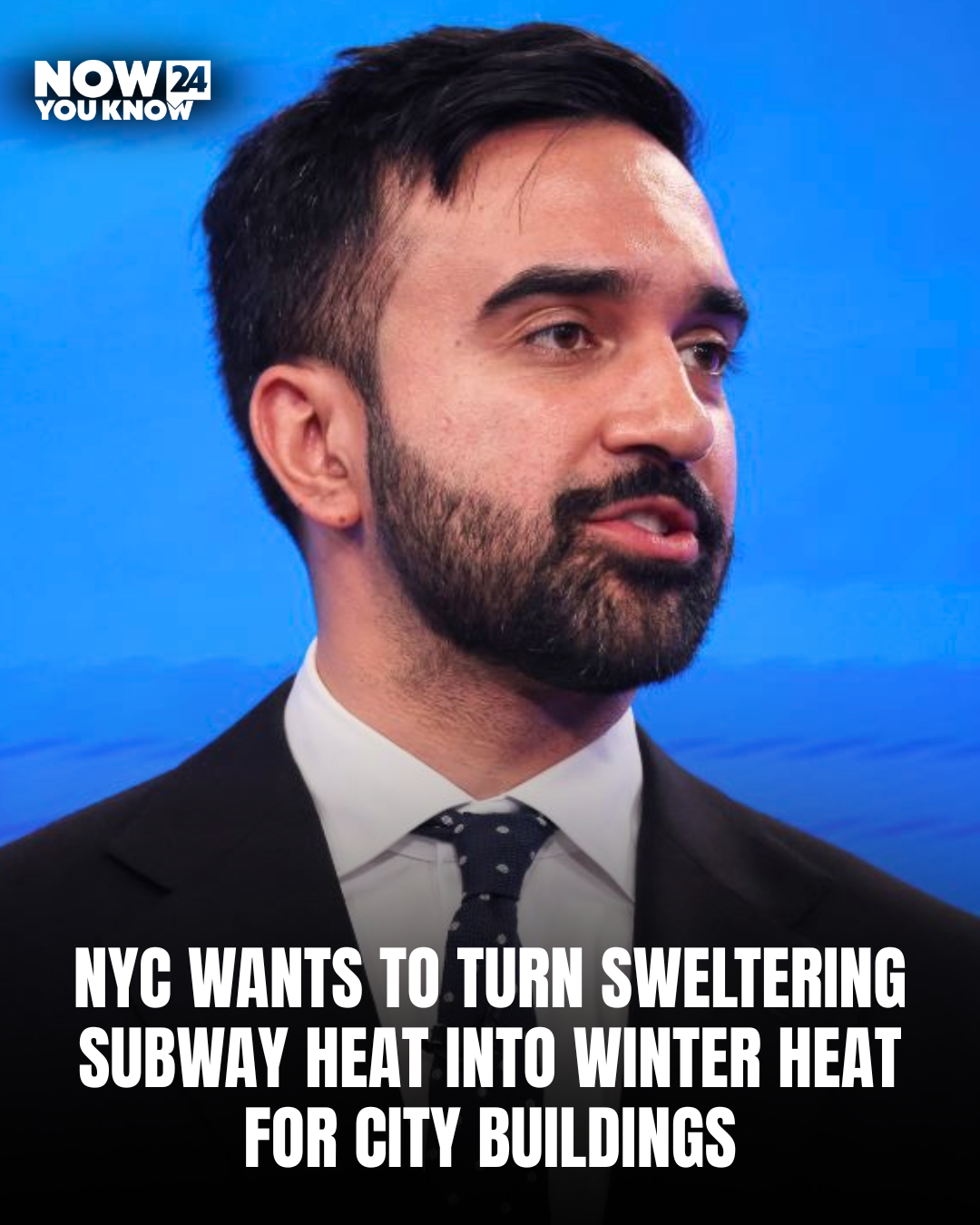

New York City is exploring an unusual way to deal with one of its most frustrating summer problems: sweltering subway platforms. Mayor Zohran Kwame Mamdani and the MTA have launched an $800,000 feasibility study to determine whether excess heat underground can be captured and reused.
From Subway Sauna to Winter Heat
The proposal centers on the Chambers Street and Brooklyn Bridge-City Hall subway complex in Lower Manhattan. Officials want to study whether a Thermal Energy Network could remove some of the heat from subway platforms during summer and store it underground for use during colder months.
The concept would use geothermal boreholes extending roughly 500 to 600 feet underground, along with pipes and circulating pumps. The stored thermal energy could eventually be used to heat nearby municipal buildings, including City Hall, Tweed Courthouse, Surrogate’s Court and the David Dinkins Municipal Building.
Could It Actually Cool the Subway?
That remains one of the biggest questions. MTA officials said the study is intended to determine how much cooling could realistically be delivered and how much energy the city could save. Officials are not promising air-conditioned platforms, but even a reduction of a few degrees could make extremely hot summer conditions more bearable.
The need is particularly noticeable at Brooklyn Bridge-City Hall, where the MTA says average temperatures reached 96 degrees last summer. Traditional air conditioning is difficult to install throughout the subway because stations have open entrances, stairways and ventilation systems.
A Potential Double Benefit
If the system proves workable, the same heat that currently makes underground platforms uncomfortable could become an energy resource. Instead of simply allowing excess heat to dissipate, the city could capture it, store it and use it later to help heat municipal buildings.
There could also be a financial benefit. City Comptroller Mark Levine said the city spends roughly $1.4 million annually to heat the David Dinkins Municipal Building, although the study still needs to determine how much of that demand could actually be offset.
Why This Could Matter Beyond One Station
Officials describe the proposal as a potential first for an American transit system. Thermal Energy Networks themselves are not new, but integrating one with subway infrastructure would be a different application. The technology is already being used in other settings, including New York City.
The feasibility work is expected to determine whether the geothermal approach can move forward. Mamdani said the city hopes to confirm feasibility by the end of 2026, with design work potentially beginning in 2027 if the results are positive. For now, New Yorkers will have to wait before knowing whether the city’s hottest subway platforms could become part of a much larger heating system.