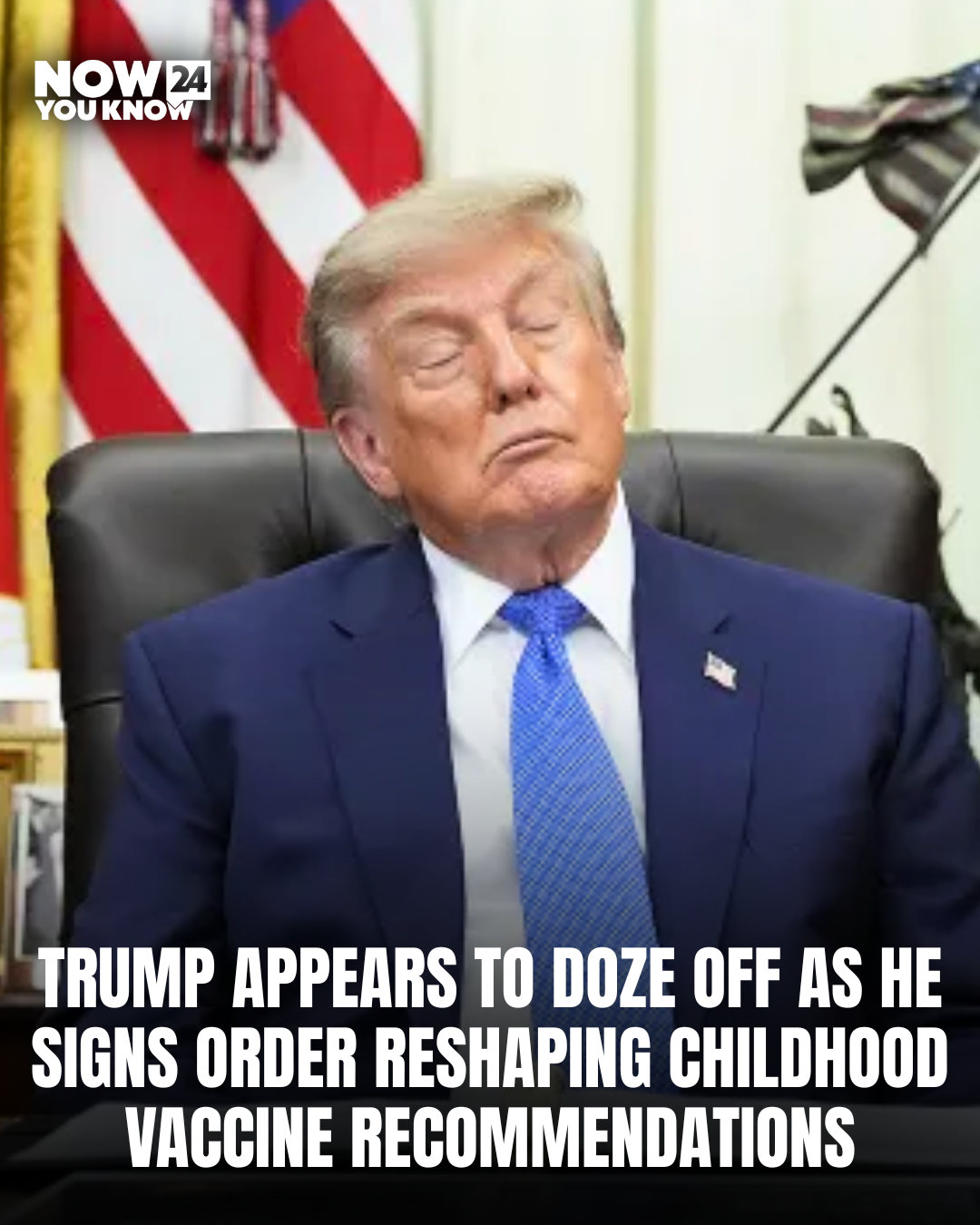

President Donald Trump appeared to doze off during an Oval Office event Monday as he signed an executive order calling for major changes to the nation’s childhood vaccine recommendations. Video clips quickly spread online, adding a viral moment to an already controversial policy announcement.
A Major Change to the Vaccine Schedule
The August 10 order directs federal health officials to pursue a reduced childhood immunization schedule, moving recommendations from vaccines covering 18 diseases to 11, according to reporting on the order. It also calls for greater spacing between vaccinations and for the MMR vaccine to be separated into individual measles, mumps and rubella shots.
The administration has described the approach as a “gold standard” strategy intended to give parents more flexibility. However, the order does not simply create a new vaccine product overnight, and separate measles, mumps and rubella formulations are not currently available in the United States as routine alternatives to the combined MMR vaccine.
Autism Claims Return to the Spotlight
During the event, Trump and Health Secretary Robert F. Kennedy Jr. again discussed the rise in autism diagnoses. Kennedy cited a dramatic increase in reported diagnoses over the decades and pointed toward environmental factors as a possible explanation.
But an important distinction remains: a rise in autism diagnoses does not demonstrate that vaccines caused the increase. Researchers have identified multiple factors that can affect diagnosis rates, including changes in diagnostic criteria, awareness and access to evaluation. Major scientific reviews have found no credible evidence that vaccines cause autism.
The Moment That Went Viral
While the policy announcement dominated the event, footage appearing to show Trump nodding off with his eyes closed quickly became a separate story online. Critics mocked the moment and described it as embarrassing, while supporters and others questioned whether a brief clip could establish that he was actually asleep.
The viral footage comes as the administration faces intense criticism over its vaccine policy. Medical groups and public-health experts argue that changing long-standing recommendations without strong scientific justification could create confusion for parents and potentially reduce protection against preventable diseases.
For parents, the biggest question may be what these changes actually mean in practice. The executive order sets the administration’s direction, but federal vaccine recommendations, state requirements and individual medical decisions involve different layers of policy. The debate is therefore likely to continue well beyond the Oval Office signing ceremony.