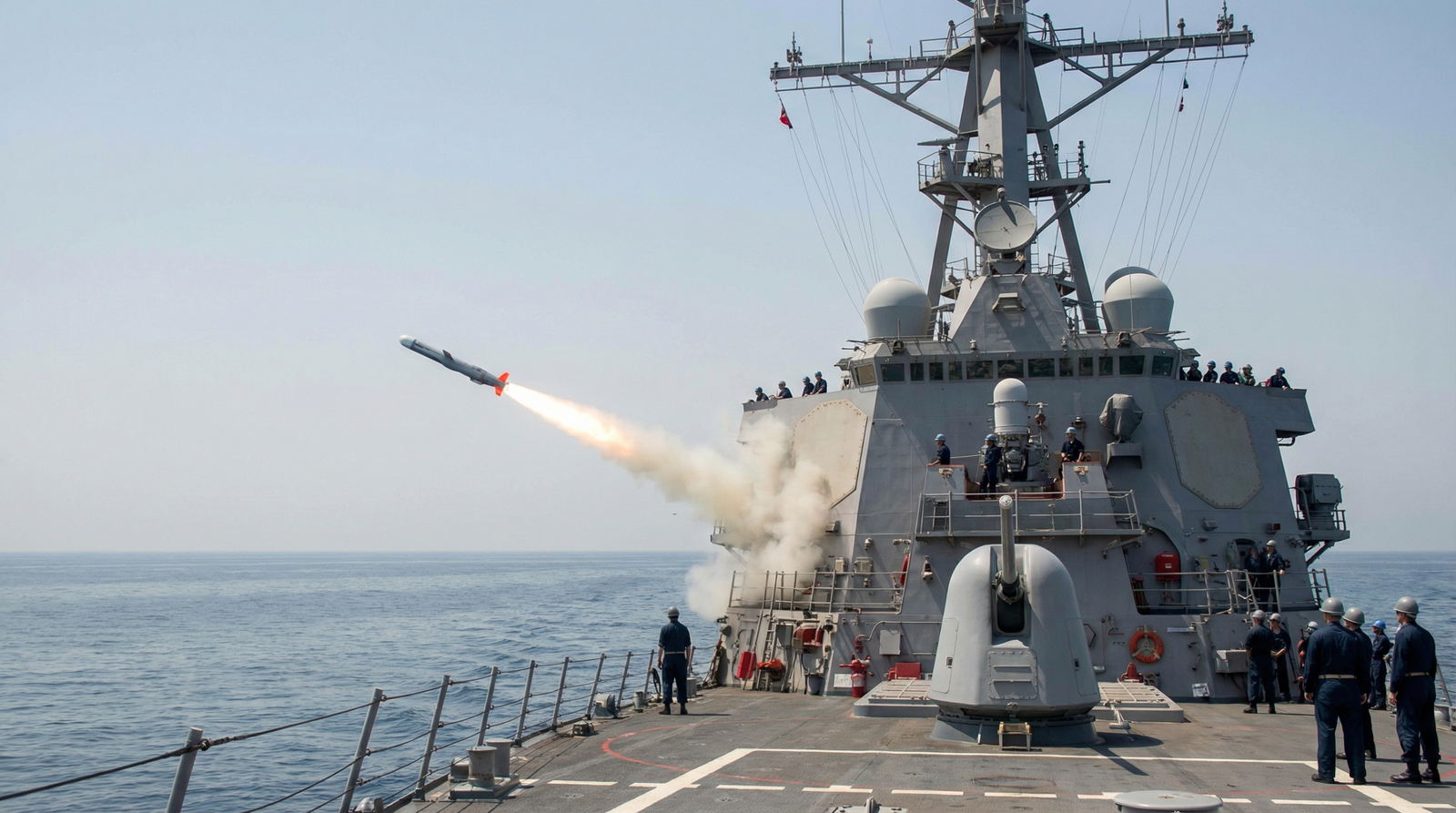

The United States military executed strikes against Iranian targets using a variety of weapons, including missiles and drones, while deploying advanced air defense systems to protect its bases across the Middle East from retaliatory attacks. This information was provided by a U.S. official on Saturday under the condition of anonymity to discuss ongoing military operations.
U.S. warships launched Tomahawk cruise missiles, and ground forces utilized the High Mobility Artillery Rocket System (HIMARS) during the strikes. Additional asset deployment involved drones and other unspecified standoff weapons, with the attacks originating from U.S. military installations on land, sea, and air.
In response to these strikes—conducted alongside Israeli forces—Iran launched multiple missile barrages targeting various locations in the region, including key American military bases in Qatar, Bahrain, Kuwait, and the United Arab Emirates. To defend against these retaliatory assaults, the U.S. military has employed the MIM-104 Patriot surface-to-air missile systems and Terminal High Altitude Area Defense (THAAD) batteries, complemented by Standard Missile interceptors launched from U.S. Navy vessels.
The official confirmed the interception of an unspecified number of Iranian missiles, noting no significant damage to U.S. facilities and no casualties among American personnel. Bahrain reported missile strikes on a major U.S. Navy base within its territory, while Qatar—home to the largest U.S. military base in the Middle East—also confirmed successful interceptions of incoming missiles. The United Kingdom Prime Minister Keir Starmer stated that British aircraft are actively participating in coordinated defense measures in the region.
According to an Israeli official, Iran has launched several dozen missiles over the course of several hours. Earlier on Saturday, former President Donald Trump announced the initiation of “major combat operations” in Iran, following unsuccessful negotiations aimed at curbing Tehran’s nuclear and military development. Israel also reported carrying out a “preemptive” strike against Iran.
The strikes involved coordinated efforts from U.S. ground, air, and naval forces as well as Israeli fighter jets, with the UK not engaged in offensive actions despite maintaining military assets in the region.
This military action represents the second direct U.S. strike on Iran within the past year, following the June 2025 Operation Midnight Hammer, which targeted Iran’s nuclear facilities. The U.S. has recently increased its military presence in the Middle East and Eastern Mediterranean, deploying more than a dozen warships, including two aircraft carriers, alongside hundreds of fighter and support aircraft. These deployments coincide with indications from Donald Trump that further military actions may be authorized.