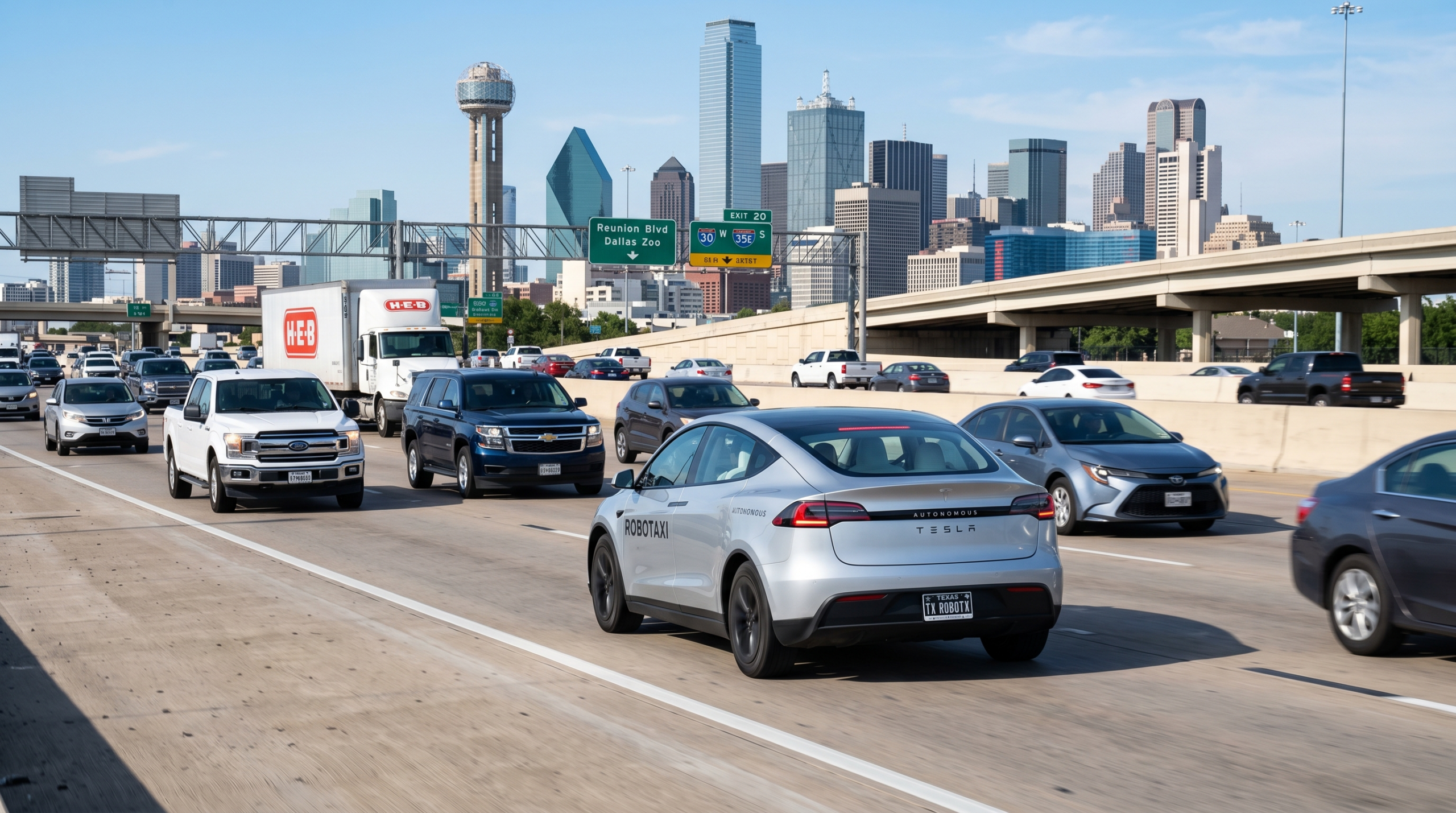

Tesla recently began operating its robotaxi service in Dallas, Texas, marking a significant step in the expansion of autonomous ride-sharing technology. The debut comes after Tesla introduced a similar driverless service in Austin earlier this year, following Waymo’s launch of its service in the region almost a year prior.
Chris Ramos, a 34-year-old accounts payable supervisor and Dallas resident, was among the first to try Tesla’s robotaxi service after learning about its availability. Ramos shared his experience, describing both the potential and the current limitations of autonomous vehicles.
Despite arriving at a designated service area and attempting to request a ride via the Tesla Robotaxi app, Ramos initially faced difficulties as the app repeatedly reported no available vehicles nearby for almost two hours. After contacting Tesla customer support, he was informed the service had not officially launched in that location. However, Ramos eventually secured a ride from a nearby Bank of America parking lot.
During the ride, which lasted approximately 54 minutes over an 11-mile route, Ramos noted that the vehicle handled city driving fairly well, though it did encounter trouble interpreting some traffic signals. For example, the robotaxi did not recognize that it could turn right at a red light.
A more concerning moment arose when the car missed an exit and merged onto a highway where traffic moved between 80 and 90 miles per hour. Ramos observed that the vehicle initially accelerated to match the flow of traffic but then abruptly slowed down as if preparing to pull over. Given the highway conditions, Ramos described feeling unsafe, citing the danger of stopping in fast-moving traffic.
A Tesla representative reportedly intervened, taking control of the vehicle to guide it safely into the slow lane and eventually off the highway. Once on surface streets, the robotaxi faced further issues; it missed the final destination, took Ramos to an incorrect location, and circled a hotel multiple times before Tesla support was able to redirect the vehicle properly.
The trip concluded with the vehicle dropping Ramos off approximately 2.6 miles from his intended destination before eventually reaching the correct address. He paid around $18 for the ride, which is higher compared to a previous three-mile ride with Waymo that cost $16.
Ramos described the ride as an adventurous experience that highlighted the evolving state of autonomous vehicle technology. While he acknowledged the challenges and safety concerns encountered during the trip, he expressed optimism about the future of self-driving cars, though he would not recommend the current service to his elderly relatives.
Public reaction to Tesla’s robotaxi service has been mixed, with some users praising the innovation and smoothness of the ride, while others report glitches and confusion in complex traffic environments. The technology remains under scrutiny, and skepticism about fully autonomous vehicles persists, especially regarding safety and reliability in everyday driving conditions.
Tesla has yet to respond to requests for comments concerning the specific incidents reported by Ramos. Meanwhile, this early deployment offers valuable insights into the ongoing development and integration challenges faced by autonomous vehicle services as they begin operating in real-world urban environments.