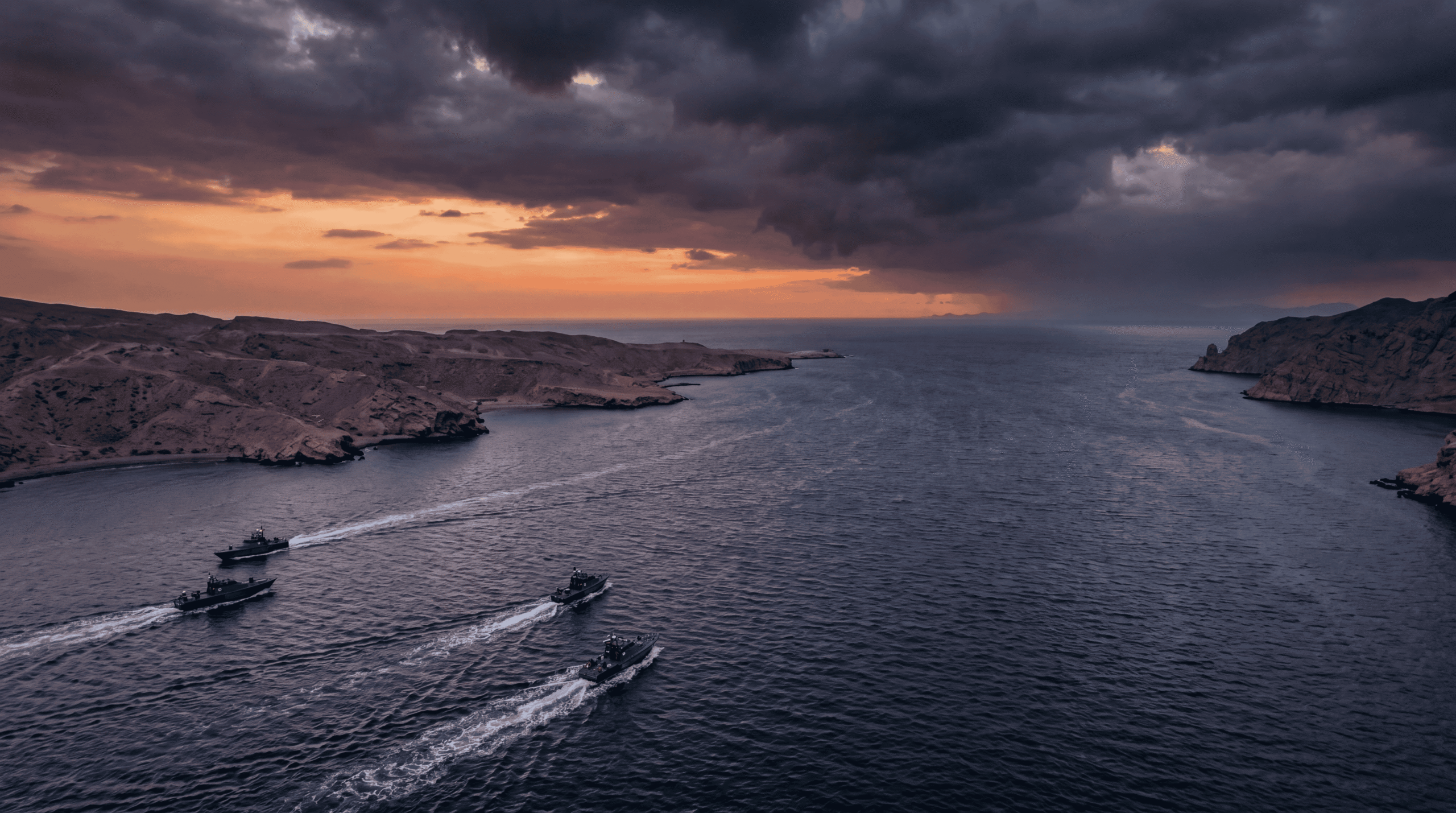

Europe is playing Russian roulette with its energy security, except every chamber is loaded. For over two months, the Strait of Hormuz—the artery that carries 21% of the world’s petroleum liquids and nearly a third of seaborne liquefied natural gas—has been effectively closed. First Iran blockaded it in March 2026. Then the United States attempted a counter-blockade. Now both powers are exchanging fire while European capitals watch their strategic reserves drain like sand through an hourglass.
The European Commission finally admitted what analysts have been screaming for weeks: Europe needs to “fasten its seat belts.” That’s diplomatic code for “brace for impact.” EU Climate Commissioner Wopke Hoekstra’s warning on May 5th wasn’t about climate policy—it was about economic survival. When a senior Commission official tells you to prepare for things getting “much worse,” believe them. They’ve seen the classified energy security briefings you haven’t.
The Strait of Hormuz: Europe’s Achilles’ Heel Exposed
The current crisis represents the longest sustained closure of the Strait since the Iran-Iraq War’s “Tanker War” phase in 1984-1988. But there’s a critical difference: back then, both belligerents eventually allowed neutral shipping to pass after naval escorts were established. Today, Tehran shows zero interest in compromise. Iranian Parliament Speaker Mohammad-Bagher Ghalibaf declared on May 6th that the “new equation” of Strait control is “being solidified,” adding ominously that Iran has “not even begun yet.”
This isn’t posturing. Iran has spent two decades building asymmetric naval capabilities specifically designed to deny this chokepoint to adversaries. According to Brookings Institution analysis, Tehran’s strategy relies on fast-attack craft, shore-based anti-ship missiles, and naval mines—weapons that don’t require blue-water naval supremacy to be devastatingly effective in the Strait’s confined waters.
President Trump’s “Project Freedom”—sending US warships to “guide” commercial vessels through the Strait—sounds bold. It’s actually a admission of strategic failure. When a superpower announces it will escort civilian ships through international waters, it’s acknowledging it cannot reopen those waters through military force without unacceptable escalation. Trump tried the escort approach overnight on May 5th. Iranian forces immediately engaged. No commercial ships made it through. The escort doctrine failed within 12 hours.
Why Europe Is Uniquely Vulnerable (And Knew It)
Europe imports approximately 23% of its crude oil from the Gulf region, with refineries in Rotterdam, Antwerp, and the Mediterranean specifically configured for Gulf crude grades. You cannot simply swap Saudi Arabian crude for Norwegian Brent without extensive (and expensive) refinery adjustments. This is industrial chemistry, not musical chairs.
But the real crisis isn’t crude oil—it’s refined products, especially jet fuel. Energy Commissioner Dan Jørgensen raised the prospect of “redistribution of jet fuel” and releasing government reserves in June. Translation: by summer, European airports could face the continent’s first peacetime fuel rationing since World War II. As the Commission noted in its May 1st contingency briefing, regional shortages are “increasingly probable” if the closure extends past 90 days.
What makes this particularly galling: Europe saw this coming. The Council on Foreign Relations warned in 2023 that post-Ukraine energy diversification had created a dangerous Gulf dependency. After cutting Russian pipeline gas, Europe increased LNG imports from Qatar by 137% between 2022-2025. That LNG transits the Strait. Europe didn’t diversify its risks—it swapped one chokepoint (Ukraine) for another (Hormuz) while congratulating itself on energy security.
The Stagflation Specter: 1973 Redux With Fewer Tools
EU Economy Commissioner Valdis Dombrovskis deployed the dreaded term on May 5th: stagflation. Economic slowdown plus inflation. The worst of both worlds. The combination that ended political careers in the 1970s and ushered in a generation of economic restructuring.
But 2026 isn’t 1973, and that’s not necessarily good news. During the first oil shock, European economies were manufacturing-heavy, with energy-intensive industries that could be temporarily idled. Today’s service-based economies have less flexibility. You cannot “idle” a data center or put a hospital on pause. Modern supply chains operate on just-in-time principles with minimal inventory buffers. When fuel gets scarce or prohibitively expensive, these systems don’t slow gracefully—they fracture.
European Central Bank President Christine Lagarde tried to downplay stagflation fears last week, but her own institution’s internal models tell a different story. According to ECB modeling released April 2026, a sustained 40% increase in energy costs coupled with 1.5% GDP contraction—both increasingly likely scenarios—would push core inflation above 6% by Q4 2026 while unemployment rises past 8.5%.
Central banks traditionally fight inflation with interest rate hikes. But raising rates into a recession amplifies the economic pain. The ECB is trapped: raise rates and deepen the recession, or hold steady and watch inflation devour purchasing power. There is no good option, only less-bad choices.
What This Means For You: The Hidden Costs Coming
If you’re a European citizen, here’s what the Commission isn’t clearly communicating: the pain is coming in waves, not all at once.
Wave One (Now-June 2026): Gasoline and diesel prices continue climbing. You’re already seeing this at the pump. Expect €2.50-2.80 per liter across most of the EU by mid-June, up from €1.85 in February. Commuting costs spike. Delivery surcharges become standard.
Wave Two (June-August 2026): Summer travel disruption. Airlines will cancel routes not because they choose to, but because they cannot source fuel at economically viable prices. Package holiday companies will impose “fuel surcharges” that exceed the base ticket price. Some regional airports may temporarily close. EU officials are quietly modeling scenarios where 15-20% of scheduled summer flights don’t operate.
Wave Three (September 2026 onwards): Industrial contraction. Energy-intensive manufacturers—chemicals, steel, aluminum, glass—will idle production lines. This triggers unemployment in industrial regions concentrated in Germany’s Ruhr Valley, northern France, and Poland’s Silesia. These job losses hit communities with fewer alternative employment options. Politically, this creates fertile ground for populist movements blaming Brussels for the crisis.
Wave Four (Winter 2026-2027): If the Strait remains closed into autumn, heating fuel shortages become critical. Europe’s strategic gas reserves, rebuilt after the Ukraine crisis, are designed to handle supply interruptions of 60-90 days maximum. Beyond that, rationing moves from industry to residential consumers. Think controlled blackouts and heating quotas.
The Decisions That Led Here (And The Leaders Who Made Them)
This crisis has authors, not just causes. European energy policy over the past four years prioritized speed over resilience. The rush to replace Russian energy created a Gulf dependency that any first-year geopolitics student could have identified as dangerous.
Qatar became Europe’s savior, signing long-term LNG contracts worth over €140 billion between 2022-2024. Those contracts require Qatari gas to transit the Strait. No European leader publicly questioned what would happen if that route closed, because asking the question would have undermined the narrative that Europe had successfully secured its energy future. Political convenience trumped strategic planning.
Germany bears particular responsibility. Berlin championed the Gulf pivot while simultaneously slow-walking domestic renewable deployment due to permitting bottlenecks and NIMBY opposition. Germany’s offshore wind capacity in 2026 remains barely half the 2020 target. That shortfall is now being made up with Gulf gas that isn’t arriving.
The European Commission also failed basic strategic planning. Despite repeated warnings from the International Energy Agency about concentration risk in the Gulf, Brussels never mandated meaningful strategic reserve increases or diversification requirements. The Commission can convene emergency meetings and issue stern statements, but it cannot magic oil tankers into existence or force Iran to reopen the Strait.
What Happens Next: Three Scenarios
Scenario One: Diplomatic Breakthrough (Probability: 20%)
The US and Iran agree to a monitored ceasefire that allows neutral shipping to resume within 30 days. Tehran gets sanctions relief and implicit recognition of its regional influence. Washington gets the Strait reopened without a humiliating military defeat. Europe pays for this through accepting higher baseline energy costs and increased Gulf dependency. This is the best-case scenario, and it still leaves Europe structurally vulnerable.
Scenario Two: Frozen Conflict (Probability: 55%)
The current standoff continues through summer 2026. Neither Washington nor Tehran can achieve their maximalist goals, but neither is willing to back down. Occasional skirmishes continue. Some oil shipments resume through alternative routes (pipelines across Arabia, tankers around Africa), but at severely reduced capacity and massively increased costs. Europe enters a prolonged period of energy scarcity and elevated inflation. Economic growth stalls. Political instability increases. This is the most likely outcome.
Scenario Three: Escalation to Regional War (Probability: 25%)
A miscalculation or deliberate provocation triggers wider conflict. US strikes on Iranian nuclear facilities or Iranian attacks on Gulf oil infrastructure beyond the Strait. Regional powers including Israel and Saudi Arabia are drawn in. Oil prices spike above $200 per barrel. Europe faces immediate rationing across all sectors. Emergency EU summits authorize unprecedented economic intervention, but cannot address the core supply shortfall. This scenario doesn’t just damage European economies—it reshapes them, potentially for a generation. The probability is uncomfortably high and rising.
The Geopolitical Lessons Europe Refuses to Learn
Every major European energy crisis of the past 50 years—the 1973 oil shock, the 2006 and 2009 Russia-Ukraine gas disputes, the 2022 Russian supply cut, and now the 2026 Strait closure—shares a common feature: Europe is a price-taker, not a price-maker. The continent consumes more energy than it produces and depends on imports from regions where it has minimal political influence.
This isn’t fixable with better diplomacy or smarter negotiations. It requires transforming Europe’s energy system from the ground up—massive renewable deployment, continent-wide grid integration, industrial electrification, strategic reserve expansion, and acceptance of higher baseline energy costs in exchange for security. According to Bruegel Institute calculations, achieving genuine energy independence would require sustained investment of 3-4% of EU GDP annually for 15-20 years.
That level of investment and political will doesn’t exist. So Europe will continue lurching from crisis to crisis, each time proclaiming “never again,” each time making marginal adjustments that don’t address the structural vulnerability. The Strait of Hormuz closure is teaching Europe a lesson it has failed to learn repeatedly: in a world of resource competition and great power rivalry, energy dependency is a dagger held to your own throat by someone else’s hand.
The bitter truth: Europe’s energy security crisis isn’t a crisis at all—it’s a chronic condition it lacks the political courage to treat.