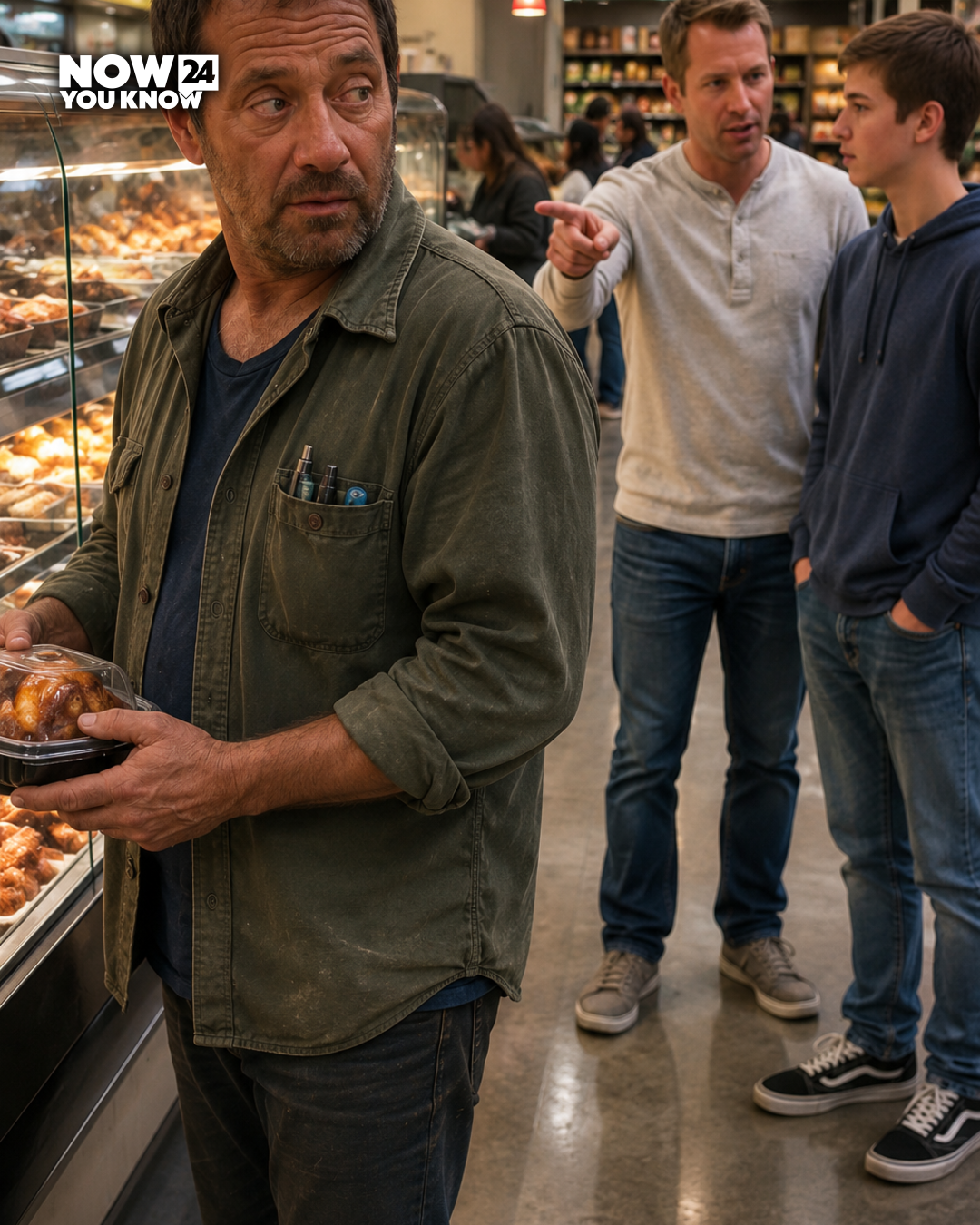

A FATHER INDICATED MY GREASE-SMEARED HANDS AND TOLD HIS SON I WAS A FAILURE — JUST MOMENTS LATER, HIS SON’S PERCEPTION OF ME SHIFTED ENTIRELY.
After working as a welder for most of his life, the narrator found himself at a hot food section after a grueling 15-hour shift. His hands were still stained with grease and his clothes carried the scent of metal and smoke. Fatigue weighed on him as he deliberated over what to eat, fully aware of how others might perceive his appearance.
Nearby, a father noticed the greasy hands and leaned toward his son, warning him that this was the result of not taking school seriously—implying a future filled with manual labor and failure. The son hesitated but quietly rejected the path his father suggested.
The narrator could have responded to their judgment but chose instead to let his work and life speak on their own. He quietly picked up his food and moved toward the checkout, accepting the reality of his profession with no shame.
As fate would have it, the father and son ended up right behind him in line. The contrast between their polished appearance and his worn hands became striking, especially as the son glanced repeatedly at the welder’s hands. There was an unspoken shift in the boy’s outlook triggered by what he saw.
This unexpected moment demonstrated how judgments based on outward appearances can be challenged simply by presence and quiet dignity. The father never looked back, but the son’s perception was already changing—showing that respect and value can come from hard work and experience, not just formal education or appearances.
The story’s most powerful lesson encourages reflection on how society values different kinds of labor, and how the eyes of the next generation may be quietly reassessing what success means beyond traditional expectations.