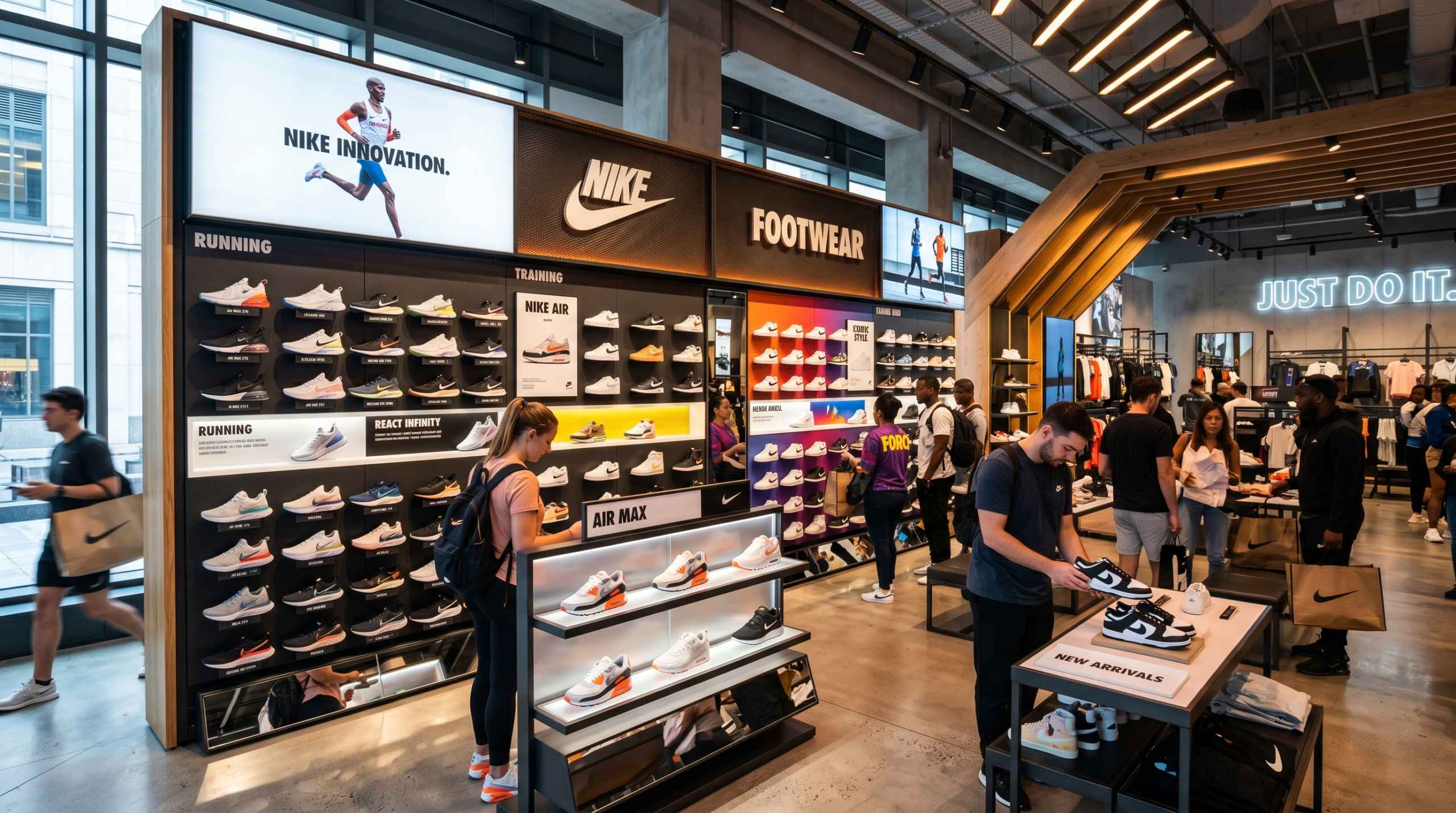

Nike, the global sportswear leader, is facing significant challenges as it attempts a corporate turnaround under the leadership of CEO Elliott Hill, who returned to the company in 2024. Since peaking in November 2021, Nike’s stock price has fallen approximately 70%, with a 30% decline in 2026 alone, reflecting broader issues impacting the company’s market standing.
Hill’s strategy centers on returning Nike to its sports roots, cultivating stronger partnerships with retailers, enhancing product innovation, and streamlining leadership. This approach marks a departure from previous efforts under former CEO John Donahoe, whose aggressive pivot toward direct-to-consumer (DTC) sales and reduced collaboration with key wholesale partners disrupted Nike’s long-standing retail ecosystem. The decision to downsize ties with retailers such as Foot Locker, DSW, and Macy’s aimed to increase profits and control over consumer data but ultimately weakened Nike’s presence in the physical retail space and opened market share opportunities to competitors like New Balance, On, and Hoka.
During the pandemic, Nike initially maintained strong sales, boosted by increased consumer spending on sporting goods while at home and a robust market for collectible shoes. However, as consumer habits shifted post-pandemic, the drawbacks of Nike’s sales restructuring became evident. Issues with excess inventory, oversaturation of popular shoe models like Air Force 1s and Air Jordans, and a decline in product innovation impacted brand desirability.
Notably, while rivals invested in research and development to introduce novel technologies, Nike experienced a lag in refreshing key product lines, allowing competitors to gain traction with advanced cushioning and sole designs. Analysts have pointed to the aging product line and internal workforce changes, including replacing seasoned employees with less experienced staff, as factors contributing to the challenges Nike faces.
Since Hill’s appointment, efforts such as the “Win Now” turnaround plan have been introduced. This includes refocusing on sports-specific product development, repairing wholesale relationships, reorganizing internal teams, and reducing promotional discounts to address inventory issues. Progress has been cautiously optimistic, with improvements in North American sales and renewed emphasis on core sportswear, although China remains a difficult market due to economic factors, rising nationalism favoring domestic brands like Anta and Li-Ning, and lingering inventory challenges.
Nike’s leadership acknowledges the complexity of the turnaround process. Hill has expressed a desire to transition from focusing solely on fixing problems to inspiring growth and innovation. The company continues to invest in forward-looking projects, including collaborations such as NikeSKIMS and cutting-edge footwear technologies, recognizing that product development cycles of 12 to 18 months mean results will take time.
Despite current struggles, Nike remains the dominant shoe brand in the United States. Market experts observe that even amid setbacks, Nike continues to secure wins in key segments, and its North American growth counters concerns about its overall performance. Nonetheless, challenges in China and the need for sustained innovation and retail partnerships mean the company’s full recovery will require patience and continued strategic execution.