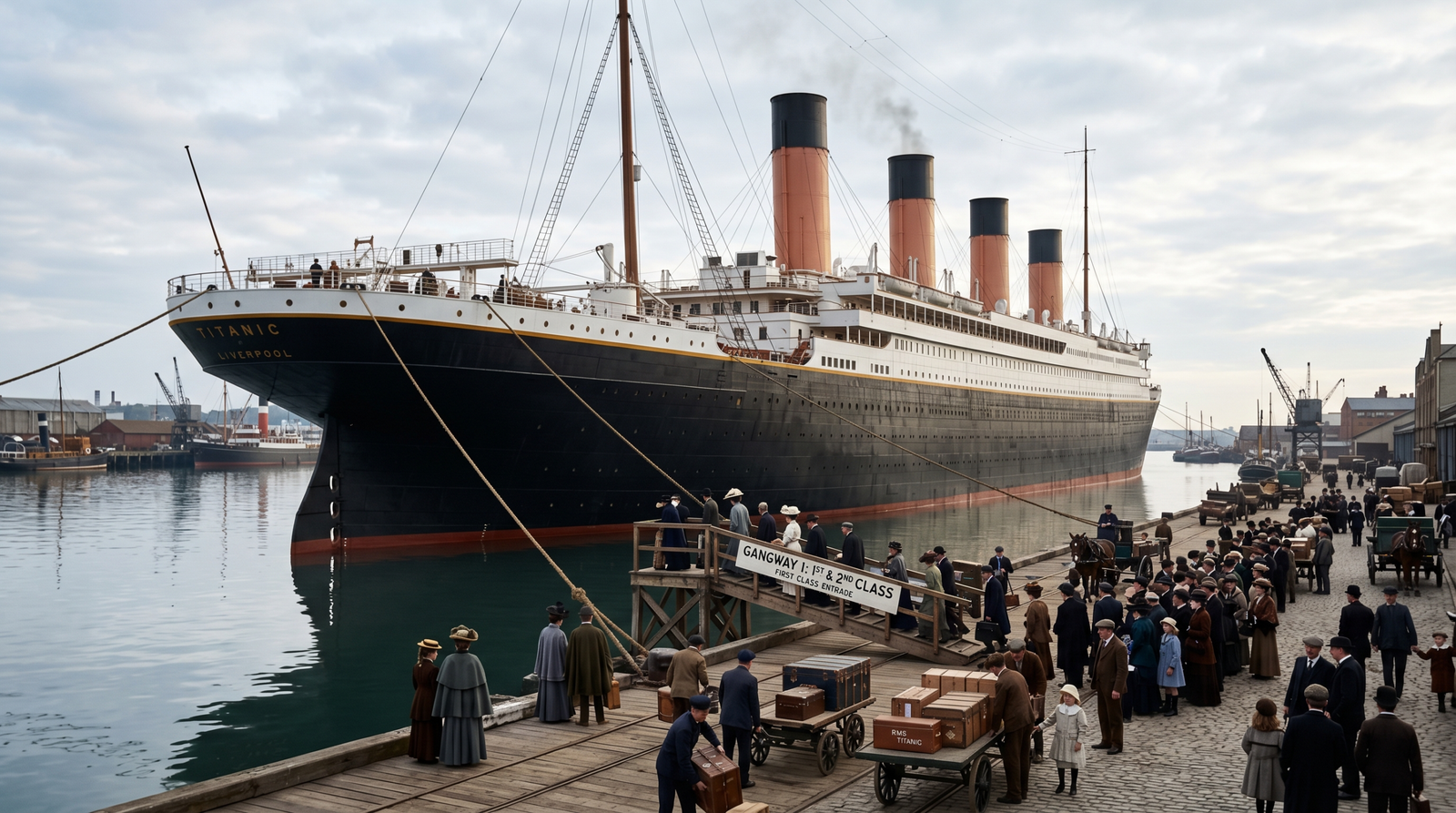

The sinking of the Titanic on April 15, 1912, remains one of the most tragic maritime disasters in history. While many aboard perished, there were several well-known figures who had purchased tickets for the ship’s maiden voyage but ultimately did not board. These near-misses continue to capture public interest over a century later.
One of the most notable individuals was American financier J. Pierpont Morgan, a cofounder of major companies such as General Electric, International Harvester, and US Steel. Morgan also founded the International Mercantile Marine, the parent company of the White Star Line, which owned the Titanic. He had a personal suite reserved and even attended the ship’s launch party in 1911, but extended his vacation in France and missed the sailing. The exact reason for his cancellation remains unclear, with some speculation involving health concerns or customs issues related to his art collection.
Milton Hershey, the founder of the Hershey Company, and his wife Catherine had planned to return from a European vacation aboard the Titanic. Hershey had paid for their tickets in December 1911; however, pressing business matters compelled him to cut his trip short. Instead, they traveled home on a German liner, the Amerika, days before the Titanic departed. Hershey’s canceled reservation check is preserved in the Hershey Community Archives.
Guglielmo Marconi, the Nobel Prize-winning inventor of the wireless radio, was instrumental in the rescue operations after the Titanic sank. Remarkably, he was also offered a free ticket to sail on the Titanic but chose to travel three days earlier on the Lusitania, as his stenographer preferred that ship.
Industrialist Henry Clay Frick, notable for his contributions to Carnegie Steel and art patronage, had reserved accommodations aboard the Titanic. However, Mrs. Frick sprained her ankle while in Europe, leading them to remain behind for medical attention. The suite they had booked later became associated with survival, as most who reserved it either did not sail or escaped via lifeboats, and the suite was transferred to J. Bruce Ismay, White Star Line’s chairman, who survived the disaster.
Other prominent individuals who narrowly avoided embarking on the Titanic include Alfred Gwynne Vanderbilt, a member of the influential Vanderbilt family. He survived the Titanic disaster but later perished in 1915 when the Lusitania was sunk by German U-boats.
American journalist Theodore Dreiser planned to travel on the Titanic to observe the affluent passengers but was convinced by his publisher to take a less expensive ship two days earlier. Nobel Peace Prize winner John R. Mott also opted for the Lapland instead of the Titanic, escaping tragedy multiple times during his life.
Additionally, several well-known individuals held tickets for a future Titanic voyage that never occurred due to the sinking. This group includes J.C. Penney, founder of the department store chain; Frank Seiberling, cofounder of Goodyear Tire & Rubber Company; John Alden Dix, former governor of New York; and historian Henry Adams, descendant of two U.S. presidents.
The legacy of the Titanic continues to influence popular culture, tourism, and maritime safety regulations to this day. The stories of those who nearly sailed on the ship highlight the numerous chances and choices that impacted who survived one of the most infamous voyages in history.