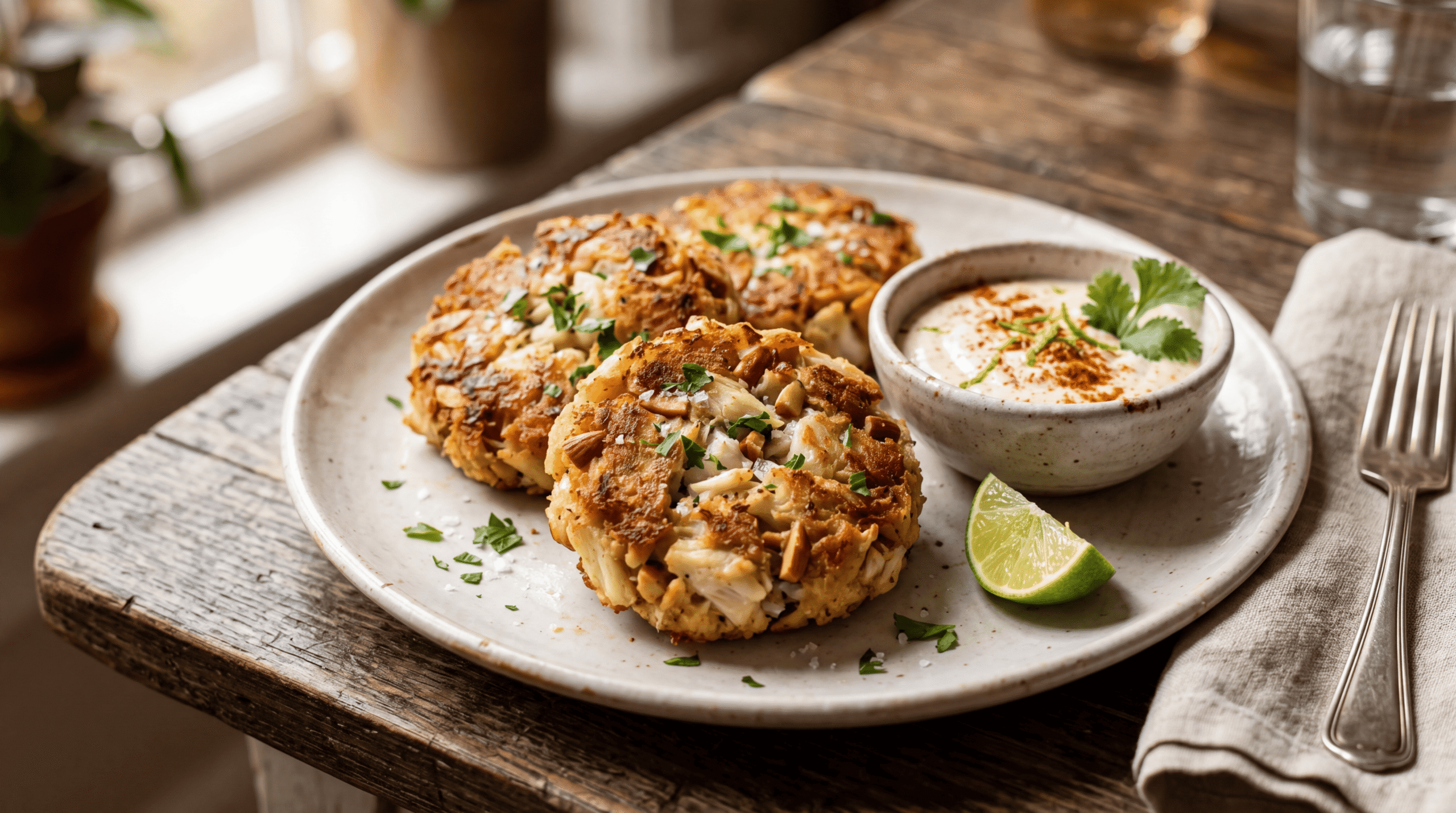

Here’s what you’ve been doing wrong: You’re using breadcrumbs as a binder in your crab cakes, which not only dilutes the delicate sweetness of the crab but creates a dense, starchy texture that absorbs oil like a sponge during cooking. The result? Heavy, greasy patties that taste more like fried bread than premium seafood. The solution is counterintuitive but scientifically sound: ground almonds.
Why Ground Almonds Transform Crab Cakes From Good to Exceptional
Ground almonds create a binding matrix that’s fundamentally different from breadcrumbs. When you knead them with grated onion (as this recipe brilliantly specifies), the moisture activates the almond’s natural oils and proteins, creating a paste that holds the crab meat together without overwhelming it. This isn’t just about taste—it’s about preserving the nutritional powerhouse that makes crab one of the ocean’s most valuable proteins.
White crab meat delivers 20 grams of protein per 100 grams while containing less than 1 gram of fat. But here’s what separates crab from chicken breast: it’s loaded with omega-3 fatty acids, specifically EPA and DHA, which reduce inflammation at the cellular level and support cardiovascular health in ways that land-based proteins simply cannot match.
The Nutritional Science Behind This Recipe
This isn’t just another healthy recipe—it’s a masterclass in nutrient density. Each crab cake contains approximately 98 calories, 8 grams of protein, and 6.3 grams of fat (mostly from heart-healthy almonds and parmesan). Compare that to traditional crab cakes, which often exceed 250 calories each and deliver saturated fat from mayonnaise-heavy binders.
The omega-3 content deserves special attention. Crab provides both EPA (eicosapentaenoic acid) and DHA (docosahexaenoic acid), the two omega-3 fatty acids your body cannot produce efficiently. Research published in Food Science journals consistently shows these compounds reduce triglycerides, lower blood pressure, and may even slow cognitive decline.
But here’s what most recipes ignore: crab also delivers vitamin B12 (essential for nerve function), selenium (a powerful antioxidant), zinc (critical for immune response), and phosphorus (necessary for bone density). A serving of three crab cakes provides nearly 40% of your daily B12 requirement and 25% of your selenium needs.
The Science Behind the Binding Technique
The genius of this recipe lies in its methodology. When you grate raw onion and knead it with ground almonds, you’re creating what food scientists call a “cohesive protein-fat emulsion.” The onion’s moisture (about 89% water) hydrates the almond flour, while the onion’s sulfur compounds (the same ones that make you cry) actually enhance the savory flavor of the crab through a process called flavor potentiation.
Adding parmesan isn’t just about taste—it’s structural engineering. Parmesan contains calcium and phosphorus compounds that, when heated, create additional binding points in the mixture. The aged cheese also contributes glutamates, which trigger umami receptors and make the crab taste “crab-ier” without adding salt.
The egg serves as the final binding agent, but its role is more sophisticated than you think. Egg proteins (primarily ovalbumin) denature at around 80°C (176°F), creating a gel network that locks the crab and almond mixture into place. This is why proper oven temperature matters—too hot and the exterior sets before the interior binds; too cool and you get crumbly, falling-apart patties.
Why Baking Beats Frying Every Time
Traditional crab cake recipes call for pan-frying in butter or oil, which adds 100-150 calories per cake and oxidizes the delicate omega-3 fatty acids you’re trying to preserve. Omega-3s are polyunsaturated fats, meaning they have multiple double bonds that are vulnerable to heat damage. When you fry at high temperatures (180°C/350°F or above), you create lipid peroxides—compounds that not only destroy the health benefits but can actually promote inflammation.
Baking at 200°C (390°F) achieves surface browning through the Maillard reaction—the same chemical process that makes bread crust taste amazing—without submerging the crab cakes in hot fat. The result is a golden exterior with a moist interior, and you preserve up to 85% of the omega-3 content compared to just 40-50% retention in deep-fried versions.
Common Mistakes That Ruin Crab Cakes
1. Using canned crab without draining thoroughly: Canned crab meat sits in liquid that dilutes flavor and adds unwanted moisture. You must squeeze the crab meat in a clean kitchen towel until it’s nearly dry. Excess water prevents proper binding and creates steam pockets that make the cakes fall apart.
2. Overworking the mixture: When you aggressively stir or knead crab meat, you break down its natural flake structure. The recipe correctly instructs you to “stir through, breaking up but leaving some chunkier pieces.” Those chunks provide textural contrast and visual appeal—they prove you used real crab, not imitation.
3. Making the patties too thick: The 2cm (¾-inch) thickness specified isn’t arbitrary. Thicker patties require longer cooking, which dries out the edges before the center sets. Thinner patties cook too quickly and don’t develop proper crust. The 2cm sweet spot ensures even cooking and optimal texture.
4. Skipping the rotation: Ovens have hot spots—areas where temperature varies by 10-15°C. Rotating the tray after 15 minutes ensures even browning. This seems minor, but uneven cooking creates some cakes that are overdone (dry) while others are underdone (crumbly).
The Mediterranean Diet Connection
This recipe embodies Mediterranean eating principles: seafood as primary protein, nuts for healthy fats, and minimal processed ingredients. The Mediterranean diet isn’t just trendy—it’s the most extensively studied eating pattern in nutritional science, with decades of research supporting its effects on longevity and disease prevention.
What makes this approach so effective? It’s the synergy. Omega-3s from crab reduce inflammation. Monounsaturated fats from almonds improve cholesterol ratios. Probiotics from Greek yogurt (in the dipping sauce) support gut health. Antioxidants from paprika and chili protect cells from oxidative stress. No single ingredient is a miracle—it’s the combination that produces remarkable health outcomes.
The Yogurt Dipping Sauce: More Than a Condiment
The accompanying sauce isn’t an afterthought—it’s nutritional insurance. Full-fat Greek yogurt contains conjugated linoleic acid (CLA), a fatty acid that may improve body composition, plus probiotics that support digestive health. The “full-fat” specification is crucial: low-fat yogurt often contains added sugars to compensate for flavor loss, and the fat in full-fat yogurt helps your body absorb fat-soluble vitamins A, D, E, and K.
The lime juice adds more than brightness—citric acid enhances iron absorption from the crab meat. Worcestershire sauce contributes fermented complexity and additional umami. The paprika and chili aren’t just for heat; capsaicin (the compound that makes chili spicy) has been shown to boost metabolism and improve insulin sensitivity.
How to Make These Crab Cakes Like a Professional
The Recipe:
Ingredients (makes 8 crab cakes):
- ½ onion, peeled and grated
- 60g ground almonds (almond meal)
- 1 spring onion, finely sliced
- 1 egg, lightly beaten
- 25g parmesan, finely grated
- 200g cooked white crab meat (fresh or canned, thoroughly drained)
- Sea salt and black pepper
For the dipping sauce:
- 80g full-fat Greek yogurt
- ½ teaspoon ground paprika
- 1 teaspoon Worcestershire sauce
- ¼ teaspoon dried chili flakes (optional)
- Zest and juice of ½ lime
Method:
1. Preheat your oven to 200°C fan (220°C conventional/430°F/Gas mark 7). Line a baking tray with parchment paper—not aluminum foil, which can react with acidic ingredients.
2. Grate the onion directly into a large bowl. Don’t chop it—grating breaks down more cell walls, releasing more moisture and flavor compounds. Add the ground almonds immediately and knead with clean hands for 60-90 seconds until the mixture becomes cohesive and sticky. You should feel the texture change from powdery to paste-like.
3. Add spring onion, egg, parmesan, and a generous pinch of salt and pepper. Mix thoroughly with a fork, ensuring the egg is completely incorporated. The mixture should look like thick, shaggy cookie dough.
4. Add the crab meat and fold it in gently with a spatula or your hands. This is critical: don’t stir aggressively. You want visible chunks of crab throughout, not a homogeneous paste. If using canned crab, break up any very large pieces but preserve the natural flake structure.
5. Using a ¼ cup measure or kitchen scale (aim for 50g each), portion the mixture and roll into balls. Place on the prepared tray and gently press to 2cm thickness—use the back of a spoon or your palm, not your fingers which create uneven pressure.
6. Bake for 15 minutes, then rotate the tray 180 degrees. Bake for an additional 5 minutes. The cakes should be golden brown with slightly darker edges. They’ll firm up as they cool, so don’t be tempted to overbake.
7. While the cakes bake, whisk together all sauce ingredients. Taste and adjust—it should be quite tart and punchy on its own because it will balance the rich, savory crab cakes. Add more lime juice if it tastes flat, more Worcestershire if it needs depth.
8. Let the crab cakes rest for 3-4 minutes before serving. This allows the interior binding to fully set and prevents them from falling apart when you transfer to a serving plate.
Serving Suggestions That Maximize Nutrition
As an appetizer, serve two cakes per person with the yogurt sauce. For a complete meal, plate 3-4 cakes alongside a mixed green salad dressed with olive oil and lemon juice. The healthy fats in the olive oil enhance absorption of fat-soluble nutrients from the crab and greens.
For optimal satiety, pair with non-starchy vegetables like steamed broccoli, roasted Brussels sprouts, or sautéed spinach. The fiber from vegetables slows digestion of the protein, keeping you fuller longer and stabilizing blood sugar.
The Make-Ahead Strategy
These crab cakes actually improve with a brief rest. After forming the patties, you can refrigerate them for up to 4 hours before baking. The chilling time allows the ground almonds to fully hydrate and the flavors to meld. The texture after refrigeration is noticeably firmer and easier to handle.
You can also freeze the formed, unbaked patties. Place them on a tray, freeze until solid, then transfer to a freezer bag. Bake directly from frozen, adding 5-7 minutes to the cooking time. The texture is nearly identical to fresh—this is because the low moisture content prevents large ice crystal formation that usually damages frozen foods.
Why This Recipe Works for Weight Management
At under 100 calories per cake with 8 grams of protein, these are remarkably satiating for their caloric load. The protein-to-calorie ratio (8g protein per 98 calories) is exceptional—it means 33% of calories come from protein, well above the 25% threshold associated with increased satiety and thermogenesis (the calories your body burns digesting food).
The healthy fats from almonds and parmesan slow gastric emptying, meaning you stay full longer. This isn’t marketing speak—gastric emptying rate is measured scientifically using MRI and ultrasound, and fat consistently delays emptying by 1-2 hours compared to carbohydrate-only meals.
The One Technique That Changes Everything
The game-changing technique isn’t the almond flour or the baking method—it’s the onion-kneading step. That 60-90 seconds of hand-kneading the grated onion with ground almonds creates a binding matrix that’s stronger than egg alone could ever achieve. The onion’s moisture activates the almond proteins while the physical kneading develops gluten-like elasticity (despite being gluten-free). Master this technique and you’ll never make crumbly, falling-apart crab cakes again.
This isn’t just cooking—it’s precision nutrition wrapped in extraordinary flavor, and it proves that healthy food doesn’t require sacrifice.