





Recent assessments by military experts indicate that Ukrainian forces have been effectively slowing down Russia’s progress while reclaiming territory in strategic areas. Although Russia has continued to capture land overall, its rate of advance has significantly decreased, and Ukraine has made fresh gains, which experts highlight as a notable development.
George Barros, a conflict analyst at the Institute for the Study of War (ISW) in Washington, D.C., emphasized that Ukrainian troops have reclaimed more ground than Russia has captured since early this year. “The Ukrainians are gaining more ground,” Barros noted, adding that such momentum had not been seen since Ukraine’s extensive counteroffensive in 2023.
The advances have been concentrated rather than widespread across the front lines, with particular progress observed around Oleksandrivka in Ukraine’s eastern Donetsk region, where a counteroffensive began in January. Ukrainian President Volodymyr Zelenskyy reported on March 17 that over the prior 30 days, Ukrainian forces had retaken more territory than Russian forces had secured. He also stated that Ukraine had reclaimed more than 177 square miles so far this year.
Ukrainian Commander-in-Chief Oleksandr Syrskyi later noted that over 185 square miles had been liberated in the Oleksandrivka area alone. ISW’s Geospatial Intelligence team corroborated these figures, citing net gains of more than 38 square miles in certain sectors from December 1 to March 25, particularly in the Dnipropetrovsk Oblast. Last year, despite some successes such as in Kupiansk, Ukraine’s overall territory gains were surpassed by losses, with Russia seizing more than 1,891 square miles.
In comparison, from December 1 to March 25, Russian forces had gained over 330 square miles, though this was at a slower rate than in previous periods. Barros commented that Russia’s gains have decreased to just over one square mile per day, while Ukraine’s daily territorial gains increased by more than 1.8 square miles.
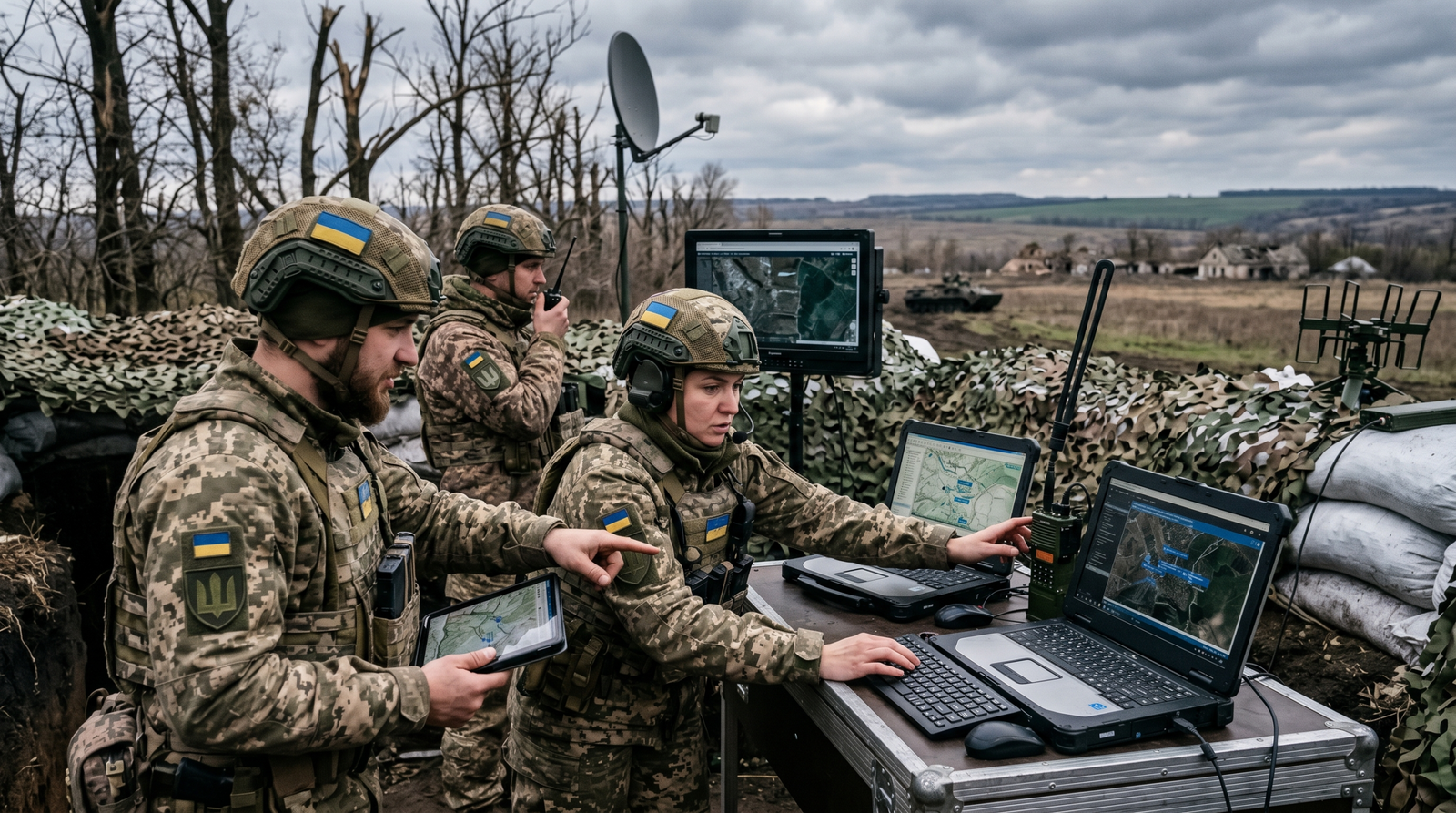
The improvement in Ukraine’s operational effectiveness is attributed to enhanced planning and battlefield preparation. Barros credited a maturing operational command and the deployment of the Delta system, an online platform providing real-time battlefield data to Ukrainian units. This system has reportedly improved command coordination, enabling more strategic offensive operations that consider deeper battlefield objectives.
In addition to ground tactics, Ukraine has intensified strikes on Russian positions and logistical networks, particularly in southern regions, weakening Russian forces ahead of recent counterattacks. Ukrainian efforts to degrade Russian air defense systems have also played a role in softening enemy lines.
The use of drones has become increasingly effective, with Ukrainian forces targeting specialized Russian drone warfare units. While some have suggested that limitations on Russian access to satellite internet services provided by SpaceX’s Starlink contributed to Ukraine’s successes, Barros described this influence as an accelerant rather than a primary factor. He stated that Ukraine’s advances were part of long-term planning initiated months earlier.
Overall, the coordinated improvements in strategy, technological integration, and tactical applications have contributed to Ukraine’s recent battlefield momentum. Analysts see these developments as a shift in the dynamics of the ongoing conflict, signifying an enhanced capability within Ukrainian forces to slow, and in some cases reverse, Russian territorial gains.