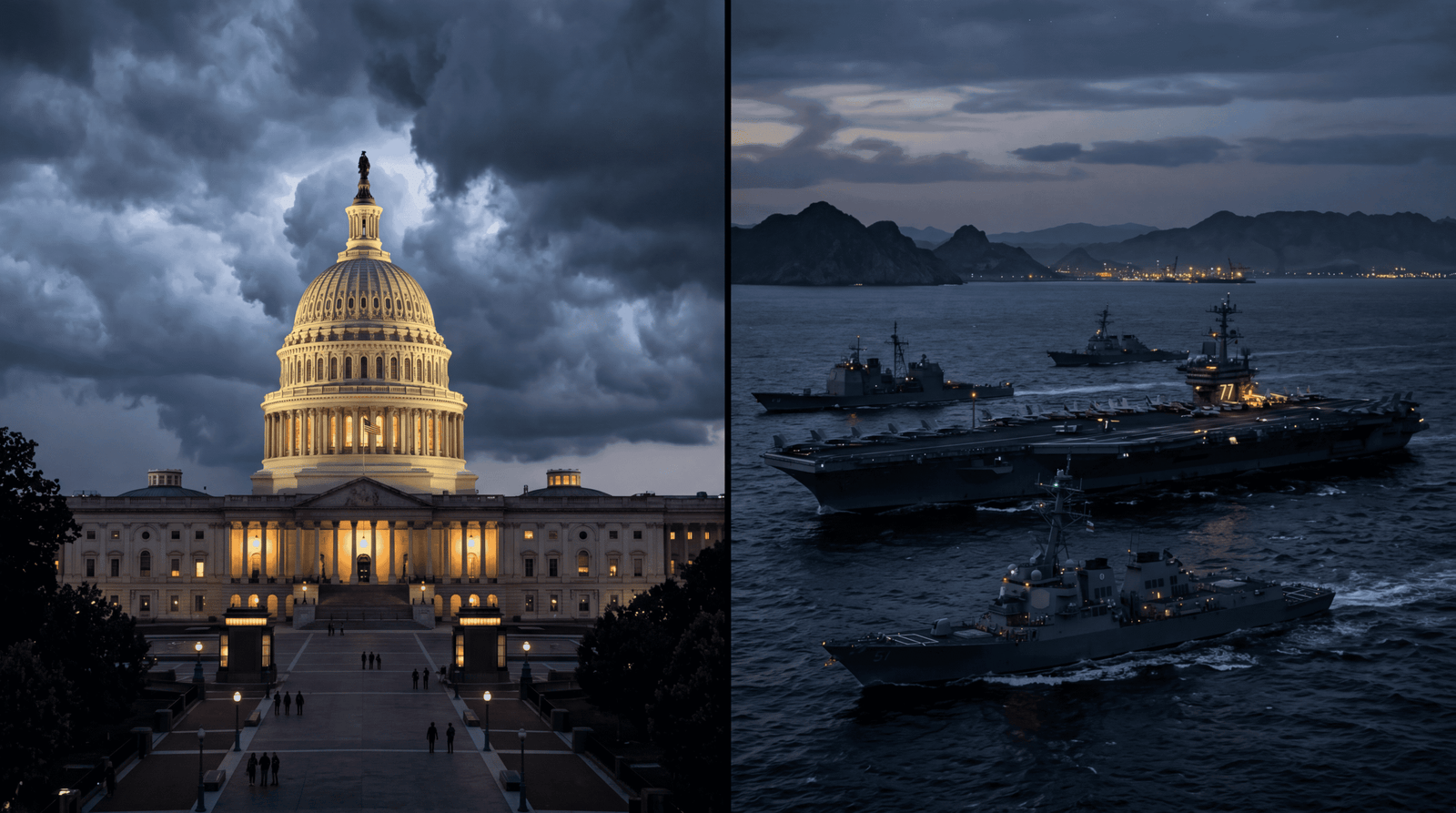

The United States Senate just chose presidential authority over constitutional duty—again. For the fourth consecutive week, lawmakers rejected a resolution that would force President Trump to seek congressional approval before continuing military operations against Iran. The vote failed 52-47, almost perfectly along party lines, with only Senator Rand Paul breaking Republican ranks.
This isn’t routine partisan theater. This is the War Powers Resolution of 1973 being stress-tested in real time—and revealing how thoroughly the executive branch has reclaimed war-making authority that Congress surrendered decades ago.
The Constitutional Mechanism That Stopped Working
The War Powers Resolution was born from congressional fury over Vietnam. Richard Nixon had expanded that war into Cambodia without legislative consent, prompting Congress to pass—over his veto—a law requiring presidential notification within 48 hours of deploying forces and mandating withdrawal after 60 days unless Congress explicitly authorizes continued action.
That 60-day deadline arrives on April 29th for Trump’s Iran campaign, which began with airstrikes on February 28th. The White House can unilaterally extend this window by 30 days citing national security, pushing the reckoning to late May. But every president since 1973 has treated the Resolution as advisory, not binding—and courts have consistently refused to intervene, calling it a “political question” beyond judicial reach.
Senator Tim Kaine, who’s led all four failed resolutions, told reporters his strategy now: “If we’re unsuccessful, at least we’ll make clear to the American people who owns this war.” That’s the language of documentation, not deterrence. He’s building a legislative record for historians, not stopping bombs.
Why Republicans Locked Ranks (For Now)
The Republican position is tactically straightforward: Trump promised swift resolution, they’re giving him runway. Senate Majority dynamics demand unity—breaking ranks risks committee assignments, campaign funding, and primary challenges. Only Rand Paul, with his libertarian brand and Kentucky safe seat, can afford dissent.
But cracks are forming. Senator Josh Hawley of Missouri told the BBC he wants the war “over within the next few days.” Translation: his patience has a timer. If Trump’s “close to over” rhetoric—delivered to Fox News Wednesday—proves hollow, more Republicans will face electoral pressure as gas prices climb and constituents demand answers.
The historical parallel matters: in 2007, a Democratic Congress couldn’t defund the Iraq surge despite public opposition exceeding 60%. The presidency simply has more leverage—control of operational tempo, classified intelligence briefings that intimidate opposition, and the rally-round-the-flag effect that makes war critics look unpatriotic.
What This Means For You
You’re watching constitutional theory collide with executive reality. The Founders explicitly gave Congress—not the president—the power to declare war (Article I, Section 8). But decades of precedent, from Korea to Kosovo to Libya, have created a parallel system where presidents wage multi-month military campaigns and Congress argues about it afterward.
Practically, this vote means Trump controls escalation decisions without legislative constraint. The naval blockade strangling Iran’s oil exports? Unilateral executive action. Potential strikes on nuclear facilities? Same authority. The only check remaining is public opinion—which moves slowly while warships move fast.
For ordinary Americans, the failure cascades economically. Gas prices spiked 40% since the blockade began. Supply chains for everything from electronics to pharmaceuticals face disruption. The UK is preparing for food shortages under worst-case scenarios. Yet your elected representatives just voted that none of this requires their formal approval.
What Happens Next: Three Scenarios
Scenario One: Swift De-Escalation (30% probability)
Trump’s negotiators reach a face-saving deal with Tehran by April 29th. Iran dismantles contested weapons programs, the US lifts the blockade, both sides claim victory. Republicans breathe relief, Democrats lose their political weapon, and the War Powers Resolution remains toothless for the next crisis. Oil prices stabilize by summer.
Scenario Two: Grinding Stalemate (50% probability)
The conflict drags past the 60-day mark, Trump invokes the 30-day extension, then ignores the 90-day deadline entirely. More Republicans defect—perhaps five or six—but not enough to override a presidential veto of any binding resolution. By June, Americans are paying $6/gallon for gas, midterm election dynamics shift, but bombs keep falling. The Supreme Court declines to intervene, citing precedent.
Scenario Three: Catastrophic Escalation (20% probability)
Iran, cornered economically, attacks a US vessel or regional ally. Trump orders strikes on nuclear facilities. Casualties mount. Suddenly 15-20 Senate Republicans face constituent fury and break ranks, passing a binding resolution with veto-proof margins. But the damage is done—the war has expanded beyond what legislative action can contain. Markets crater. This is the Gulf of Tonkin scenario, where congressional regret arrives too late.
The Power Dynamic Nobody Mentions
Here’s what the sanitized coverage misses: the War Powers Resolution was designed for an analog era when “hostilities” meant division-sized ground invasions, not drone swarms and naval blockades. Modern presidents wage war through classifications—”limited operations,” “defensive strikes,” “counterterrorism”—that technically never trigger the 60-day clock.
Trump’s blockade of Iranian ports is an act of war by any historical definition. It’s starving an economy, preventing medical supplies from arriving, and enforcing compliance through threat of violence. Yet because no American ground troops are “in combat,” the White House argues the Resolution doesn’t fully apply. This is legal sophistry that would have appalled the 1973 Congress.
The Brookings Institution’s analysis of the Resolution’s 50-year history found presidents invoked it 200+ times while never once accepting its constraints as binding. It’s constitutional theater—a law both parties cite when in opposition, then ignore when holding power.
What Democrats Are Really Doing
Tim Kaine’s promise to introduce identical resolutions “every week” isn’t about passage—it’s about creating a voting record for 2028 campaign ads. Every Republican senator must now defend their stance as gas prices rise. Every vulnerable incumbent will face ads showing their vote alongside footage of Americans struggling to afford groceries.
This is strategic political pain, not constitutional remedy. And it reveals how thoroughly Congress has accepted its diminished role. They’re not fighting to reclaim war-making authority—they’re fighting for campaign ammunition.
Pennsylvania’s John Fetterman, the sole Democrat voting with Republicans, represents a different calculation: he’s from a swing state where appearing anti-military can be fatal. His vote reveals the electoral logic that keeps most senators in line regardless of constitutional duty.
The Question That Determines Everything
Does the Senate’s institutional interest in reclaiming war powers exceed individual senators’ interest in avoiding tough votes? History says no. The 2003 Iraq invasion had congressional authorization, but every conflict since—Libya, Syria, Yemen operations—proceeded without it. The pattern is clear: Congress wants credit for victories and distance from disasters, not responsibility for tough decisions.
If Democrats truly wanted to stop this war, they’d threaten to withhold funding for all military operations until Trump complied. But that’s politically radioactive—Republicans would run endless ads about Democrats “defunding troops under fire.” So instead we get symbolic votes and press conferences, the kabuki theater of opposition.
The 60-Day Deadline That Isn’t
April 29th will arrive. Trump will either declare victory and wind down, or invoke the 30-day extension. If he does the latter, Senate Republicans have signaled they’ll accept it—Senator Hawley’s comments about “the next few days” notwithstanding. Presidential power expands because Congress lets it expand.
The deeper crisis isn’t about Iran policy—reasonable people can disagree on that. The crisis is constitutional: the branch designed to check executive war-making has voluntarily neutered itself. The War Powers Resolution isn’t failing because it’s poorly written. It’s failing because it requires Congress to want power more than it wants political cover.
And that preference—risk aversion over constitutional duty—is bipartisan and seemingly permanent. We’ve returned to a pre-1973 norm where presidents wage war and Congress debates. The only question now is whether Americans care enough to demand their representatives reclaim authority the Founders explicitly gave them—or whether we’ve decided that concentrated executive power is more convenient than messy democratic deliberation.