
Let me be brutally honest: most viral food trends are culinary crimes dressed up in pretty filters. After three decades in professional kitchens and years studying food chemistry at Le Cordon Bleu, I can tell you that 2026’s trending recipes aren’t just disappointing—many are actively sabotaging your cooking skills, your health, and basic food safety principles.
The problem isn’t that home cooks are trying new things. The problem is that social media rewards visual appeal over actual technique, clicks over chemistry, and viral potential over fundamental culinary truth. What looks spectacular in a 15-second video often violates everything we know about flavor development, food safety, and proper cooking methodology.
The Plastic-Leaching Disaster: Pringles Chocolate Cans
This trend makes my stomach turn, and not because of the flavor combination. Pouring hot melted chocolate into a Pringles can and freezing it creates a sweet-and-salty cylinder that influencers slice into disks. What they don’t mention is the chemical nightmare happening inside that tube.
Pringles cans are lined with polyethylene terephthalate (PET) plastic and aluminum foil—materials engineered to protect shelf-stable chips, not to withstand thermal shock from hot liquids. When you pour chocolate heated to 115-120°F into this container, you trigger a process called thermal desorption, where heat energy breaks the polymer bonds holding the plastic together.
Research published in Environmental Science & Technology shows that heating plastic containers can increase microplastic migration by 55-fold. You’re essentially creating a chocolate-covered microplastic delivery system. These particles accumulate in human tissue, and emerging research links them to inflammatory responses and endocrine disruption.
Beyond the health concerns, this trend teaches terrible technique. The Pringles provide zero structural integrity—they become soggy within hours as moisture from the chocolate penetrates the starch matrix. A proper chocolate bark requires tempered chocolate on parchment paper with properly toasted, oil-free chips that maintain their crunch through moisture management. The viral version is just Instagram theater with a side of chemical contamination.
The Environmental Crime: Snow Ice Cream
This trend looks magical—making ice cream in a snow-carved bowl using salt to accelerate freezing. The chemistry is sound: sodium chloride lowers water’s freezing point through freezing point depression, the same principle behind ice cream makers. The problem is what happens after your photo shoot ends.
When you dump salt directly into snow, you’re creating a concentrated brine that eventually infiltrates your soil ecosystem. According to environmental research, residential salt contamination has increased soil salinity in suburban areas by 30-40% over the past decade. This disrupts the osmotic balance plants need for water absorption.
Salt doesn’t just disappear when snow melts. It persists in soil, where it damages root systems, kills beneficial microorganisms, and eventually runs into waterways where it harms aquatic life. A single cup of salt—the amount many recipes call for—contains enough sodium chloride to contaminate 100 gallons of water beyond safe levels for freshwater organisms.
The culinary tragedy here is that this method produces mediocre ice cream anyway. Without proper emulsification and air incorporation, you get icy, grainy results. A proper ice cream base requires tempering egg yolks at 170°F to denature proteins for smooth texture, then churning to incorporate 50% air by volume. The snow method skips all of this fundamental technique.
The Science Behind It: Why Shortcuts Fail
These viral trends share a common flaw: they prioritize speed and visual appeal over the chemical and physical processes that create genuinely excellent food. Real cooking is applied chemistry, and you cannot hack thermodynamics with clever camera angles.
Take the frozen margarita soft-serve trend. Alcohol has a freezing point of -173°F, while water freezes at 32°F. A typical margarita contains 15-20% alcohol by volume, which means it should freeze around 15-20°F to reach soft-serve consistency. Home freezers operate at 0°F, which isn’t cold enough for proper crystallization without constant agitation.
What actually happens in these viral videos? The mixture partially freezes into large ice crystals surrounded by concentrated alcohol pockets. The texture is simultaneously icy and syrupy—the worst of both worlds. Professional gelato achieves its smooth texture by churning during freezing, which breaks up ice crystals and incorporates air. The margarita hack produces what we call “granita texture”—large, crunchy ice shards that lack the creamy mouthfeel of genuine frozen desserts.
Moreover, tequila’s flavor compounds—primarily isoamyl alcohol and ethyl acetate—become harsh and medicinal when concentrated through partial freezing. The volatile aromatics that make a fresh margarita pleasant evaporate unevenly, leaving behind the less pleasant fusel alcohols. You’re essentially making alcoholic slushie with all the subtlety of a college dorm party.
The Texture Disaster: Stuffed Pancakes
This trend betrays fundamental misunderstandings about heat transfer and gluten development. Pancakes rely on precise batter hydration (typically 1.25:1 liquid-to-flour ratio) and controlled heat application to develop structure through gluten formation and starch gelatinization.
When you stuff a pancake mid-cook, you create a thermal barrier that prevents even heat distribution. The filling acts as insulation, leaving the center batter raw while the exterior overcooks. The result is a pancake with a gummy, underdeveloped interior and a tough, rubbery exterior—the exact opposite of what proper technique achieves.
Professional pancakes develop their signature tender crumb through steam leavening. Baking powder releases carbon dioxide at two stages: first when mixed with liquid, then again when heated above 140°F. This double-acting process creates the light, fluffy structure we associate with quality pancakes. Adding cold fillings drops the interior temperature below the second activation threshold, leaving you with dense, heavy results.
The sugar overload is another problem. Most stuffed pancake recipes use Nutella, cream cheese frosting, or candy—ingredients with 50-60% sugar content. This floods your bloodstream with glucose, triggering an insulin spike followed by the inevitable crash. From a nutritional perspective, you’re eating dessert disguised as breakfast, with none of the protein or fiber needed for sustained energy.
Common Mistakes Home Cooks Make
Mistake #1: Trusting visual cues over temperature. Viral videos show chocolate “melting perfectly” in Pringles cans, but they never show thermometer readings. Professional chocolate work requires precise temperature control—tempering dark chocolate means heating to 115°F, cooling to 81°F, then reheating to 88°F. Skip these steps and you get bloom (that white, chalky surface) and poor texture.
Mistake #2: Ignoring food safety fundamentals. Materials matter. Plastic containers have specific temperature ratings for a reason. Food-grade materials are tested for chemical migration at various temperatures. Pringles cans are engineered for room temperature storage, not thermal cycling. Using them for hot liquids is like using a paper plate in the oven—technically possible, but fundamentally wrong.
Mistake #3: Confusing convenience with technique. Real cooking skills transfer across recipes. Learning to properly temper chocolate teaches you about crystal formation and temperature control—knowledge you’ll use for decades. The Pringles hack teaches you nothing except how to pour liquid into a tube. One builds culinary competence; the other builds your Instagram engagement.
Mistake #4: Prioritizing novelty over flavor. The stuffed pancake trend exemplifies this perfectly. A well-made pancake with butter and real maple syrup is a study in contrasts—crispy edges, fluffy interior, the complex caramel notes of genuine maple, the richness of cultured butter. Stuffing it with Nutella obliterates these subtle flavors with overwhelming sweetness. You lose the entire point of the dish.
What Actually Works: The One Technique You Need Today
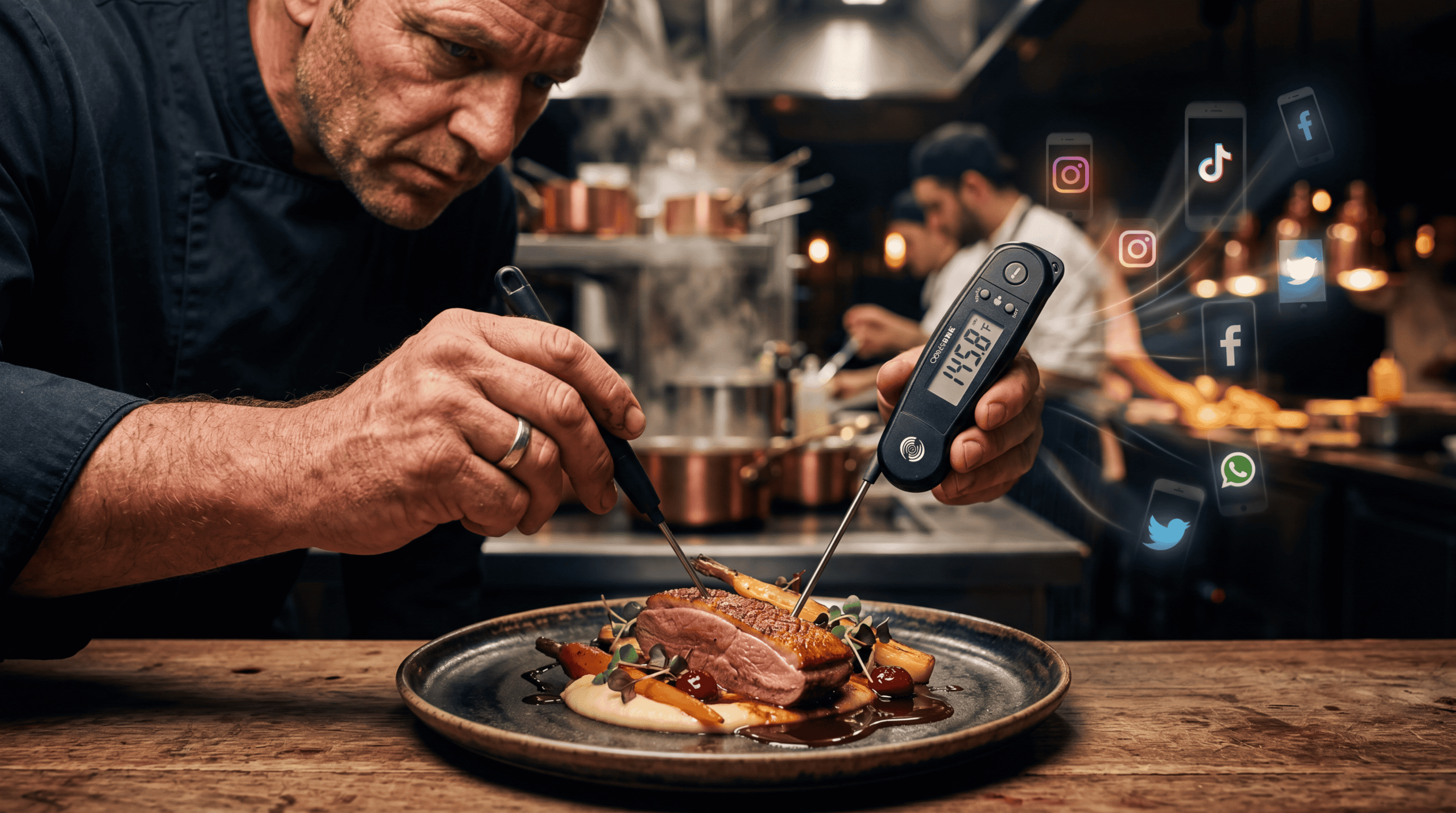
Instead of chasing viral trends, master temperature control—the single most important skill in cooking. Buy an instant-read thermometer and start measuring everything. This simple tool will revolutionize your cooking more than any TikTok hack ever could.
For chocolate work, heat to exactly 115°F—no higher or you’ll burn the cocoa solids. For pancakes, keep your griddle at 375°F for even browning without burning. For ice cream, cook your custard base to 170°F to pasteurize eggs and create silky texture without scrambling.
Temperature precision is how professionals achieve consistent results every single time. It’s not glamorous, it’s not viral, but it’s the difference between home cooking and restaurant-quality food. Once you understand how heat transforms ingredients at the molecular level, you stop needing shortcuts because the real techniques become just as easy—and infinitely more rewarding.
Stop letting algorithms teach you to cook. Learn the science, respect the chemistry, and your kitchen becomes a place where you control the magic instead of hoping viral trends accidentally work.