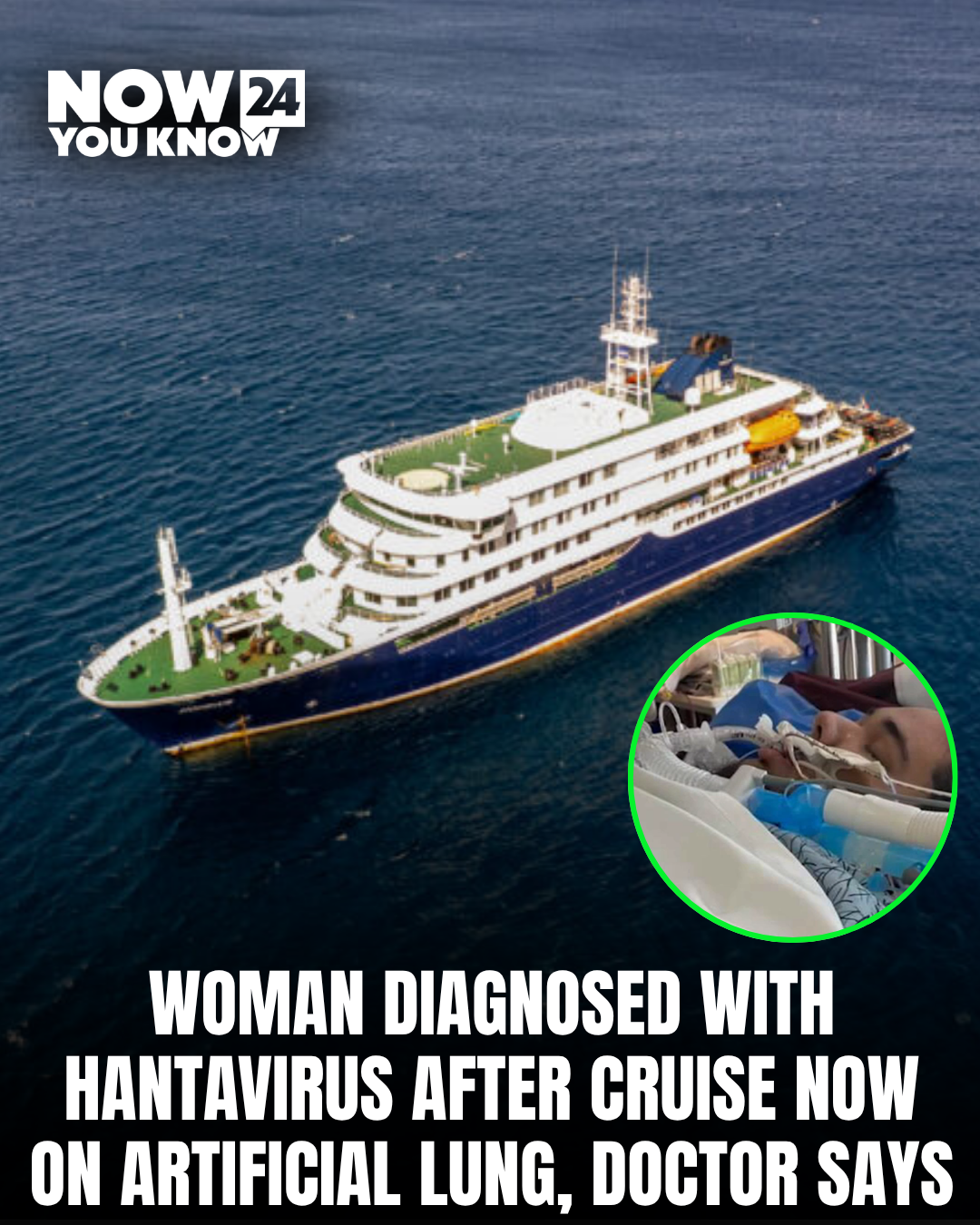

A French woman is in critical condition and receiving life-support treatment after contracting hantavirus during an outbreak linked to a cruise ship journey that has already resulted in multiple deaths.
The case is connected to the MV Hondius, a cruise ship that departed Argentina on April 1 and later travelled toward the Canary Islands with around 150 passengers and crew onboard.
Patient Now on Artificial Lung Support
Doctors at a Paris hospital treating the woman said she is now in the “final stage of supportive care” after developing severe complications from the virus.
She is reportedly being kept alive with the help of an artificial lung system due to life-threatening damage affecting both her heart and lungs.
Medical staff confirmed she is critically ill, with no specific cure available for hantavirus once infection becomes severe.
Outbreak Linked to Cruise Ship Journey
Health authorities have confirmed that the outbreak on board the MV Hondius has so far resulted in at least three deaths and multiple hospitalizations across several countries.
The World Health Organization said there have been at least 11 confirmed cases among passengers and crew, with additional probable infections still under investigation.
Officials noted that more cases could still emerge due to the virus’ incubation period, though there is currently no evidence of a wider international outbreak.
What Is Hantavirus?
Hantavirus is typically transmitted through contact with infected rodents or exposure to their urine, droppings, or saliva.
According to health authorities, the virus can cause severe respiratory and cardiovascular complications in some cases, and there is currently no specific antiviral treatment.
Patients instead receive supportive care, including oxygen therapy, fluids, and intensive monitoring.
Passengers Evacuated Across Multiple Countries
After concerns escalated, remaining passengers were evacuated in Tenerife in Spain’s Canary Islands on May 10.
Since then, travelers from the ship have been transported to several countries for monitoring and quarantine, including Spain, the Netherlands, Germany, the United Kingdom, and the United States.
Health officials in multiple countries are continuing to track passengers, with some required to undergo quarantine periods of up to 42 days depending on exposure risk.
Authorities say investigations are ongoing to determine how the outbreak began aboard the vessel and whether further infections may still appear in the coming weeks.