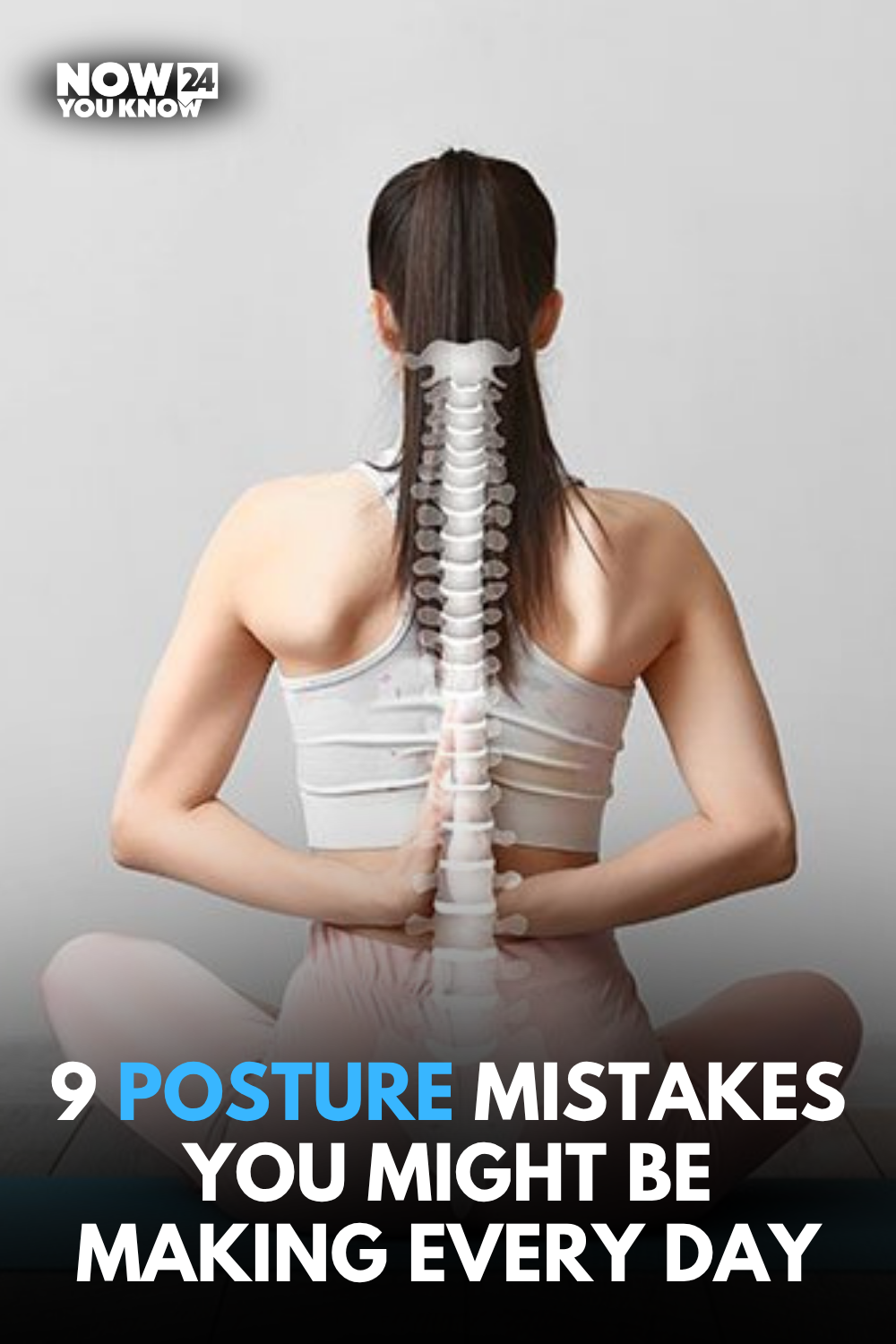

Most people don’t think much about their posture—until their back starts hurting.
But experts say the way you sit, stand, sleep, and even look at your phone can have a major impact on your body over time.
Poor posture doesn’t just affect your appearance. It can place extra stress on your spine, strain muscles and joints, and even make everyday movements less comfortable.
The good news? Small adjustments can make a big difference.
Here are nine common posture mistakes and simple ways to correct them.
1. Slouching Throughout the Day
Slouching may feel comfortable in the moment, but it puts additional pressure on the muscles, joints, and structures that support your spine.
Over time, poor posture can contribute to back pain, neck stiffness, and muscle fatigue.
Some experts also note that prolonged slouching may compress the chest and abdomen, potentially affecting breathing and digestion.
2. Forgetting to Stand Tall
Good posture starts when you’re on your feet.
When standing, keep your head aligned over your shoulders, pull your shoulders back gently, and engage your core muscles.
Avoid pushing your hips forward or arching your lower back excessively.
Think about lengthening your spine rather than forcing yourself into a stiff position.
3. Sitting Incorrectly at Your Desk
Millions of people spend hours each day sitting at a desk.
Unfortunately, many sit on the edge of their chair or lean forward toward their computer screen.
Instead, sit fully back in your chair and support the natural curve of your lower back with a lumbar cushion or small rolled-up towel.
Keep your feet flat on the floor and your knees at approximately a 90-degree angle.
4. Looking Down at Your Phone
Modern technology has introduced a posture problem commonly known as “text neck.”
Every time you tilt your head downward to look at your phone, additional pressure is placed on the neck and upper spine.
The solution is simple: bring the device closer to eye level whenever possible and move your eyes instead of constantly bending your neck.
5. Reclining Too Far While Driving
Long drives can encourage people to sink into their seats.
While reclining may feel relaxing, it can place unnecessary strain on the lower back and neck.
Experts generally recommend sitting upright with your knees slightly bent and your hips positioned comfortably against the seat.
Adding lumbar support can also help maintain better spinal alignment during longer trips.
6. Wearing High Heels Too Often
High heels may complement an outfit, but they can also affect posture.
Elevated heels shift the body’s center of gravity forward, which can increase pressure on the lower back, knees, and feet.
For everyday wear, many experts suggest choosing lower heels or supportive footwear that allows for more natural alignment.
7. Sleeping on the Wrong Mattress
Posture matters even while you sleep.
A mattress that’s too soft or worn out may fail to support the spine properly, allowing it to fall out of alignment overnight.
Many sleep experts recommend a supportive mattress that helps maintain the spine’s natural curves.
Sleeping position matters as well. Side sleepers often benefit from slightly bent knees, while back sleepers may find comfort with a small pillow supporting the neck.
8. Ignoring Core Strength
Strong abdominal and back muscles play a major role in maintaining healthy posture.
When these muscles are weak, the spine often has to work harder to support the body.
Activities such as walking, yoga, pilates, strength training, and other low-impact exercises can help improve stability and support better posture over time.
9. Never Checking Your Alignment
Many people don’t realize they have poor posture until discomfort develops.
A simple self-check can reveal potential issues.
Stand with the back of your head against a wall and your feet a few inches away from it. Your shoulders and hips should align naturally, while small gaps remain behind the neck and lower back.
If maintaining this position feels difficult or uncomfortable, it may be worth discussing posture concerns with a healthcare professional.
Why Posture Matters More Than You Think
Good posture isn’t about standing perfectly straight all day.
It’s about maintaining positions that place less strain on your body and allow your muscles and joints to work efficiently.
Small habits—raising your phone, adjusting your chair, strengthening your core, or improving your sleeping setup—can have a significant impact over time.
And while perfect posture doesn’t exist, making a few simple adjustments today may help prevent aches and pains tomorrow.