



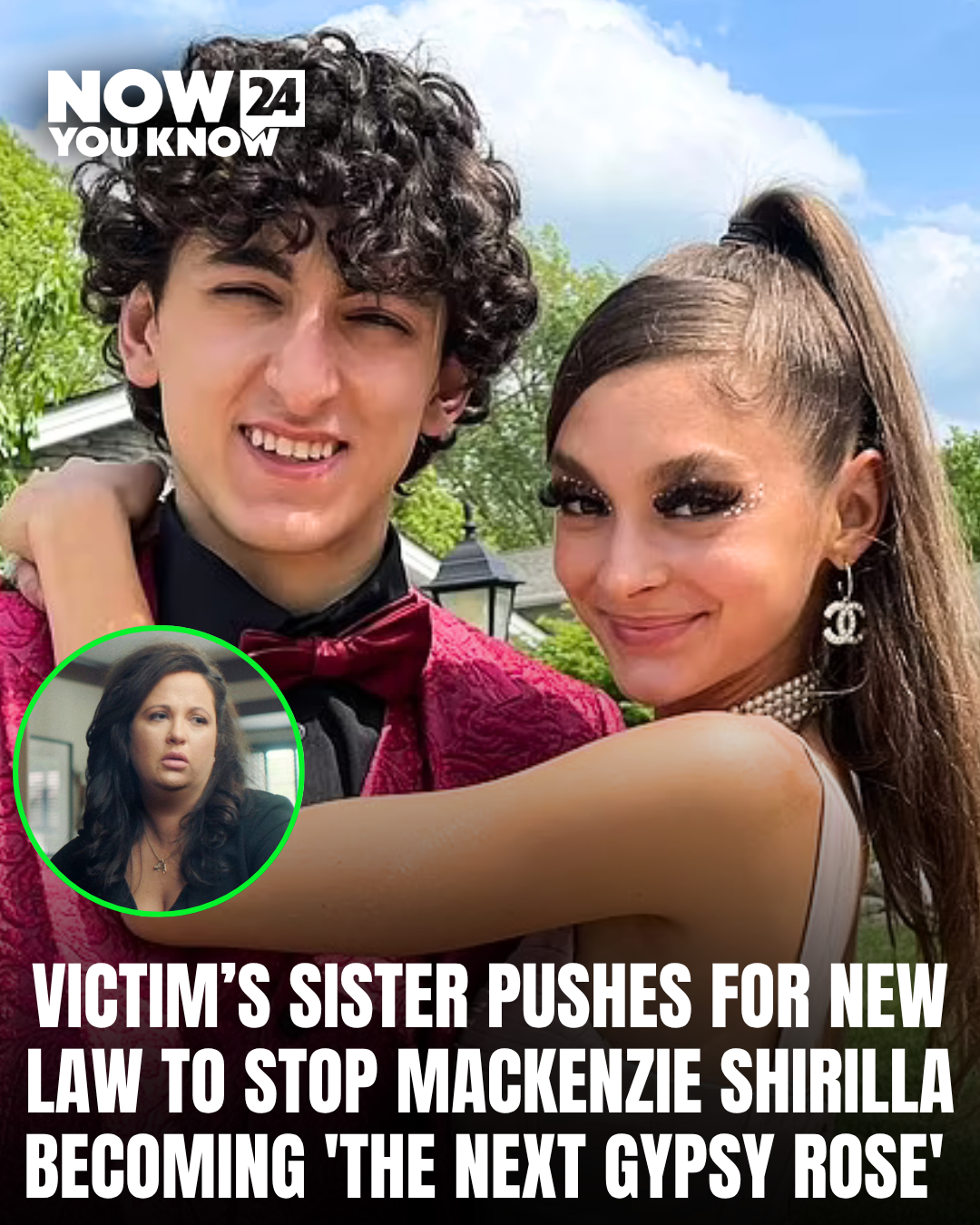

Christine Russo, the sister of Dominic Russo, has launched a petition calling for new legislation designed to prevent convicted violent offenders from profiting from their crimes through social media, television appearances and other modern platforms.
The proposed measure, which she has dubbed “Dom’s Law,” comes amid renewed public interest in the Mackenzie Shirilla case following the release of Netflix’s true crime documentary The Crash. The petition has already attracted tens of thousands of signatures from supporters who believe existing laws have failed to keep pace with the digital age.
A Campaign Born From Personal Loss
Dominic Russo and his friend Davion Flanagan were killed in July 2022 when Shirilla crashed her vehicle into a building at approximately 100 mph. Prosecutors argued the crash was intentional, and Shirilla was later convicted of murder and sentenced to prison.
Since the documentary’s release, the case has returned to the national spotlight, forcing the victims’ families to revisit one of the most painful chapters of their lives.
“The documentary brought everything back into focus,” Russo has said while discussing the renewed attention surrounding the case. She explained that the resurgence of public interest strengthened her determination to pursue legal reforms aimed at protecting victims’ families from further trauma.
What Would Dom’s Law Do?
According to the petition, Dom’s Law would seek to modernize existing laws that restrict criminals from financially benefiting from their crimes.
Many states have versions of so-called “Son of Sam” laws, which were originally created to prevent notorious criminals from earning money through book deals, interviews and movie rights. However, supporters of Dom’s Law argue that those statutes were written long before the rise of TikTok, YouTube, influencer culture and reality television.
“The laws weren’t designed for today’s digital world,” supporters argue. “People can now build massive audiences and generate income online in ways lawmakers never anticipated.”
The proposal would explore ways to prevent convicted violent offenders from turning criminal notoriety into a source of income, publicity or online influence after their release.
Concerns About Future Fame
Russo has publicly expressed concerns that convicted offenders can sometimes gain celebrity status after serving prison sentences, pointing to high-profile cases that have attracted major social media followings and television opportunities.
“My goal is to make sure violent crimes never become a pathway to fame, financial gain or influence,” Russo said while discussing the campaign.
She argues that victims’ families often endure ongoing emotional pain while offenders receive attention generated by the very crimes that caused the suffering.
“Families are left carrying the grief forever,” she said. “Meanwhile, the people responsible can sometimes benefit from the attention surrounding their crimes.”
Debate Over Crime and Celebrity Culture
The campaign has sparked broader conversations about society’s fascination with true crime and whether convicted criminals should be allowed to monetize their stories after completing their sentences.
Supporters say stronger laws are needed to protect victims and prevent exploitation of tragedy.
“We need safeguards that put victims first,” one supporter wrote in response to the petition.
Critics, however, note that any new legislation would need to balance those concerns against constitutional protections involving free speech and media rights.
“Any law in this area would face significant legal scrutiny,” legal experts have noted, pointing to the challenges of restricting speech while protecting victims’ interests.
A Conversation That May Continue for Years
Shirilla remains incarcerated and is not expected to become eligible for parole until 2037. Nonetheless, Russo says she believes the discussion should begin now rather than years down the road.
“If we wait until it’s happening, it’s already too late,” she said.
As public interest in true crime documentaries continues to grow, Dom’s Law is becoming part of a larger national debate about accountability, victims’ rights and whether modern laws are equipped to address the realities of social media-driven fame.
“This isn’t just about one case,” Russo said. “It’s about making sure victims and their families aren’t forgotten while others profit from tragedy.”