
You Think You’re Smart, But You’re Measuring the Wrong Thing
Here’s what no one wants to hear: your IQ doesn’t predict whether you’ll keep your job, stay married, or feel satisfied with your life. The intelligence that actually determines those outcomes is the one you’ve spent your entire life dismissing as “soft skills” or “just being nice.”
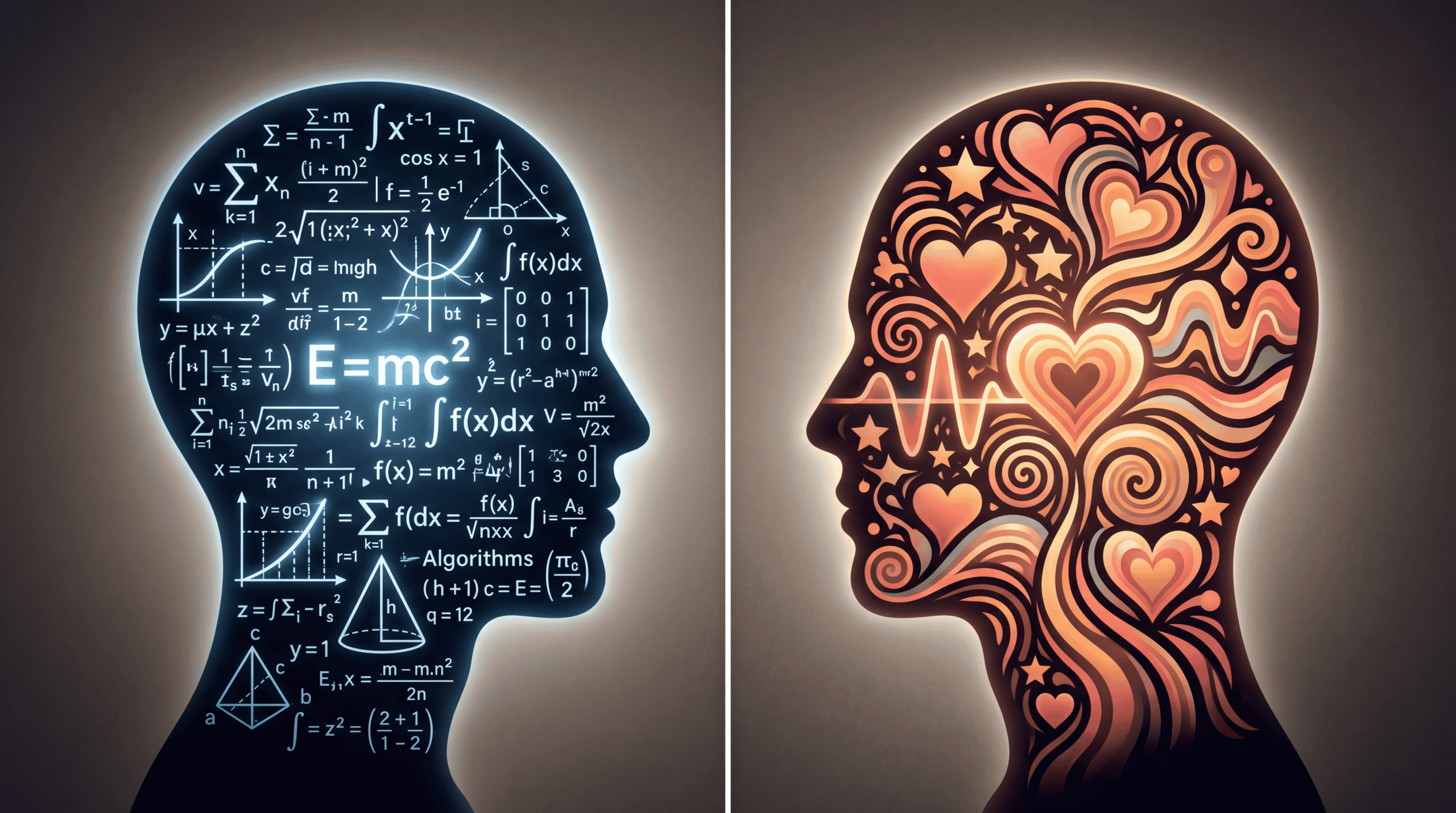
I’m talking about emotional intelligence, and before you roll your eyes, understand this: the systematic devaluation of emotional intelligence is one of the most expensive cognitive errors humans make. We’ve built entire educational systems, hiring practices, and self-concepts around a form of intelligence that explains roughly 20% of life success while ignoring the one that explains significantly more.
This isn’t motivational speaking. This is behavioral science revealing an uncomfortable truth about how we’ve been taught to value the wrong capabilities.
The Fundamental Attribution Error Is Killing Your Relationships
Every time you label someone as “irrational” or “too emotional,” you’re committing what psychologists call the fundamental attribution error—attributing their behavior to character flaws while excusing your own behavior as circumstantial. This single cognitive bias explains why emotionally intelligent people outperform their “smarter” peers: they’ve learned to recognize that all behavior is information.
When your colleague snaps at you, high IQ says “they’re difficult.” High emotional intelligence asks “what pressure are they under that I can’t see?” That difference in interpretation changes everything—how you respond, whether the relationship survives, whether you get the promotion.
Research from Yale’s Center for Emotional Intelligence demonstrates that individuals with higher emotional intelligence earn an average of $29,000 more annually than their lower-EQ counterparts, even when controlling for IQ and education level. The reason isn’t mysterious: they navigate the actual complexity of human systems instead of pretending humans are logical machines.
Your Brain Is Designed to Ignore Emotional Data
Here’s the neurological reality: your prefrontal cortex—the part you think of as “you”—is actually the least powerful player in your skull. The limbic system, which processes emotions, operates roughly 80,000 times faster and influences the prefrontal cortex far more than the reverse.
This creates what I call the intelligence hierarchy illusion: we believe rational thought governs behavior, when in fact emotional states determine what we even perceive as “rational.” You’ve experienced this every time you made a decision while angry that you regretted later, or when anxiety convinced you that a minor risk was catastrophic.
Emotionally intelligent people haven’t transcended this neural architecture—they’ve learned to work with it. They recognize emotional states as data rather than dismissing them as noise. A 2017 study in Cognition and Emotion found that individuals trained in emotional awareness showed significantly improved decision-making in ambiguous situations, precisely because they could identify when their emotional state was distorting their perception.
The Research Says: We’ve Been Measuring Success Wrong
Daniel Goleman’s groundbreaking work in the 1990s first quantified what clinicians had observed for decades: traditional intelligence testing predicts academic performance but fails spectacularly at predicting life outcomes. His meta-analysis of 188 companies found that emotional intelligence competencies were twice as important as technical skills and IQ for jobs at all levels.
More recent longitudinal research strengthens this conclusion. A 2019 study published in Scientific Reports followed individuals for 30 years and found that childhood emotional regulation predicted adult income, health outcomes, and relationship stability far more accurately than standardized test scores.
The University of Pennsylvania’s research on academic success reveals something even more striking: among Ivy League students with nearly identical SAT scores and GPAs, emotional intelligence was the primary differentiator in career trajectory and life satisfaction. The students who could identify and manage their emotional states, read others accurately, and navigate social complexity simply outperformed their peers across virtually every metric.
Why You Resist What Actually Works
There’s a reason you’ve been hesitant to embrace emotional intelligence, and it’s not because you’re stubborn—it’s because of system justification theory. We have a psychological need to believe the systems we’ve succeeded in are legitimate and fair.
If you’ve built your identity around being “the smart one,” accepting that emotional intelligence matters more feels like a threat to your entire self-concept. If you’ve worked hard to develop analytical skills, acknowledging that your inability to read a room is holding you back triggers cognitive dissonance. Your brain would rather dismiss emotional intelligence as unmeasurable or unimportant than confront the possibility that you’ve been optimizing for the wrong variable.
This is confirmation bias in action: you notice every time analytical thinking solves a problem and fail to notice the thousand tiny moments when emotional tone, timing, or relational awareness determined the actual outcome. The colleague who got the promotion wasn’t smarter—they just knew when to advocate versus when to listen, how to make others feel heard, and how to regulate their own stress response in high-pressure moments.
What Emotional Intelligence Actually Looks Like in Practice
Let me be specific about what I mean, because emotional intelligence has been diluted into meaningless corporate-speak. Real emotional intelligence has four measurable components, identified by researchers Peter Salovey and John Mayer:
Perceiving emotions accurately in yourself and others—not just obvious expressions, but microexpressions, tonal shifts, and contextual cues. This means noticing when someone says “I’m fine” but their body language screams otherwise, and having the judgment to know whether to probe or give space.
Using emotions to facilitate thinking—recognizing that emotions aren’t obstacles to clear thinking but sources of information. Anxiety tells you something needs attention. Anger signals a boundary violation. Excitement indicates alignment with values. People low in emotional intelligence try to eliminate these signals; people high in EQ decode them.
Understanding emotions means grasping their complexity and progression. You understand that disappointment can calcify into resentment, that shame often presents as anger, that what someone calls “stress” might actually be grief or fear. This emotional literacy completely changes how you interpret behavior.
Managing emotions doesn’t mean suppression—it means strategic regulation. It’s knowing that sending that email while angry will feel satisfying for 30 seconds and cost you for 30 days. It’s recognizing when your anxiety is giving you useful information versus when it’s running an outdated threat-detection program.
The Cost of Emotional Illiteracy Is Higher Than You Think
Every failed project that “should have worked on paper,” every promising relationship that deteriorated for “no reason,” every talented person who plateaued despite obvious capability—look closer and you’ll find emotional intelligence failures.
The engineer who’s brilliant but can’t collaborate. The executive who makes perfect logical decisions but demoralizes their team. The partner who’s generous and committed but can’t recognize when you need reassurance versus space. These aren’t separate issues—they’re all manifestations of the same deficit.
A 2021 study in the Journal of Applied Psychology found that teams with high average emotional intelligence completed projects 30% faster and with 25% fewer errors than equally skilled teams with lower EQ. The difference wasn’t in technical ability—it was in recognizing tension early, managing conflict constructively, and maintaining psychological safety under pressure.
In intimate relationships, the pattern is even clearer. Research by John Gottman spanning four decades reveals that emotional attunement—the ability to perceive and respond to a partner’s emotional states—predicts relationship survival with 90% accuracy. Intelligence, education, and income barely register as predictors. The smartest people in the room are often the loneliest, not because they can’t find partners, but because they can’t emotionally connect with them.
Why Schools and Companies Get This Wrong
Here’s the uncomfortable institutional reality: traditional intelligence is easy to measure and validate. You can give someone a test, generate a number, and feel confident you’ve assessed something real. Emotional intelligence is harder to quantify, which makes it threatening to systems built on standardization.
This is the McNamara fallacy—making decisions based exclusively on quantitative observations while ignoring qualitative factors, even when those factors are more relevant. We hire based on credentials and test scores because they’re measurable, then wonder why 46% of new hires fail within 18 months (usually for emotional intelligence reasons, according to Leadership IQ research).
Educational systems optimize for memorization and analytical problem-solving because those competencies fit into existing assessment frameworks. They can’t easily test whether a student can navigate a complex social dynamic, recognize their own emotional triggers, or repair a relationship after conflict—so they don’t. Then we act surprised when academically successful people struggle in workplaces where those capabilities determine everything.
The Specific Mechanisms That Make EQ Powerful
Let me explain the actual psychological mechanisms at work, because understanding them makes emotional intelligence less mystical and more actionable.
Emotional contagion is the phenomenon where emotions spread through groups automatically and unconsciously. When you walk into a meeting anxious, everyone’s cortisol levels rise within minutes. When a leader maintains calm under pressure, the team’s stress response dampens. People high in emotional intelligence understand they’re always broadcasting emotional information and adjust accordingly.
Affect labeling—simply naming an emotion accurately—reduces amygdala activation by up to 50%, according to UCLA neuroscience research. This is why emotionally intelligent people seem unnaturally calm in crisis: they’ve learned that precisely identifying “this is frustration mixed with disappointment about the project delay” literally reduces the emotional intensity they experience.
Perspective-taking activates different neural networks than analytical reasoning, engaging areas associated with empathy and theory of mind. When you actively imagine someone else’s emotional experience, you process information differently and make different decisions. This isn’t “being nice”—it’s accessing data that pure logic misses entirely.
Try This Today: The Emotional Awareness Intervention
Here’s something you can implement immediately that will reveal how much emotional data you’re currently ignoring: the hourly emotion check.
Set a timer to go off every hour today. When it does, stop and answer three questions: What emotion am I feeling right now? Where do I feel it in my body? What information might this emotion be giving me?
Don’t try to change the emotion or judge it—just notice and name it with precision. Not “stressed” but “anxious about the presentation mixed with frustration about the timeline.” Not “fine” but “slightly resentful about taking on extra work, with some pride about being capable enough to handle it.”
Most people discover they’ve been operating on emotional autopilot, vaguely aware of feeling “good” or “bad” but missing the specific signals that could inform better decisions. After one day of this practice, you’ll notice emotional patterns you’ve been blind to for years. After one week, you’ll start recognizing these states without the timer. After one month, you’ll wonder how you ever navigated life without this information.
The Intelligence That Actually Matters
Your analytical capabilities will get you in the room, but your emotional intelligence determines whether you thrive there, whether people want to work with you, whether you build something meaningful or just execute technically competent work that nobody cares about.
The most misunderstood type of intelligence isn’t misunderstood because it’s complex—it’s misunderstood because acknowledging its importance requires admitting that much of what you were taught about success and capability was incomplete. The smartest thing you can do is stop defending the intelligence you have and start developing the intelligence you need.
Every moment you spend dismissing emotional information as irrelevant is a moment you’re operating with partial data in a system where emotions drive almost everything that matters.