




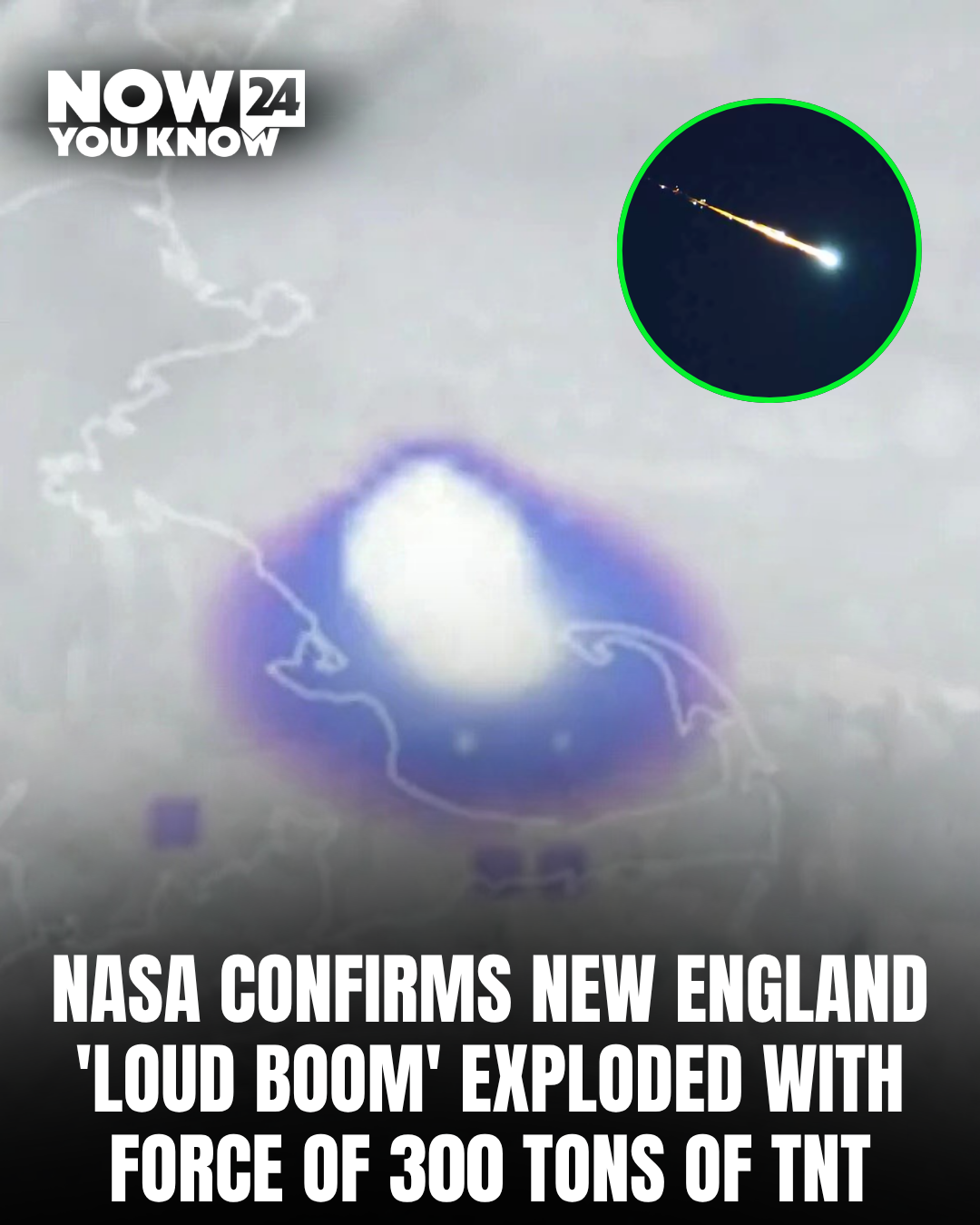

Residents Startled by Sudden Explosion
People across Massachusetts and parts of the Northeast were left stunned Saturday afternoon after a meteor exploded in the atmosphere, producing a loud boom that rattled homes, shook windows, and startled pets.
The event occurred around 2:11 p.m. ET, with reports flooding in from communities across Massachusetts, Rhode Island, and neighboring areas. Many initially feared an earthquake or explosion before experts identified the source.
NASA Reveals Powerful Impact
According to NASA, the meteor fragmented approximately 40 miles above northeastern Massachusetts and southeastern New Hampshire.
Scientists estimate the breakup released energy equivalent to roughly 300 tons of TNT, creating a powerful shock wave that traveled to the ground and generated the thunderous sound heard by residents.
Fireball Seen Across the Northeast
Dozens of witnesses reported seeing a bright fireball streak across the sky moments before the boom. Reports submitted to the American Meteor Society helped researchers track the object’s path through the atmosphere.
Satellite data also detected a signature consistent with a meteor at the same time the explosion was reported.
Why the Meteor Was So Loud
Experts explain that meteors enter Earth’s atmosphere at extremely high speeds, often traveling tens of thousands of miles per hour.
As larger objects plunge deeper into the atmosphere, they create intense pressure waves similar to those produced by supersonic aircraft. When those shock waves reach the ground, they can be heard as sonic booms over a wide area.
Where Did It Land?
NASA later determined that the meteorite likely fell into Cape Cod Bay after breaking apart in the atmosphere.
The agency jokingly referred to the ocean impact as a “fishy squisher,” noting that the object landed in water approximately 34 meters deep, making recovery highly unlikely.
Scientists Continue Studying the Event
Although no immediate threat was posed to the public, researchers say eyewitness videos and reports will provide valuable information about the meteor’s size, speed, composition, and origin.
Meteorites remain one of the most important tools scientists have for studying the history of our solar system, often delivering material that cannot be obtained any other way.
Part of a Growing Trend?
The Massachusetts event follows several other high-profile meteor explosions reported across North America this year, including incidents over Ohio and Texas that also produced sonic booms.
Scientists stress there is no evidence of any increased danger to Earth, but dramatic fireball events like this continue to capture public attention whenever they light up the sky.