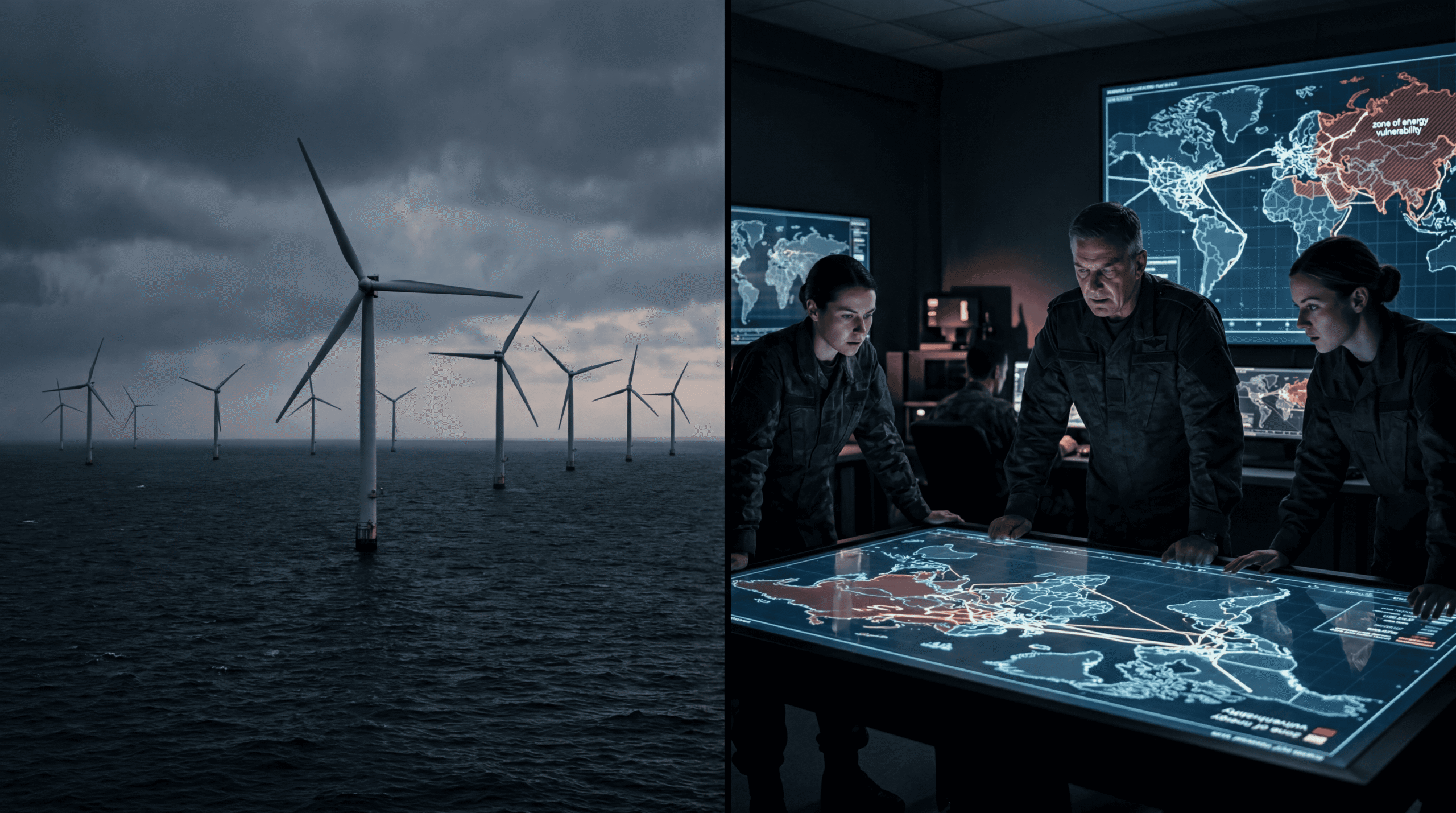

The global energy transition didn’t fail because of technology or economics—it failed because we forgot that energy is power, and power is survival. When Russia weaponized natural gas in 2022, European nations reopened coal plants within weeks. Germany, the architect of Energiewende, fired up lignite mines it had promised to shutter. The climate pledges made in Glasgow became footnotes to a single geopolitical reality: no government will let its citizens freeze to meet a emissions target.
The Illusion of Decoupling Energy From Conflict
For two decades, energy analysts operated under a comforting delusion—that renewable technology would gradually decouple energy security from geopolitical rivalry. Solar panels and wind turbines, the thinking went, would democratize power generation. No OPEC for sunlight. No Putin controlling the tap.
That assumption died in February 2022. Within 48 hours of Russia’s invasion of Ukraine, European natural gas prices spiked 62%. Germany’s industrial engine—BASF, ThyssenKrupp, the chemical manufacturers that underpin the continent’s manufacturing base—faced existential threats not from Chinese competition or climate regulation, but from a single man’s decision in Moscow.
The Brookings Institution documented how energy became the primary weapon of 21st-century conflict. Russia earned $180 billion from fossil fuel exports in the first year of the war—money that directly funded artillery shells landing on Kharkiv. Europe’s decade-long bet on Russian gas wasn’t just naive; it was a strategic surrender disguised as economic efficiency.
China’s Rare Earth Stranglehold: The Hidden Chokepoint
Here’s what energy transition advocates still refuse to confront: replacing fossil fuels with renewables doesn’t eliminate resource dependencies—it shifts them. And the new dependencies are concentrated in fewer, more problematic hands.
China controls 80% of global rare earth processing, 70% of lithium refining, and 60% of cobalt processing. Every electric vehicle battery, every wind turbine motor, every solar panel inverter flows through Chinese supply chains. Beijing didn’t conquer these markets through superior geology—China has 37% of rare earth reserves, not 80% of processing. It conquered them through strategic industrial policy while Western nations outsourced extraction as “dirty work.”
The Council on Foreign Relations analysis makes the power dynamic explicit: China can choke the energy transition anytime it serves Beijing’s interests. In 2010, during a territorial dispute with Japan, China quietly restricted rare earth exports. Prices spiked 750% in months. That was a warning shot. A full embargo would paralyze Western green energy production for years.
The Return of Energy Nationalism
Geopolitical tension doesn’t slow the energy transition—it fundamentally reorders it around national security imperatives that contradict climate logic. Watch what nations do, not what they promise at climate summits.
The United States passed the Inflation Reduction Act with $369 billion for clean energy, but buried in the legislation are strict “Buy American” provisions that exclude allies from supply chains. The European Union’s Critical Raw Materials Act aims to onshore 40% of processing by 2030—a direct challenge to Chinese dominance that will raise costs and slow deployment.
India, now the world’s most populous nation, increased coal power generation by 8% in 2023. Not because renewables aren’t cheaper—they are. But because coal mines are domestic, and imported LNG makes India vulnerable to the same energy blackmail that crippled Europe. Energy security now trumps energy efficiency in New Delhi’s calculations.
Japan restarted nuclear reactors it had shuttered after Fukushima, reversing a decade of policy in months. South Korea abandoned its nuclear phaseout entirely. These aren’t climate decisions—they’re sovereignty decisions. Nations watched Europe’s energy crisis and concluded that geopolitical resilience requires dispatchable baseload power under national control, regardless of emissions.
The Middle East’s Last Stand
Saudi Arabia and the UAE aren’t pivoting to renewables out of climate conscience—they’re securing their positions for the next energy paradigm. Mohammed bin Salman’s $500 billion NEOM project isn’t a green city; it’s a declaration that the Kingdom will control hydrogen markets the way it controlled oil.
The Reuters reporting on Saudi hydrogen strategy reveals the calculation: green hydrogen requires vast solar resources and cheap capital—both of which the Gulf monarchies possess. If the West transitions to hydrogen, Riyadh intends to be the swing producer, maintaining energy leverage into the 2050s.
This isn’t cooperation on climate—it’s geopolitical continuity. The same regimes that used oil revenue to fund Wahhabist extremism and regional destabilization will control the energy infrastructure of the “clean” economy. The International Crisis Group warns that energy transitions without political transitions simply electrify the same power structures.
What This Means For You
If you’re in manufacturing, brace for volatile input costs as rare earth prices fluctuate with geopolitical tensions. Your supply chain is now a national security issue, whether you manufacture semiconductors or dishwashers.
If you’re a homeowner investing in solar or EVs, understand that the equipment relies on supply chains that can be severed by conflicts you’ll never vote on. The premium on energy independence—rooftop solar, battery storage, energy efficiency—just increased dramatically.
If you’re a pension fund manager, recognize that energy assets are now geopolitical chess pieces. The value of a lithium mine in Argentina or a rare earth deposit in Greenland isn’t determined by geology or economics alone—it’s determined by which great power secures extraction rights and transit routes.
What Happens Next: Three Scenarios
Scenario One: The Fortress Transition. The US, EU, and allies construct parallel supply chains excluding China, accepting 10-15 years of delay and higher costs. Subsidies flood domestic mining and processing. The transition continues, but fragments into competing technological blocs. Climate goals miss by decades, but energy security is restored. Probability: 60%.
Scenario Two: The Grand Bargain. Climate emergency forces uncomfortable cooperation. The West accepts Chinese dominance of green supply chains in exchange for verifiable climate commitments and stable pricing. New institutions—a “Renewable OPEC”—manage supply. Beijing gains permanent leverage, but deployment accelerates. Probability: 20%.
Scenario Three: The Collapse. Escalating tensions—Taiwan, Ukraine, Middle East—trigger supply chain severance before alternatives are ready. Energy prices spike globally. Nations prioritize fossil fuels for energy security. The transition stalls for a generation as survival overrides sustainability. Climate tipping points are breached. Probability: 20%.
The Uncomfortable Verdict
Geopolitical tensions haven’t merely slowed the energy transition—they’ve exposed its fundamental naivety. The assumption that technology could transcend power politics was always fantasy. Energy is coercive leverage, whether it flows through pipelines or battery supply chains.
The tragic irony is that climate change itself will intensify the resource competition that’s already sabotaging the transition. Droughts will fight wars over water for hydropower. Melting Arctic ice will spark new territorial disputes over offshore wind and sea routes. The hotter the planet gets, the more nations will prioritize security over sustainability.
The Foreign Affairs assessment is blunt: we’re not witnessing a clean energy transition; we’re watching the birth of a new resource imperialism, with all the conflict and exploitation the term implies. Lithium will be the new oil, rare earths the new gold. And the nations controlling those resources will wield power as ruthlessly as OPEC ever did.
History offers a precedent: the original energy transition from coal to oil took 70 years and required two world wars to complete. We’re attempting a faster, more complex shift during a period of intensifying great power rivalry and democratic backsliding. Every serious energy security analyst knows where this leads—nations will choose sovereignty over sustainability every single time.
The energy transition isn’t being killed by climate deniers or fossil fuel companies—it’s being killed by the same force that has shaped human history since the first tribe controlled the first water source: the will to power.