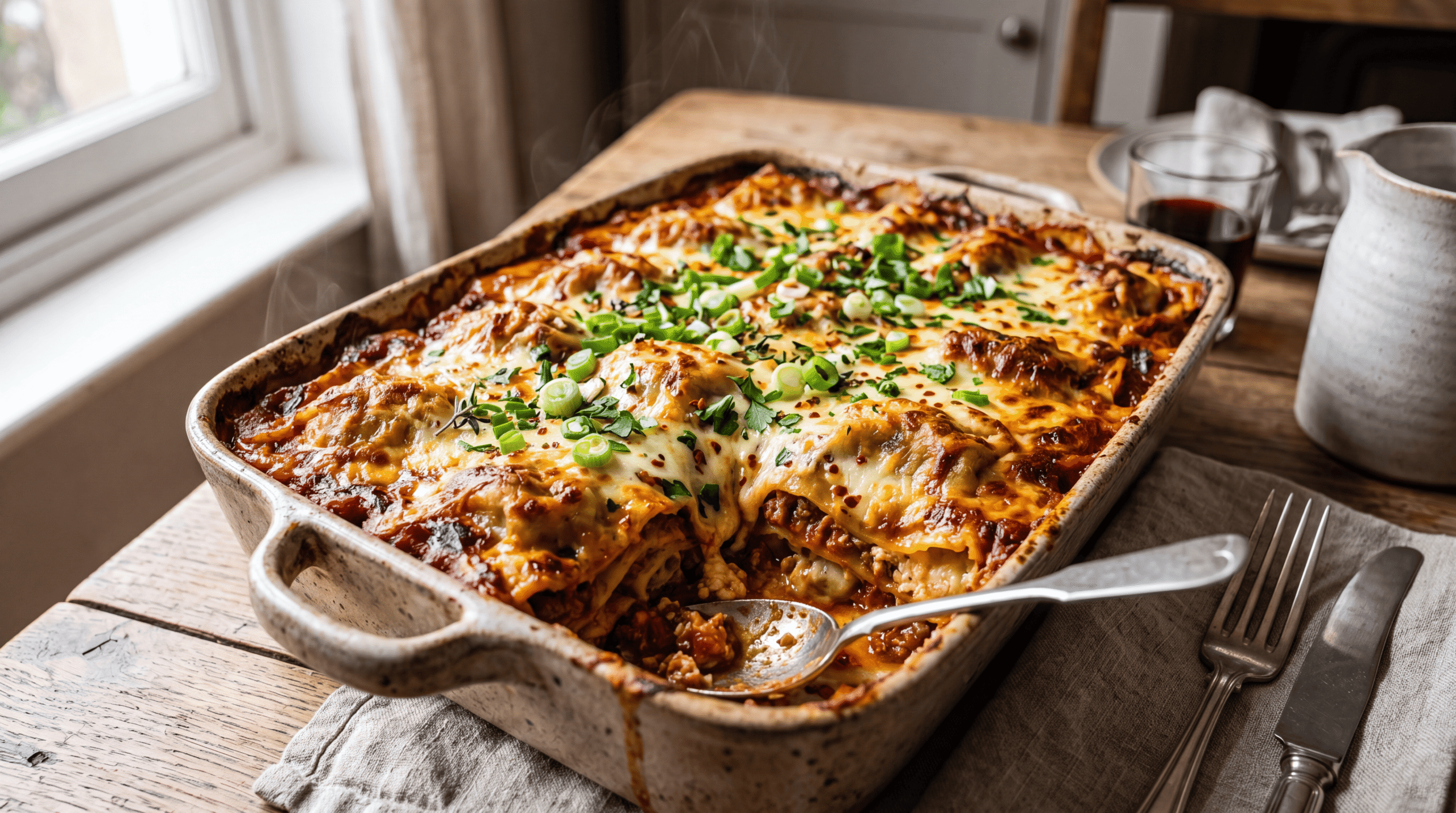

Home cooks have been boiling dumplings for centuries, and they’ve been doing it wrong the entire time. The viral dumpling lasagne sweeping TikTok isn’t just internet novelty—it’s accidentally brilliant food engineering that solves the fundamental problem with steamed and boiled dumplings: uneven texture and flavor dilution.
I’ve spent fifteen years perfecting dumpling wrappers in professional kitchens from Barcelona to Tokyo. When I first saw this recipe, I rolled my eyes. Then I made it. The result shocked me: superior browning, better moisture control, and exponentially more flavor complexity than traditional preparation methods. Here’s why this technique works, and why you need to stop boiling your dumplings immediately.
The Viral Phenomenon: What Makes Dumpling Lasagne Different
Dumpling lasagne transforms frozen dumplings—typically potstickers or gyoza—into a layered casserole that combines Italian baking technique with Asian flavor profiles. Instead of steaming or pan-frying individual dumplings, you layer them in a baking dish with sauce, cheese, and aromatics, then bake until the top achieves deep caramelization while the bottom stays tender.
This recipe exploded on social media because it promises convenience: no pleating wrappers, no careful pan-frying, no steamer baskets. But the real revolution is textural. By baking dumplings in layers, you create three distinct textures in one dish—crispy top, tender middle, sauce-soaked bottom—that traditional dumpling preparation can never achieve.
The technique capitalizes on what food scientists call “moisture gradient cooking.” The top layer dehydrates and browns through the Maillard reaction, while the bottom layers steam in their own sauce. You’re essentially getting three cooking methods simultaneously: roasting, steaming, and braising.
The Science Behind Why Layering Beats Boiling
When you boil or steam dumplings, you’re cooking them in 100°C (212°F) water vapor. This produces tender wrappers but zero browning, zero crust development, and zero flavor complexity from caramelization. The filling steams uniformly, but the wrapper becomes a bland vehicle—not a flavor contributor.
Dumpling lasagne, baked at 190°C (375°F), triggers the Maillard reaction on exposed wrapper surfaces. This chemical cascade between amino acids and reducing sugars creates hundreds of new flavor compounds—the same reason bread crust tastes better than bread interior. You’re not just heating dumplings; you’re fundamentally transforming their molecular structure.
The layering technique also solves dumpling’s moisture management problem. In traditional steaming, excess moisture has nowhere to go—it saturates the wrapper, making it gummy. In dumpling lasagne, the baking dish creates a moisture gradient. Top dumplings shed water vapor into the oven. Bottom dumplings absorb flavorful liquid from the sauce. Middle dumplings achieve the Goldilocks zone: tender but not waterlogged.
According to food science research on the Maillard reaction, browning reactions begin around 140°C (285°F) and accelerate dramatically above 150°C. Steamed dumplings never reach this temperature. Baked ones do—but only where they’re exposed to dry heat.
The Complete Dumpling Lasagne Recipe
Ingredients:
- 900g (2 lbs) frozen dumplings (gyoza, potstickers, or vegetarian dumplings)
- 480ml (2 cups) tomato-based pasta sauce or Asian chili oil sauce
- 240ml (1 cup) chicken or vegetable stock
- 200g (2 cups) shredded mozzarella or aged cheddar
- 4 cloves garlic, thinly sliced
- 3 green onions, chopped
- 2 tablespoons sesame oil
- 1 tablespoon soy sauce
- 1 teaspoon chili flakes (optional)
- Fresh herbs: basil, cilantro, or Thai basil for garnish
Instructions:
Preheat your oven to 190°C (375°F). This temperature is critical—too low and you won’t trigger sufficient browning; too high and the cheese burns before the dumplings cook through.
In a bowl, combine your sauce, stock, sesame oil, soy sauce, and half the garlic. This creates your braising liquid. The stock thins the sauce just enough to penetrate between dumpling layers without making them soggy. The sesame oil adds fat-soluble flavor compounds that water-based sauces lack.
Spread one-third of the sauce mixture in a 23cm x 33cm (9×13 inch) baking dish. Arrange half the frozen dumplings in a single layer—don’t overlap or they’ll steam instead of browning on top. Scatter half the remaining garlic slices between dumplings.
Pour another third of sauce over this layer, then add half the cheese. The cheese serves two purposes: it adds richness, obviously, but more importantly, it creates a moisture barrier that prevents the middle dumpling layer from becoming waterlogged. Cheese proteins coagulate during baking, forming a semi-permeable membrane.
Add the second dumpling layer, remaining garlic, final third of sauce, and remaining cheese. Sprinkle chili flakes on top if using. The top layer of cheese will brown and crisp, creating textural contrast.
Cover the dish tightly with foil and bake for 25 minutes. The foil traps steam, ensuring the middle and bottom dumplings cook through. Remove foil and bake an additional 15-20 minutes until the top is deeply golden and the edges are crispy. You want dark brown spots—that’s flavor.
Let rest 5 minutes before serving. This allows the sauce to thicken slightly and the cheese to set. Garnish with green onions and fresh herbs. The herbs aren’t decorative—their volatile aromatic compounds activate your olfactory receptors, making the dish taste more complex than it actually is.
Common Mistakes That Ruin Dumpling Lasagne
Mistake #1: Using fresh or homemade dumplings. This technique is specifically engineered for frozen dumplings with thick, sturdy wrappers. Fresh dumpling wrappers are too delicate—they’ll dissolve into the sauce, creating a gummy mess. Frozen dumplings have been dehydrated slightly during freezing, giving them structural integrity that survives baking. Don’t fight the technique.
Mistake #2: Not using enough liquid. The most common failure I see is dried-out, cardboard-textured dumplings because cooks used pure tomato sauce without thinning it with stock. Frozen dumplings contain less moisture than fresh ones. They need liquid to rehydrate during baking. Your sauce should be slightly thinner than you’d use for pasta—think of it as braising liquid, not coating sauce.
Mistake #3: Skipping the foil-covered phase. If you bake the entire dish uncovered, the top layer burns while the bottom stays raw. The foil-covered phase creates a mini-oven-within-an-oven, trapping steam that cooks the dumplings through. Only after they’re cooked do you remove the foil to brown the top. This two-phase technique is non-negotiable.
Mistake #4: Overcrowding the dish. Leave small gaps between dumplings in each layer. These gaps allow sauce to flow through, ensure even cooking, and create crispy edges where dumplings make direct contact with the hot baking dish. Overlapping dumplings steam each other—you lose the textural contrast that makes this dish work.
Why This Technique Produces Restaurant-Quality Results
Professional kitchens have known for decades that layered, baked dishes develop more complex flavor than single-method cooking. That’s why traditional lasagne tastes better than boiled pasta with sauce—you’re building flavor through multiple cooking techniques applied to different parts of the same dish.
Dumpling lasagne accidentally replicates this principle. The exposed dumplings undergo dry-heat cooking (roasting), developing browned, crispy exteriors rich in Maillard reaction products. The middle dumplings experience moist-heat cooking (steaming), staying tender and absorbing sauce flavors. The bottom dumplings braise in liquid, their wrappers becoming soft and sauce-saturated like the bottom layer of a perfect lasagne.
This technique also leverages what food scientists call “flavor layering.” Each component contributes different aromatic compounds: garlic provides sulfurous notes, sesame oil contributes nutty aldehydes, cheese adds umami from glutamates, and browning creates hundreds of volatile organic compounds. Your brain integrates these into a perception of “complexity” that single-method cooking can’t achieve.
The viral success of dumpling lasagne proves what I’ve always told home cooks: great food isn’t about complicated techniques or expensive ingredients. It’s about understanding how heat, moisture, and chemistry interact to transform raw materials. This recipe works because it accidentally optimizes all three variables.
Variations and Customizations
Once you understand the technique, endless variations become possible. Swap tomato sauce for Sichuan chili oil mixed with chicken stock for an intensely spicy version. Use curry sauce and coconut milk for Southeast Asian flavors. Replace cheese with panko breadcrumbs mixed with butter for a Japanese-style gratin.
Vegetarian? Use vegetable dumplings and mushroom stock. Add sliced shiitakes between layers for extra umami. For a Korean-inspired version, use gochujang mixed with stock as your sauce base and top with kimchi before baking.
The fundamental principle remains constant: create a moisture gradient, ensure sufficient liquid for rehydration, and bake hot enough to trigger browning reactions on exposed surfaces. Master this, and you can riff infinitely.
The One Technique You Need Today
Here’s what you must remember: thin your sauce with stock to a consistency slightly thinner than marinara. This single adjustment determines success or failure. Measure the sauce-to-stock ratio precisely the first time—480ml sauce to 240ml stock for 900g dumplings. Once you nail this ratio, you’ll never boil another dumpling again. Dumpling lasagne isn’t a viral gimmick; it’s accidentally perfect food science that makes you look like a genius with minimal effort. That’s the kind of cooking that turns home cooks into kitchen superheroes.