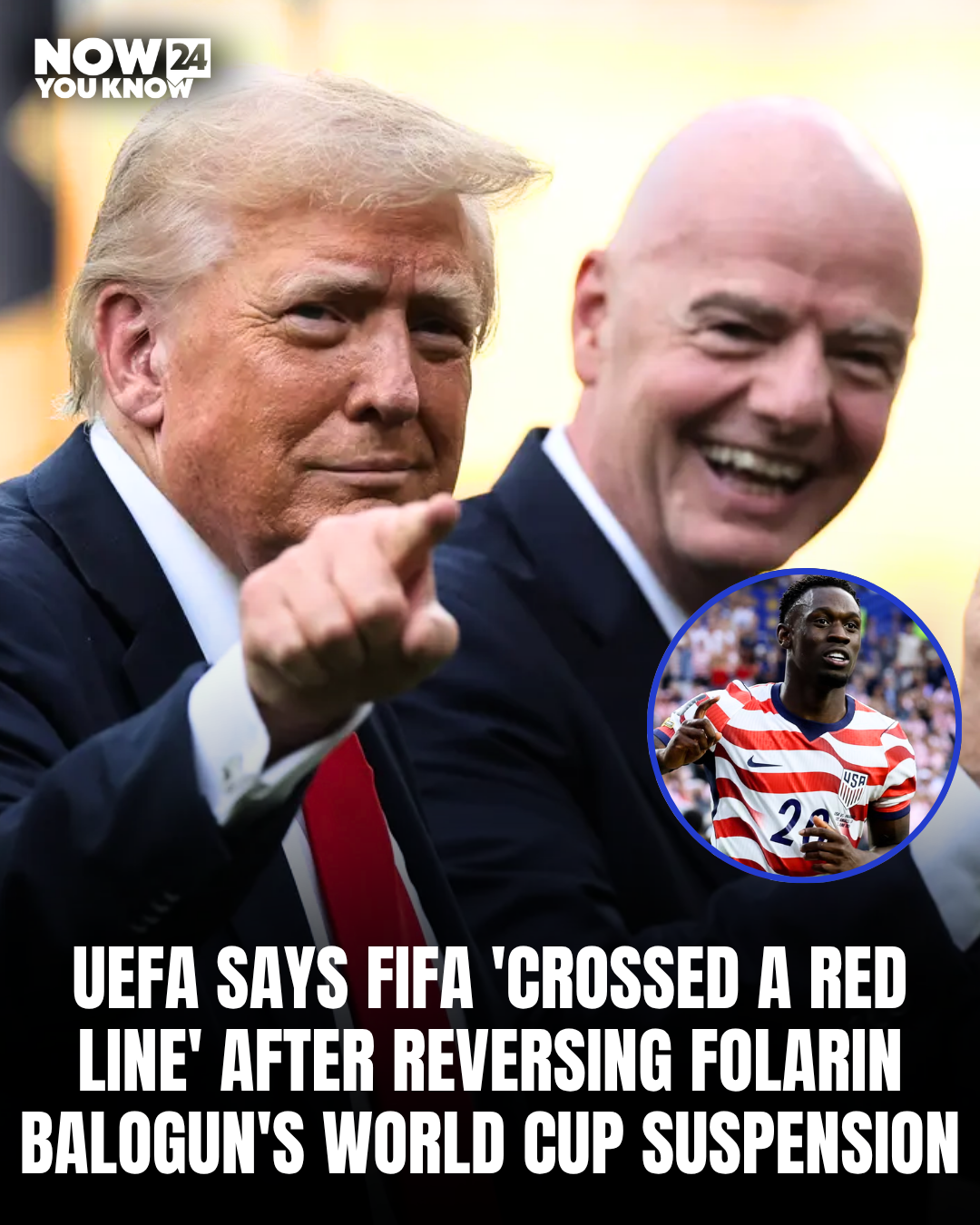

UEFA has strongly criticized FIFA after the governing body suspended the automatic one-match ban issued to United States striker Folarin Balogun, calling the decision unprecedented and warning it could damage the integrity of the 2026 FIFA World Cup. The controversy erupted just before the U.S. was due to face Belgium in the Round of 16.
Balogun cleared to face Belgium
Balogun had been sent off during the United States’ victory over Bosnia and Herzegovina after a VAR review determined his challenge warranted a straight red card. Under FIFA’s disciplinary rules, a direct red card typically results in an automatic one-match suspension.
However, FIFA announced that the suspension would be placed on hold for a one-year probationary period, making the U.S. forward eligible to play against Belgium. The organization cited Article 27 of its disciplinary code as the legal basis for the decision.
UEFA condemns the decision
In a strongly worded statement, UEFA said FIFA had “crossed a red line,” arguing that automatic suspensions following red cards are fundamental to ensuring fair competition. The European governing body warned that making exceptions during an ongoing tournament creates uncertainty over how the rules are applied and risks undermining the credibility of the competition.
UEFA also argued that several players have already served similar suspensions during the tournament, raising concerns about consistent treatment across all participating teams.
Reports link Trump to the reversal
The controversy intensified after multiple reports claimed U.S. President Donald Trump personally contacted FIFA President Gianni Infantino to request a review of Balogun’s suspension. Trump later celebrated the outcome on Truth Social, thanking FIFA for what he described as correcting “a great injustice.” FIFA has not disputed that political outreach occurred but maintains its decision was made under its existing disciplinary regulations.
Belgium considers its options
The Royal Belgian Football Association has also criticized FIFA’s decision and is exploring possible legal avenues after expressing surprise at the late change. Belgium’s coaching staff questioned the timing of the ruling, saying it complicated preparations for one of the tournament’s biggest knockout matches.
Why the decision matters
The debate extends beyond one player. Sports governance experts have long argued that consistent enforcement of disciplinary rules is essential to maintaining trust in international competitions. While FIFA says its disciplinary code allows sanctions to be suspended under certain circumstances, critics argue that exercising that authority during a World Cup knockout stage risks setting a precedent future teams may seek to invoke.
The Balogun case is now one of the most controversial moments of the 2026 World Cup, with attention shifting from the action on the pitch to questions surrounding governance, consistency and the influence of outside political figures. Regardless of the outcome of the United States’ campaign, the fallout from FIFA’s decision is likely to remain a major talking point well after the tournament concludes.