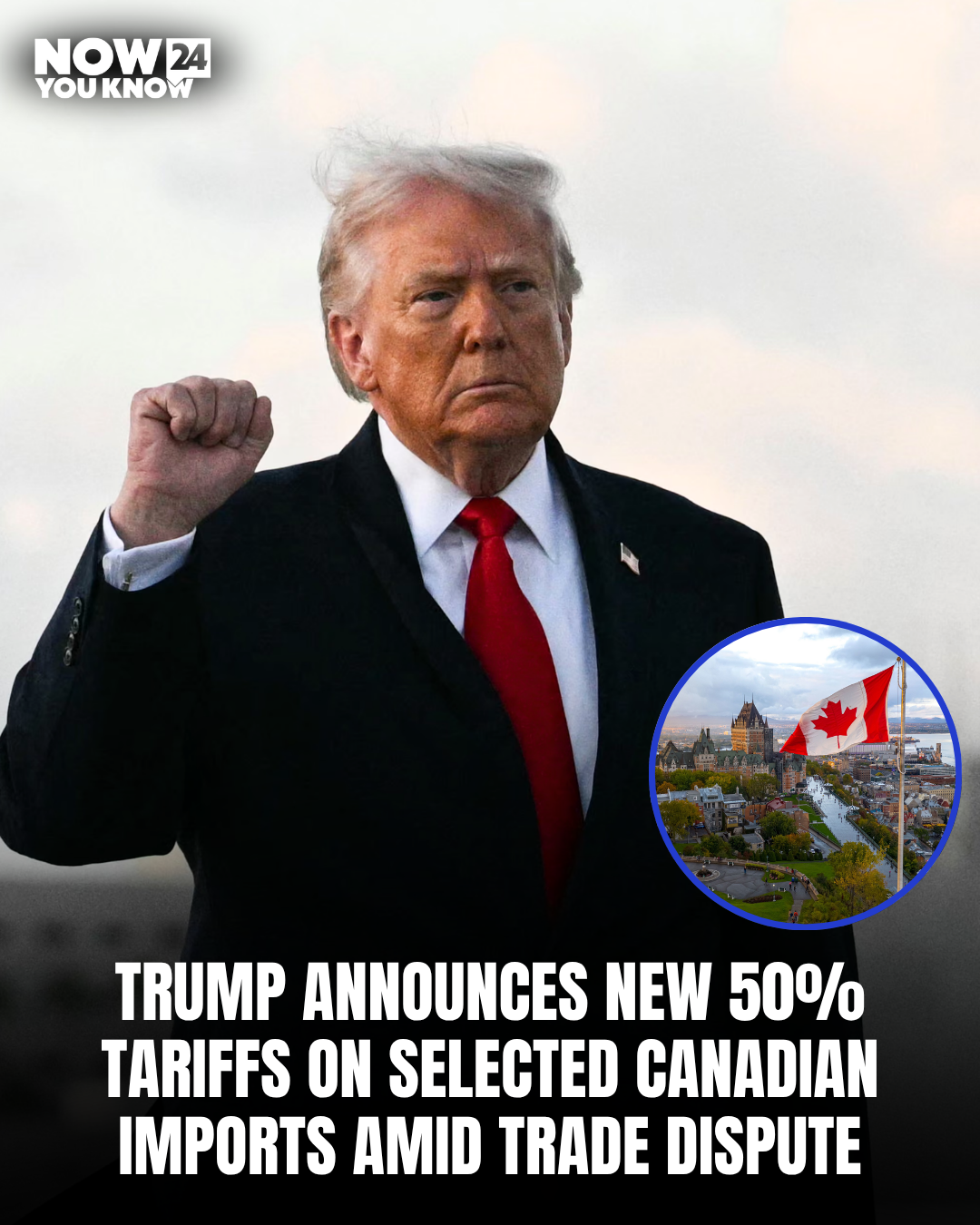

Trump Unveils New Tariffs on Canadian Goods
President Donald Trump has announced a new 50% tariff on a broad range of selected Canadian imports, escalating trade tensions between the United States and its northern neighbor.
According to senior administration officials, the move is intended to respond to what the White House describes as discriminatory Canadian trade measures and retaliatory actions taken against U.S. products.
What Products Are Affected?
The new tariffs will apply to a wide variety of Canadian goods, including dairy products, alcoholic beverages, food items, clothing, furniture, construction materials, and certain technology products.
Some products are exempt from the new duties, including energy exports, potash covered under separate trade provisions, fish, and certain critical minerals. The tariffs are expected to take effect 30 days after the president’s proclamation.
Why the Administration Says It’s Acting
The White House argues the tariffs are a response to several Canadian trade policies, including restrictions on the sale of U.S. alcoholic beverages in many Canadian provinces, tariffs affecting some American-made vehicles, and longstanding barriers involving dairy imports.
Administration officials say the goal is to create a more level playing field for American manufacturers and exporters while encouraging domestic production.
Trade Talks Continue, But No Formal Negotiations
Although U.S. and Canadian officials remain in contact, the administration said there are no formal trade negotiations currently underway.
Officials described recent discussions as constructive but indicated that both countries remain divided on several key trade issues, leaving uncertainty over whether a broader agreement can be reached.
Potential Economic Impact
Trade experts say the new tariffs could increase costs for businesses that rely on Canadian imports and may lead to additional responses from Canada if the dispute continues.
Because the United States and Canada are among each other’s largest trading partners, any escalation in tariffs could affect industries on both sides of the border, from manufacturing and agriculture to retail and construction.